Uncategorized

RAT RACE

CAUGHT IN A RAT RACE?

Feeling like you’re stuck in a rut? More rodent metaphor: like you’re on a hamster wheel spinning too fast to jump off. Spending part of your time wound up like a cornered rat who jumps straight at an attacker before running away? Are you like most November vermin, coming in from the cold looking for free food and lodging to survive winter?

I like to catch and kill rats, not feel like I’m in a race for survival with other rats where my chances are slim.  Like these dead fuckers in my traps.

But I have indeed felt this way for some time now. Caught in a race, and not one of my choosing. You see, this is a post about reinvention. Mine, yours, anyone’s.

EVENTUALITIES
I thought I was doing well in the newspaper industry. Despite its faults, it’s a product I could get fully behind because in many ways it matched my values. The idea of informing a voting public about the executive, judicial and legislative aspects of gov’t so they could make informed decisions at the voting booth seemed like worthwhile. Though I could see the corporate influence eroding its power under a concentration of newspaper ownership, it was still idealistic at its core. It is still necessary for democracy.

After running a team, I managed to rise to Canadian senior vice president of the largest paid sales subscription service in North America. With over one hundred reps and a dozen managers spread over seven cities to mentor (some of whom helped train me), it was a job I loved. My intention was to sail into the sunset on its low six-figure compensation.

Things didn’t work out. After the last big recession, advertisers migrated online, and the papers lost their financial base. By 2015, they’d shrunk even more and become desperate. The public turned away from the format, unwilling to recycle something that purports to cut down trees, nor sacrifice the convenience of digital news on demand.

I’d had a little boy in 2013, a child to add to my daughter, born in 2011. The boy had medical problems. Just as I contemplated moving to Chicago to take on a market and replicate a large and successful campaign we’d managed in Los Angeles, the medical insurance alone meant I had to turn it down. Regrettably, all this left me no option but to look elsewhere for work.

DEAD-ENDS
The energy business in Ontario had become appealing once again as the provincial government added 50 billion in spending on renewables, a cost borne by ratepayers. With a legislative majority in charge, locking in electricity prices in the face of steady increases made sense for my business customers. It helped me get out of the newspaper business, and after a couple of years, I was doing well. But there was little room for developing the kinds of teams which characterized my role in anything I’ve ever done. I’m a builder, first and foremost.

Added to this, in time a change of government stopped adding costs to the operation of the electrical grid and the public expected a roll back of pricing. Regulators also tightened up the consulting side of things with new policies. The company used this to justify cutting CPA compensation in half.  Instead of taking any of this seriously, they demanded people “do whatever it takes” to be successful. Suddenly, I saw a high turnover of reps, led by an echo chamber of managers who were little more than Machiavellian opportunists.

When I broached the idea that the kind of pressure the company is putting on sales with such dubious fundamentals was bound to attract martyrs (high conscientiousness, people pleasers) and personality disorders (narcissists, psychopaths, etc.) the company CEO’s flippant response was “we all have a personality disorder.” Well no. We don’t.

So here I am, sixty-years old, about to reinvent myself once more. I have a young wife and two small children. Times like this are perfect to really take stock and try to get it right. Rather than consider this a trial, it’s a blessing. I’ll tell you why.

BLESSINGS
First off, Corrie put me onto The Boy Crisis a few months back, and I finally got around to reading it. In it, there are 55 ways dads contribute immensely to a child’s life. In fact, it’s better to have a mom and dad in the home, but if you could choose only one, the studies say the kids are better off with dad. I can’t tell you what a shot in the arm this has been.

I wish I knew earlier because I tease missus I’m the baby whisperer. When my daughter was a born, she was difficult to put to sleep. No one had her number like I did. Not her mom, not her favourite auntie. Give the child to her dad and I’d put her out in no time.

Around the house, I noticed I was much better getting the kids to pick up their toys, help with chores and at settling disputes. I was excellent at getting them to eat, put to bed, and a myriad of other ways necessary for effective parenting. Yet, I felt a little sheepish about it and I know why. I had bought into the stereotype that “mommy knows best.” Truth is, sometimes she does, especially when the kids are sick, spotting it days before I do. Almost everywhere else, I’m ahead.

Ideally, it takes two parents to raise a kid, so her contribution is huge. Mine is too.

For example, I’ve been cooking some meals. We eat healthier when I take care of supper. My boy has a collapsing trachea and was on 70% liquid diet. In a few weeks, I have him on 90% solid food. I’ve even gotten him to use a fork the odd time—the little savage. My daughter is excelling at school in two languages. We get to speak French together, so it’s like a secret communication between us no one else in the house can understand for now. Pretty cool.

I’ve been the advisor to men for many years. I used to be a counsellor, but that freaks guys out. Then I called myself a coach, now everyone’s a coach. So, I’m an advisor—takes the pressure off us both. But ever since I graduated first in my class in the behavioural sciences, I like doing it no more than half of my time. Anything more burns me out. This keeps me fresh.

PURPOSE
As some of you know, I’ve solved the riddle of addiction. On top of that, there’s a few other key teachings which benefit men I’ve found, especially with personal relationships, parenting, and managing life in general. I’d like to get my message out somehow to larger audiences. I think every man should be in a continuous growth process. It’s why I figure the best deal for men is in a low-cost monthly mastermind like Board of Directors or something like it.

Outside of being a dad, nothing is more satisfying that when a man tells you the work we did together changed his life. I’d do it for free because I can, but without skin in the game, it’s not as effective. People should pay something for value so that they value it more. I’m a bargain they tell me, though, I wouldn’t know and part of me says it’s not for me to decide.

So, at my age, I’m going to take a real estate license. I think it might be just the way for me to go. I’m a hustler—meaning I’m not afraid of work—and I’m good with people. I act diligently as their champions, so selling houses and businesses should be up my alley. I once had a real estate license in the early 1990s but let it go. I’m familiar with its basics.

Missus is doing photoshoots on the weekends and cleaning houses for cash during the week. I admire a gal who can roll up her sleeves and get to work. Financially, we’re fine but she likes to stay busy now that the kids are both in school. I’m happy to have time in front of the computer during the day. Maybe I can write those two books waiting for me.

All this to show that no matter what age, a reinvention of self should be the norm, and not in any way something to fear or worry about. I’m excited about it. I’m encouraged I’ll be able to choose who I work with and who I don’t. I know real estate has its share of the unscrupulous. I intend being the best I can be.

I’m telling you all this so that if you find yourself wondering if you should stay or go in whatever work you’re in now, know that you can and will reinvent yourself. I suppose you could say I’m trying to inspire you, by showing you there are smaller versions of Colonel Sanders happening all around you. He didn’t go anywhere in life until his late fifties.

We never lose the ability to be something else. When we played cops and robbers, doctors and nurses and monsters and whatever else as children, we were those characters. Self-concept is destiny. How I see myself measured up against how I believe others see me is a key driver of human activity.\

LISTEN AND FLOW
And that’s the thing. Like acting, reinventing your life and self-concept is always possible. Circumstances often force your hand, and sometimes you decide to play cards you weren’t sure you even had. As you know, a man who finds his power and uses it in service of himself and others will find a life of meaning. It is here where his freedom lies.

To this end, I’ve spent a few weeks listening to my body. I’ve spent some time in tune with my chain of being, paying attention to interoception—the messages sent to my brain by the body—and decoding its consequential thoughts. Thoughts are reflections of the body.

It’s through this examination I’ve been able to find my way forward. You may have heard me say I suspect what lies locked away in your body by way of epigenetic methyl groups passed along from your ancestry, and the totality of emotional states from your life’s history, constitutes your soul.

Indeed, they call this process soul-searching for good reason. If you find yourself similarly challenged, try going within, understanding the answers are in your body. Move, move more, and move more again. The chances are revelations will appear as you sweat, while exerting yourself. Or soon after, quietly calling forth influences of distant lineages, as answers begin appearing as ethereal whispers. And you will know.

The body is the universal address of your existence. It is there, where ancestral past meets feelings carried from experience, where being calls for full expression of passions and talents, fully engaged, content and focused, where you stop time. This is your zone. The more I search for it, the more I find my flow. You can too.

It was Horace Mann who said:

“Be ashamed to die until you have scored a victory for mankind.”

Life has a purpose for us all. We cannot seek to question its wisdom in ultimate deceit. The gift of our humanity is in the way we rise to create order from chaos. We must not ask what we shall receive. We only seek to answer how to use the gift of this life, so we may repay what we owe.

Where shall you find victory my brother?

Where shall you find freedom?

Stay powerful,

© CKWallace Nov, 2018 all rights reserved

Join us on facebook at:
https://www.facebook.com/groups/advisortomen/

Join your online men’s group at:
https://advisortomen.com/board-of-directors/

BE GREAT IN ACT

THOUGHTS INTO ACTIONS

“Be great in act, as you have been in thought,” said the original bard. What was William telling us when he wrote this directive, this mini-missive for life? Could be he was urging us to be more confident, because confidence is a big part of what takes thoughts and turns them into actions.

Sometimes fear does this too, but not in the “great” way Shakespeare was referring to when he gave this advice. Greatness, being your best in a moment, is something we all experience, if only in our minds.

The question is how to take those fleeting feelings of greatness and bring them forth into the world.

Acting is one way, a version of the old “fake it until you make it” cliché. And as much as this strategy has become a trite call to be something other than yourself in the internet era, it’s still a pretty good approach. No wonder actors love what they do. They perfect the “becoming something else,” repeatedly, even becoming addicted to it.

This reminds me of when I first learned to shoot pool. Oh, not the very first time, because that was as a 13-year-old when my big brother suddenly turned to me one Saturday and asked me what I was doing. Ten minutes later, Stephen and I were nearby at Centennial Billiards on Bank Street playing on one of the small tables.

I was terrible. I’m sure Stephen was only moderately better. We didn’t play again for several decades. In the interlude, he visited over a hundred countries in service of gov’t, while I did… other things. But little did he know, by way of introduction to this wonderful game, of the seed he’d planted in me.

I played it on and off for another twenty years before I got much better. In my early 30s, in college, I often played at Edgar Lefevbre’s East End Billiards, just up the street from my place in Cornwall. I had a cheap two-piece cue and could count myself as a moderately decent player, enough to hold my own amongst other players there who were the equivalent of duffers in golf.

It was when I moved to Southern Ontario and began to run a sales team during evenings all over Southern Ontario that I stepped it up. Each night, I had three or so hours to kill between dropping off my reps and picking them up again. I drifted into the pool halls of each town to play snooker.

Pool, meaning straight pool, eight ball and nine ball, hadn’t taken off in Canada. These were American games played on smaller tables and Canada was a former British colony. We played on 6’ x 12’ tables and looked down upon the pool shooters to the south, preferring snooker. Later, I came to appreciate these smaller table games just as much. Nine ball is my favourite.

The Canadian, Cliff Thorburn, had been crowned World Snooker Champion in England in 1980. Then he’d blown away the snooker world by scoring a maximum in the Championships in 1983: a perfect game of 15 reds with 15 blacks and then all the colours to score 147. At the time, it was snooker’s equivalent to breaking the 4-minute running barrier record.

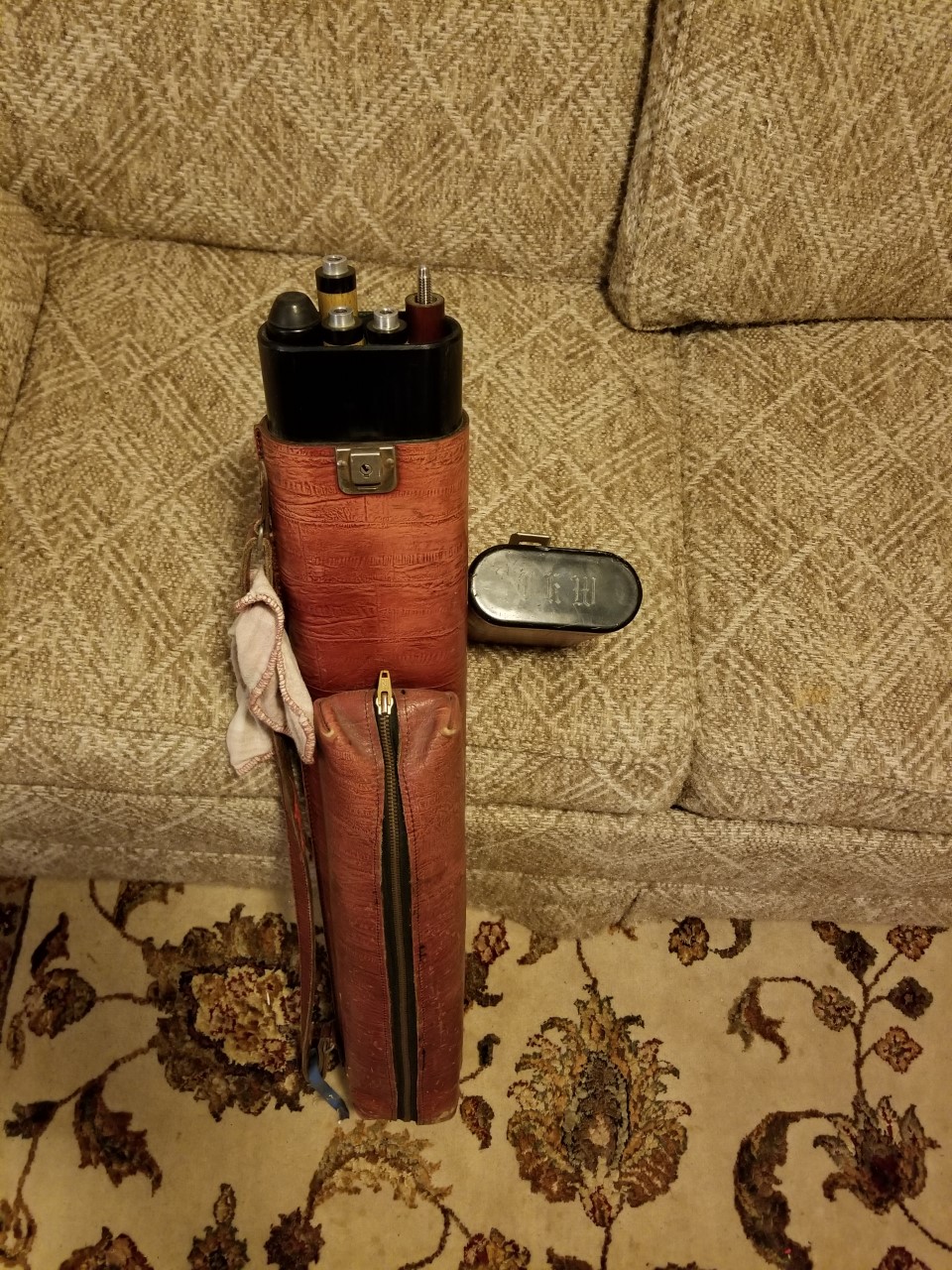
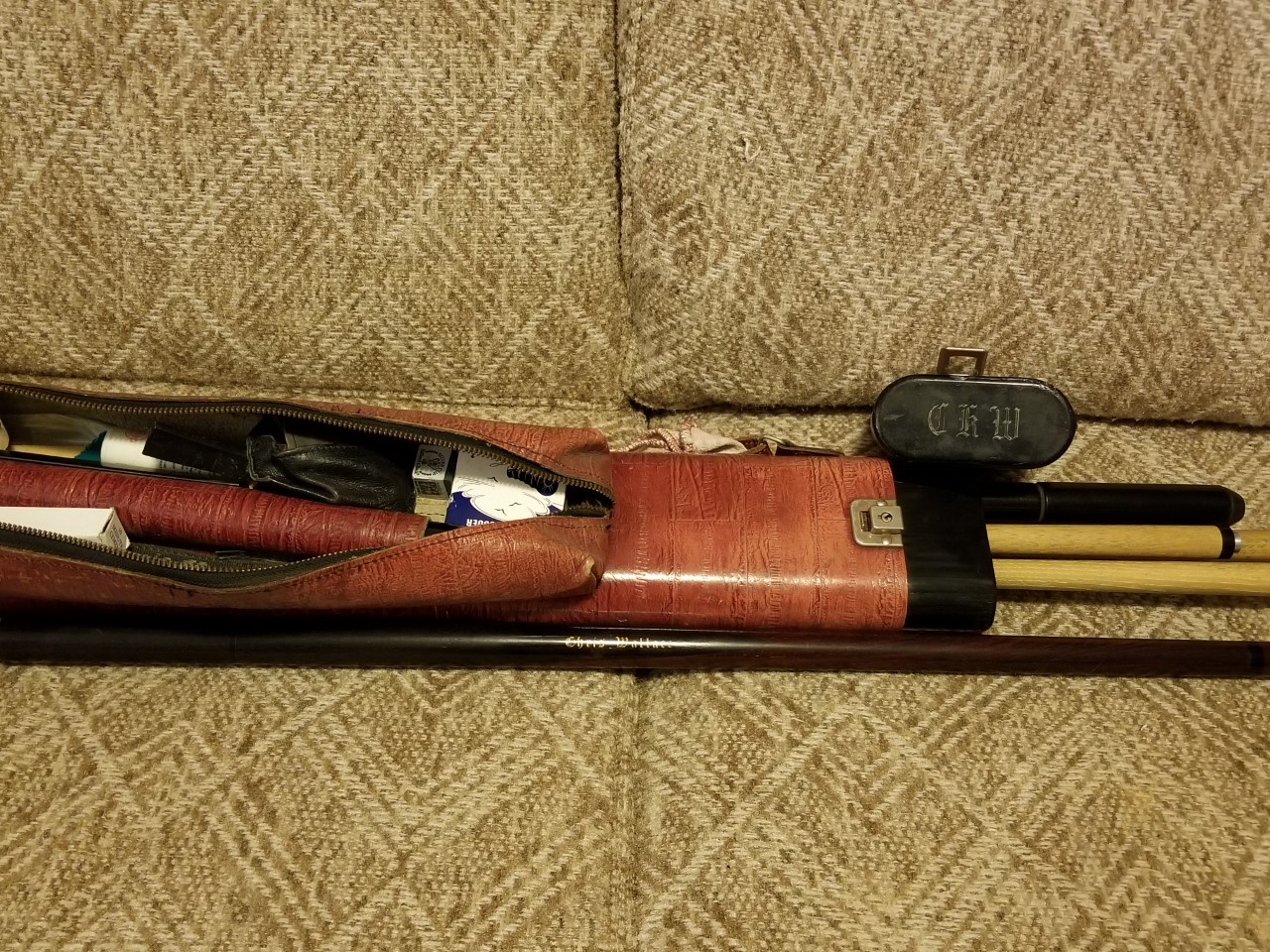
When, in 1988, I moved to Hamilton, eventually I started playing at The End Pocket, on Upper James. Marty Olds had bought the place and I’m pretty sure he still owns it. Alain Robidoux, a French-Canadian from Montreal was by then our top player in England, ranked something like number 8. I heard the announcer say he used a hand-made cue built by Marcel Jacques. I later found out Marcel had been a bowling hall carpenter, building those beautifully precise tongue and groove alleys, and made pool cues on the side.

I know this because on a whim one day, I called a pool hall in Montreal, and by luck they could get a message to him. He called me back a day or so later and I found myself agreeing to meet him the following week at one of his local pool room hangouts. He tested my stance and measured my body and arm length, as well deciding on the thickness of the cue’s butt so it would best fit my hand.

$500 bucks and a few weeks later, my cue.

When I bought my cue, I still hadn’t met Marty and the rest of the boys at the End Pocket, but I’d been in to bang the balls around a few times. When I showed up to practice on table #6 at the back of the room with the Marcel cue, Marty noticed right away that I could play well enough. The cue gave me away as a serious player.

From then on, I was welcomed into the loose fraternity of the better players there. Never the best or most talented player, I only won one of his tournaments a couple of years later and got my name printed in the classifieds for it. But it was the endless games of golf and follow played for 25 cents a point that I remember most.

I didn’t like losing very much so I enlisted the help of Canada Fats, Tony Lemay, a gambler in Toronto who made a living at the racetrack and playing cards. In three lessons at $50/hour, Tony helped me find the stance I still use to this day, very much emulating Cliff Thorburn’s frontal approach to the ball.

By this time, I was playing in rooms from Scarborough’s Snooker Canada to places in London or Niagara Falls, and everywhere in between. I’d pop in and find a game, usually for five or ten bucks a rack and the table time.

Occasionally, I got to practice with a much better player. It was a fella in Brantford, Ontario who pointed out my biggest flaw, striking before I’d pinpointed the exact place on the ball down to the size of a pen mark, instead of a circle the size of about half a dime. My eyes were weak.

I think he was also frustrated at me not being a worthy opponent and could see my potential. He did something curious: he stood behind me and wouldn’t let me strike and move on until I’d corrected what it was he was telling me. Instead of allowing me to continue my poor form, he insisted on a correction on the spot by raising his voice and saying “no, no, NO, that’s not it, keep looking for it,” so I’d be forced to stop etching the flaw further upon my style, dismantling and rebuilding the weakness which held me back in the process.

Frustrated at first, by the time he was done with me in that one evening, I was making shots with such precision I ended up beating him. He nodded when I did, knowing he had beat himself through me. The score was just proof of the soundness of his lesson.

I think his name might have been Paul but I’m unsure. All I know is I’m grateful to this stranger for his coaching. I still think of him, still see him nodding his head in approval without saying a word. My game went up from there.

This was my pastime, not my professional pursuit. At one time, I considered buying a pool room but realized it would run my love of the game if I was forced to sit in a room all day hoping customers would spend money. I played for fun, and a little money, but the real fun was in playing well.

Never intending to become a better player, I had simply taken my thoughts about playing and acted them out. I’d faked my way into a level of mastery of the game by first getting a world class cue and then forcing myself to play to its level. Funny how that works.

There are two other enormous excellence lessons I learned while playing pool. One was about visualizations, the other about flow. I’ll report back to you about these in other posts.

In the meantime, I like to believe this era in my life contains valuable lessons, ones’ I still do my best to apply today.

think of ways you can act “as if” and see yourself in a different light. What are some ways you can realize some of those thoughts which surface in your mind, begging to be turned into actions? Often thoughts come and go and are forgotten. What if we acted on some of them instead?

Three hundred years after Shakespeare’s missive, what can we do today to honour his advice?

Sometimes confidence comes from little wins, ordinary victories accumulating over time into a meaningful whole, call it a gestalt of competence if you will.

At other times, it comes from taking risks. Something daring, perhaps done on a whim, and which can open a whole new area of life just because of it’s power as a linchpin to action.

It’s like putting on a good suit. Suddenly, people act differently around you and accord you with more respect and power than when you’re dressed in work clothes. Suddenly you’re standing straighter and taller, speaking clearly and with better manners. More about this later.

Suddenly, when we take risks, people appear along the journey and contribute something to our game. It’s just how things work, beautifully.

Realize the difference between thoughts and actions is often found in a simple leap of faith.

Go with it I say. Do it now, chase a passion.

Stay powerful.

CKWallace
Advisor to Men.
©2018 all rights reserved

https://www.facebook.com/groups/advisortomen/

QUALITY RELATIONSHIPS

QUALITY RELATIONSHIPS

It’s true what they say: The quality of your life is measured by the quality of your relationships.

Most of us are lucky if we can count on one hand the people we consider close enough to confide in, to turn to in times of turmoil and trouble. Even, to be able to say “I love you,” to someone, be they man, woman or child.

Or, just to check in and connect, somehow, on some level, to let others know you exist while recognizing they exist too. And I’m not even speaking about only being able to tolerate someone else’s company. Or liking them.

Liking a person is kind of important if you’re going to consider them a friend. You think? I bet we’ve all had friends at some point we didn’t care for, people we really didn’t like.

One of our brothers tonight called to say his dog passed away. It was an honour to take his call.

Thirteen years he watched over his friend. It was a runt from a champion line, but because of a heart murmur, it was going to be put down. My friend rescued the little pooch.

He spent ten grand getting her a heart operation way back in the early days. At six months it was attacked by big mean dog and had to have 18 stitches, undergone without complaint. All her teeth had been removed…

And today, bringing her into the vet to see if there was anything he could do to make her more comfortable, she waited patiently in his arms in a room.

He looked at her, she looked at him, she closed her eyes.

She was gone. Just like that. As if, “thanks boss, but I’m 95 in people years and we’ve had a great life together. Goodbye.”

His daughter is 21 today. Most of her remembered life this little dog was part of it. As her father, this rough-around-the-edges son-of-a-gangster won’t tell her now. Not on her birthday. He’ll wait and tell her later in the week in person. He’s like that now, a man. He wasn’t always.

And that’s the thing about life and love. We may start out with not a lot of it in our heart but if we give it time, if we allow it for ourselves and others, it will find us.

They say there are three levels. One is “what can you give me” type love. It’s Janet Jackson singing “what have you done for me lately” while shaking her ass. Fuck off.

Two is a trading relationship. We trade with others all the time.

You tailor my suit coat for a hundred bucks, saving me from throwing out a perfectly good suit jacket I had made in Hamilton by Bruno the Tailor in ’89, and we’re good. Do it right and I’m happy, you’re happy.

But is that love? I don’t think so. Yet, many of us have only a trading relationship to come home to every day. And that’s the thing, you see: It’s not quality.

It’s why my gruff friend, as hard as any guy, grieved today. Because his little dog gave him nothing but level three: unconditional love. The dog made itself belong to my friend, unquestionably, irrevocably, and loved him even on days where my friend may have been unable to love her back.

It’s part of a man’s DNA to take care of others. If he does it or not is another thing. It’s not enough to call yourself a man because you produce more than you consume, so there’s extra to go around. It’s bigger, much deeper than that.

I once knew a fella whose background was the Irish Mob in Canada. Eastern Canada based, he worked out west. I think it was mostly because all the guys above him had been whacked.

Those Montreal Irish, The West End Gang, purportedly connected to the IRA guys back home, scared the shit out of the bikers and the mob most days. They made Montreal bank robbery capital for many years. Forced the Canadian Bankers’ Association to undertake drastic changes in their procedures.

I noticed he always had a small dog with him. Little thing, probably a Bichon/Poodle mix or something. One day, I asked him, “Hey George, no disrespect or anything (respect is big with goodfellas, like a fucking religion), but why is it I see you with such a small dog all the time?”.

Fucker looks at me quickly, stares me in the eyes. I brace myself just a tiny bit. Suddenly, he softens a fraction and says to me matter-of-factly, “Because little dogs need protection too.” His eyes held mine for a moment and he looked, well, very human. Obviously, I accepted his answer.

In fact, I thought it was the best response ever. Sure shut me up, and no, I didn’t probe further. I knew there was something more to it but it wasn’t the time. What else could I say?

My friend today telling me about his little dog filled in a bit more about what George meant. See, my friend told me he grieved more today for this little dog than for his own mother and father when they passed.

More pain than the death of his mother or the death of his father?? Is that a sin of some kind? Maybe.

It’s just both guys had experienced little in the way of unconditional love in their lifetimes. Yet, their humanity, surrounded by a fortress of protection learned in a lifetime of pain, was there, mostly hidden, but intact.

It just took one little dog to bring it out.

In the quiet moments away from others, the loyal pooch and master found and celebrated what was important.

Not sad at all, I say. More like, hopeful. It’s a reminder to recognize pure love when we see it and know it’s real.

Because there lies the real power in life. If we are not standing up for good, we can’t even call ourselves neutral. Because good is love, and love is what counts. Indeed, it is love which is powerful.

Today, I salute all men and their dogs, big or small. Condolences to all of us who have lost a beloved pet. They are like family, perhaps even more. Man’s best friend is also a bridge to what is best in a man.

Find it early or find it late, we must all find love.

Rest in Peace Trixie. 2005 – 2018

Thank you.

Stay powerful gentleman,

CW

https://www.facebook.com/groups/advisortomen/

NARROWED THINKING


The Zone of Happiness

This week as I traveled about, visiting the lives of others along the way both online and in-person, I was struck by a few things I’d like to share with you. Specifically, I want to talk about narrowing thinking and how it lies at the crux of the best of human experience.

When I think of those times in my life when I was firing on all cylinders, it’s when I’ve been able to focus at such a deep level my total being was engaged in living in the moment. It’s when the distractions of my surroundings are inconsequential to what’s before me. It’s when time seems stands still.

I’m not sure if you know what I mean, but if you think back, you’ll quickly remember a scene from your history where you were so engrossed in what you were doing that all else didn’t matter. I wonder if you realize it’s at these moments when we are at our happiest.

Let me qualify that statement.  I surely don’t mean a form of bliss where we are like Snoopy just grooving to Schroeder’s piano. Though this is sometimes a part of it, it’s by no means the template against which we should judge our affective experience in these circumstances.

What I mean by happiest is more like we are blissfully unaware of feeling at all. At least, the tyranny of emotion is lost for the moment, and we leave behind all feelings of inadequacy. Our usual level of vigilance changes, but it’s not that we let our guard down. No. It’s because something else takes over.

That something is a feeling of almost limitless power, or better, power being expressed at the limits of our abilities. This is when we hit a zone, or our zone, and whether we hit it accidentally or on purpose doesn’t matter. What counts here is a condition which lies at the pinnacle of human expression. It’s as if we know it’s where we belong, a place where good things, sometimes great things, happen.

It’s a serious manifestation of our gifts coming together all at once, without being aware of limits or constraints which might cast doubt upon our competence. It’s more than confidence because it’s a blend of the mental and the physical, a symbiosis, the meaningful whole of an action. It’s the Gestalt.

Practice, Focus and the Impossible

The quick and easy way to hit zones is to practice over and over so new competence is ingrained in the cerebellum, like never forgetting to ride a bike once learned. Being able to shut out distractions is next, narrowing down focus to what is before you, so time is lived second by second, or not noticed at all.

When the first two conditions are met, the longer you linger there, the more chance you have of hitting the heretofore impossible. That’s when you stretch, using your powers of concentration and emotional equilibrium to push the boundaries of your skills. It’s a time when we truly get out of our own way, allowing whatever talent we have to sing fully, to express itself at its peak and beyond.

I’d sometimes get like this after a few years of shooting snooker. In my best games, I wouldn’t even notice my surroundings except for how they were needed to play the game. It didn’t matter who was watching, or what my opponent did. My eyes were on the green table cloth and the balls. My whole body and mind was an extension of the cue and cue ball and I could make that ball do my bidding without regard to limits. I’d control the game in a way far above my normal play.

I say the zone is also when we feel most alive. The connection between our existence and the world around us blends seamlessly, acting as one, without boundaries and without fear or need to explain. We are poetry in motion. We are the poet.

It’s as if we are nodding to the Universe, acknowledging its wisdom in choosing us, in bestowing a chance at life to this very being. It’s when we are fulfilling our promise, the pact we have with life itself.

Cheating the Zone

Sadly, I don’t think we get enough of it. And the peace and power derived from visiting our zone has such appeal that we often try to recreate its essence in other ways. Unfortunately, these are often maladaptive, poor substitutes for the real thing causing more harm than good. What lies at the heart of these coping mechanisms is the desire to narrow thinking, to thin out the complexities of life and simplify what occupies the mind.

Drink a few beers or haul on a joint and watch your thinking narrow accordingly. You’re in some kind of zone alright, but it’s not a celebration of your personal power. It’s a artificial hijacking of your sympathetic system, putting your physiology into a fear state to narrow your focus to escape danger. Whereas the real zone slows your heartbeat and focuses your power, this effect increases the heartrate and scatters your competence.

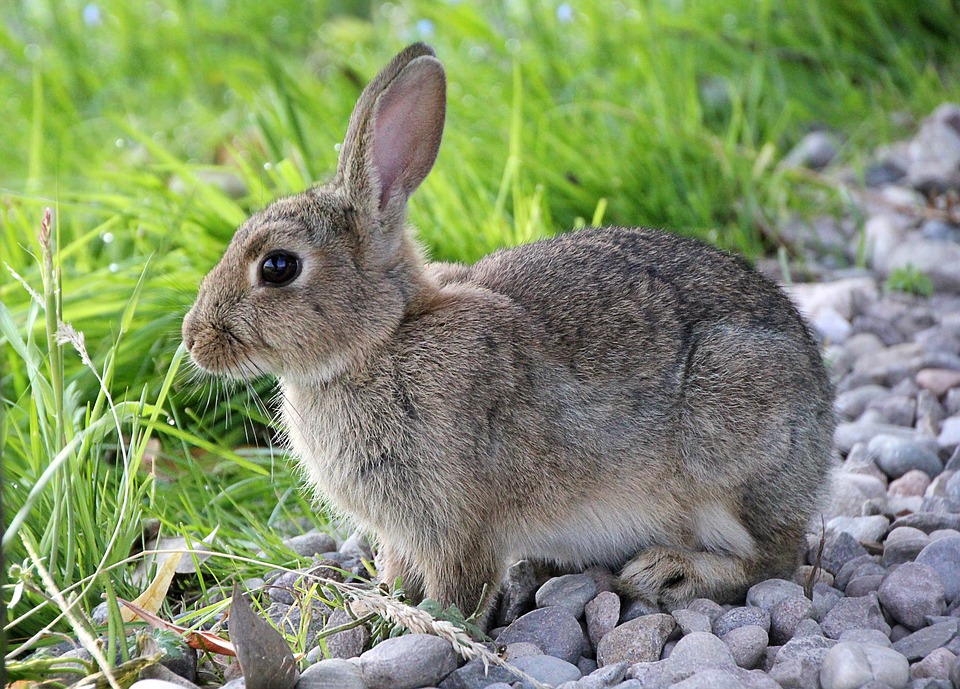
And it works—soon all your thinking of is pizza, or pussy, or fighting. Or you have slowed your body down, frozen, like a deer standing on the road staring at headlights. Or the rabbit you see on the neighbours lawn, immobilized, heart beating as fast as a snare drum, hoping it blends in.

For some, TV, food, porn, gambling, cigarettes, shopping all have the same capacity to narrow focus artificially, from an external view but without engaging the internal power and talent which exists in all of us. The suicidal try to do the same thing, narrowing their thinking down so effectively to escape the pain of life until, tragically, their options run out.

External vs Internal

The eyes see out, I like to say. So much of what we do is triggered by what the eyes can take in. Like all of our gifts, sometimes our qualities can become faults. Too often we see and respond without considering what we really seek. We all need to narrow our focus, to feel alive and celebrate our gifts in the moment. Too often we seek to do this by taking a pill of some kind, by relying on the environmental, the external solution to what really can only be solved internally.

You might expect I’ll speak now of finding more adaptive ways of narrowing thinking, of recognizing it’s draw as a fundamental expression, and encouraging you to make better choices. But here’s what I was taken with this week:

Turns out we don’t need 10,000 hours to become competent at something. See, the way I just wrote that represents the impression I took from reading Malcolm Gladwell’s famous missive about learning a new skill. It’s my own nonsense and represents the way I, along with most people I know, have misinterpreted the commitment he writes about. He’s talking about elite level mastery, world class level competence.

Old Dogs, New Tricks

In a TedX talk I watched this week, Josh Kaufman talks about researching Gladwell’s misunderstood recommendation and finding it takes around 20 hours to learn a new skill adequately. Of course, I thought when I watched him, I’ve learned plenty of things in less than 10,000 hours! Kaufman breaks it down further, suggesting just 45 minutes a day for about a month will do the trick. This is a refreshing antidote to the Gladwellian notion that it takes 5 years of hard slogging to achieve respectable competence at something.

I have 20 hours. 10,000? Not so much.

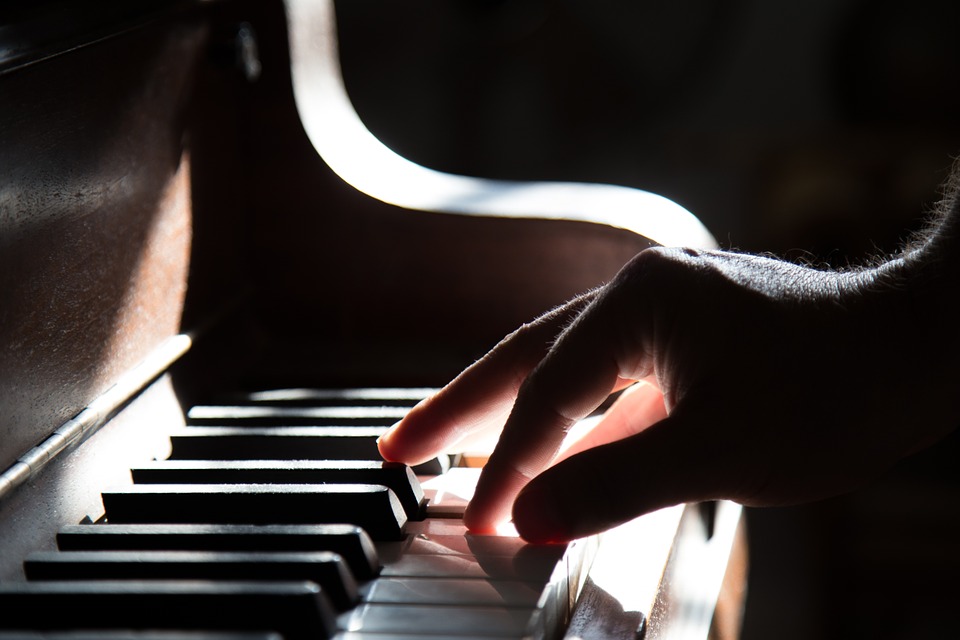
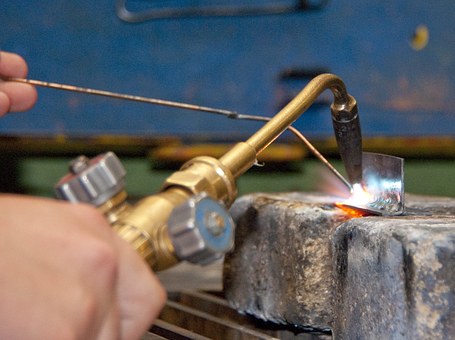
In just under an hour per day for a month, you could learn a reasonable amount about something or get good enough at something to then decide if you wanted to learn more! Piano enough to play Fur Elise, a language well enough to visit a foreign country, how to weld so you can make… anything. It just goes on.

Well, there are twelve months in a year, and how many in a lifetime? If average lifespan is 80 and we take just 50 of those years as potential months of learning, that’s 600 months of opportunity. Or 600 new skills we could potentially get good enough at in our lifetime.

Oh my, where have all my excuses gone now?

I was thinking about this when one of the guys in my men’s group told us a family friend killed himself on Tuesday. Booze was a big contributing factor. These are always tragic. People will say the suicidal was selfishly passing their pain on to the living. It’s possible. Though suicidal people who have lived through attempts tell us they thought they were doing everyone a favour. There are no good answers.

Fear Works: Just Not Well

Every day I run into folks who are affected by this scourge—attempting to narrow thinking by taking short cuts—using drugs and alcohol to kickstart adrenaline and cortisol in their system, not realizing that this IS their addiction. It’s not so much the booze or drugs, it’s these fear hormones which create an emotional state providing relief from the complexity of their existence.  While in fear, your focus is on survival, a much simpler scope, aimed at satisfying much baser needs.

And food and porn and gambling all do the same thing to a degree, using intermittent reinforcement to distract and narrow focus, attempting to gain a reward by way of a shortcut. Our eyes see out. But it’s here where the maladaptive breaks down: it’s like a dog chasing its tail. We never quite catch up.

And we don’t grow. Confidence wanes further for there is no competence in these.

There are no new skills to be found in that box of donuts, the next six pack of booze, the next shopping spree at the mall or the hardware store, the next pack of smokes or cannabis dispensary. You could argue there are skills to learn from the next porn clip you watch but that really depends how long you’ve been watching, doesn’t it?

The Search

What if we all realized this is what we were trying to do: narrow thinking. It’s our natural way of shutting out all the noise. Done right, it’s escapism with benefits. And it represents the only true way of meeting the need to live fully engrossed in the moment.

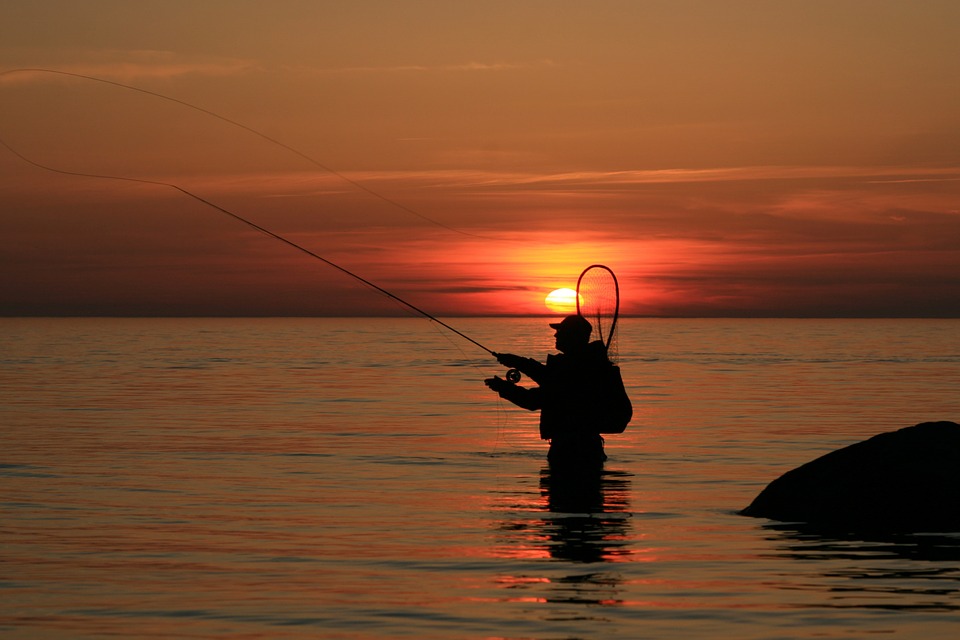
All sorts of things are like this. Watch any teenager who has mastered a video game at a high level. They get into a zone and if there wasn’t a clock on the screen and levels, they’d make time stand still. Look at their eyes, and they never leave the monitor. A friend of mine use to fly fish with such concentration that rather than go ashore to take a piss, he’d let it go in his neoprene waders and rinse them out later.

Neither of these extremes will kill you. Some of the other ways we narrow thinking can and will.  Yesterday I came home from a rather challenging week. Though I’m grateful to find myself alive every morning, I’m no more inured to the pain of life than anyone else.

Rather than go blow my mind with dope or booze, I instead sought ways to just calm myself and heal. Oh, I know there’s still pot kicking around here somewhere. And the beer store is a few blocks away. Heck, I could swallow a few Percocet, bumping up my eighth of a tablet dosage to two or three full tabs and I’d be nodding in no time.

And these would have left me hung over this morning, feeling dissonance for having compromised my pact with nature, knowing I was ungrateful for the life I have been lucky enough to win. These would have eroded my confidence, which in turn, would affect my competence. If I still drank I’d be sipping on fear and pissing out confidence. Hard earned confidence. This is the truth.

And that’s what meditation is for. No wonder it’s so popular. Even if you don’t meditate, a walk will narrow thinking just as well. Ten burpees is a pretty good reset. A run will kill off any anxiety attack. Perhaps I’m at an advantage because I have a slew of cognitive behavioural strategies I can implement to narrow my thinking. Well, these have come with practice. I also slept very well last night, something I had to practice. We build character, no one hands it to us.

Come to think of it, I had to learn to drink in a dysfunctional way too. In fact, I worked hard at it over time, just as I did with the rest of it, from dope smoking to heroin use. Gees, it took me years just to learn how to roll a joint. Cocaine definitely took some getting used to—fed my paranoia. I puked my guts out first time I did heroin.  All of these things took concentration and trial and error before I could successfully use them to… narrow focus.

When measured up against all these, it’s actually easier to learn to narrow thinking internally, by far.

Think of those times when you entered into a zone of competence, and remember how good that felt.

These days, when things get to me and I feel like I need a break, knowing the secret, the real impetus of my condition, that what really begs my attention is just to narrow my focus, I have other choices.

And in a month, looks like I might just have one more.

You could too.

CHRISTOPHER K. WALLACE

Advisor to Men, Counsellor at Large
at ckwallace.com

©2018, all rights reserved

Kaufman’s TedX talk:


FORMS OF BLISS


I once did time in a provincial reformatory for shooting a guy. It’s a bit of a long story but the gist of it was I was attacked from behind and beaten with nunchucks over a girl. Not any girl, she was runner-up Miss Nude Ottawa and a good friend of mine. I wasn’t even fucking her, then.

To shorten the story, the owner took a dislike to me sitting there with all the strippers at my table drinking and snorting lines with the girls. I ended up a little drunk with a high school buddy who happened to come in looking to see pussy. The owner  waited until the afternoon lull before picking a fight, then siccing the headwaiter on me from behind with nunchucks. I went down but not out and left.

I came back and shot one of them and tried to kill the other one. Fucker kept throwing beer cases at me and hiding behind people as I fired, until I had only one bullet left which I kept to cover my exit.

I got away but turned myself in a few days later once the cops had raided everyone I knew. I was holed up at a gal’s place who was not my girlfriend, being looked after. From there, I arranged arrest on my terms, after a hospital visit with my lawyer to sew up my head 48 hours after I was injured, something rarely done..

I got bail after a few days, thanks to my brothers and sisters stepping up to vouch for me. This despite my having not lived at home for several years. It was also the one time my folks were not in town I found out later. My eldest brother even pledged his motorcycle as surety for bail. I guess you could do that in those days. We used a lot of the “out of character” phrase, a mantra for some time afterwards.

At the preliminary, I was suddenly thrust into a waiting room at #1 Nicholas Avenue with all the people who were going to testify against me. So, I went downstairs with my gal to the coffee shop and bought about 30 coffees and sandwiches to serve my witnesses. While asking if they needed creamers or sugar, I had a chance to give them my side of the story, impressing upon them this was “out of character” and resulted from being attacked first.

Not only that, the guy who had hit me from behind and whom I’d shot, taking out his spleen and leaving a bullet lodged up against his spine, suggested we make a deal. He’d admit he hit me first if I’d testify for him later at a criminal compensation hearing. I agreed.

Whereas my lawyer had told me straight up I’d get at least five years, waving the book with the attempted murder statute under my nose, I ended up with a deuce less. That is two years less a day. Which means I was in a reformatory. No pen time this bit.

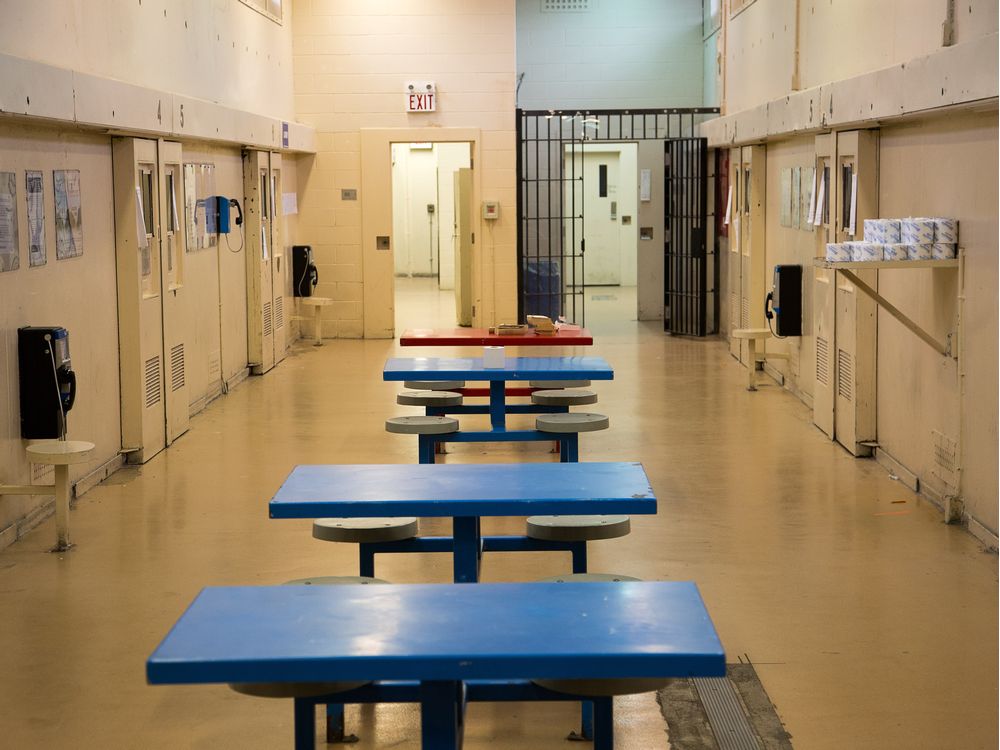
As I returned from court and was being re-booked into the county jail’s maximum wing on Innes Road, one of the guards was a little impatient with me as he demanded yet another search at the Max Rotunda. “Turn around, hands against the wall, spread’em,” he said gruffly. I noticed some broad looking at me and stared back her with contempt, thinking she probably liked to see me humiliated in this way.


photo by Wayne Cuddington/ Postmedia

Not an hour went by before I was called out of my cell to speak through the bars at the top of the range to this very lady. Apparently, she was our new classifications officer and wanted to hear my story. Prisons were being staffed by women suddenly in our rush to progress.

Of course, I told her it was all a mistake, that it was an overreaction on my part after being brutally beaten for no reason other than petty jealousy. I did my best to convince her it was “out of character” and told her about my jewelry and furniture businesses.

By the end of the week, I had buddies deliver letters attesting to my businesses and how I was needed outside to keep things afloat. I got out within ten days of being in. The guys on my range—many of whom I knew from the outside—couldn’t believe it. I left them the rest of the hash I’d smuggled in up my ass on the day I was sentenced.

That worked out well for a while. I was in a halfway house out on Riverside, with an apartment on Innes just a few miles down the river. Meanwhile, my buddies had rented a place further out the river for the summer. I bounced between the three places.

Peanut Haven out by Manotick it was called, and I rented half of one of the three cottages with my buddy Flo. Every morning at ten while at the halfway house, I’d dress in a suit and tie, grab my briefcase and go outside to meet my partner. He’d show up in our Cadillac dressed in jeans and a T-Shirt with bulging muscles. He looked like my body guard and we didn’t deny it. Then I’d either go deal dope one place or another, the time away barely causing a ripple in my schedule.

Sometimes, my partner had other shit to do so I’d drive the Caddy around and take care of business myself. It so happened I walked into a buddy’s place to collect some money one evening, just as he was being raided. I’d almost forgot about this until my high school reunion a few months back. Someone there reminded me they were there when it happened.

I knocked on the door and when it opened I saw he was being raided and ran. They caught me on the stairs and found my keys. They searched the block and tried the locks until they found the right one. My partner had left a few ounces of pot tucked into a construction boot in the trunk without me knowing. I was busted.

I remember the ride downtown in the wagon with the other guys. How I had to push my handcuffed arms from behind my back and under me, and how they had helped me get my legs through one at a time, so I was cuffed from in front instead of behind. I remember that.

I was returned to the county bucket and reclassified. I kept telling them it was all a mistake; the pot wasn’t mine and was left there by mistake. It was still, “out of character,” despite how it looked!  I even had someone else claim the pot as theirs. We took a shot at it. The guards started calling me “silk.” My poor classification officer gal listened patiently and told me she’d send me to the easiest place possible. I was shipped out to a minimum-security joint.

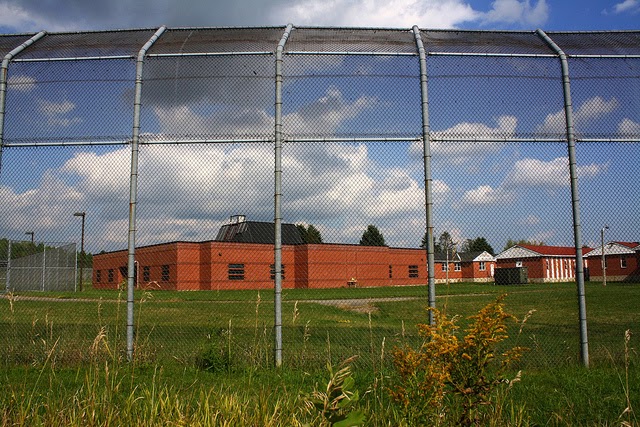
No sooner than I arrived at what we called Burritts Rapids, I immediately applied for a half-way house. I remember that interview with the warden. He called me a con-artist and reminded me of the silk nickname which had followed in my classification reports from Ottawa. He denied me outright and told me to do my time. I told him I was happy to re-apply again later.

I worked at it. The thing was, you could be denied and re-apply the next day. So that’s what I did. I was turned down over and over for transfer out to the city. And the food at the Rideau Correctional Facility, as it was known officially, was terrible. By far, the worst food I’ve eaten in prison and where I was introduced to hickory tasting coffee. Horrible, I found punishing.

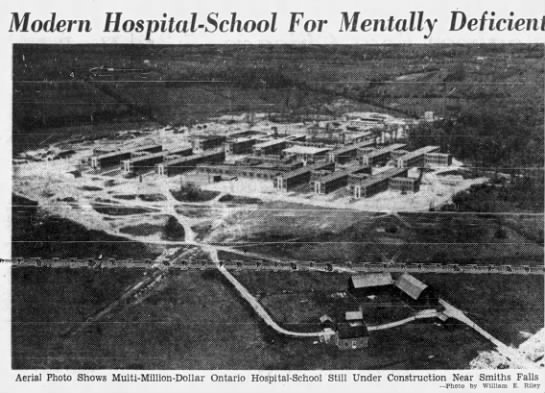
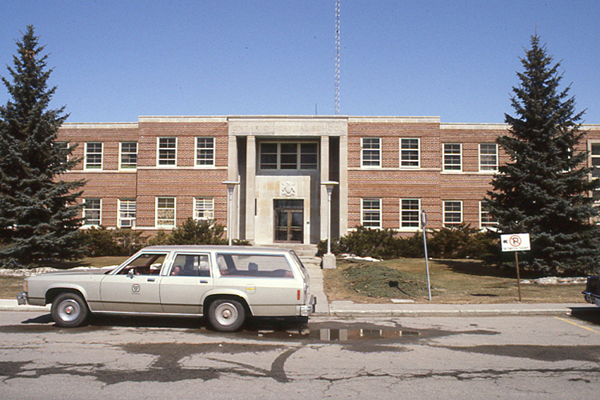
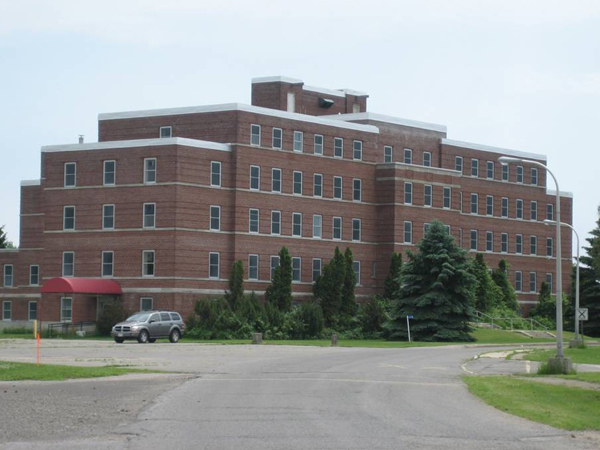
So I aimed for and won a day-job working at a local developmental hospital in Smith Falls. They had those at the time, since closed. I’d be bused to the hospital every morning and spend the day there working as a pool porter. I’d get a voucher where I could eat cafeteria food which was ten times better tasting than joint food. I’d also get to wear my street clothes and talk to women, good smelling gals. I could also swim in the pool if I wanted, with women lifeguards who worked there, and were nice to me! It was a good go, as they say.


It was there I saw what they used to do with all the kids no one wanted. There were kids wards and adult wards, male and female. They even had a series of cottage style buildings where some of the more high-functioning kids could live. I never met anyone from those.  Blind, deaf, dumb kids were dumped here by families, encouraged by doctors.

Autistic headbangers occupied whole wards, banging their hockey helmeted heads on the floor all day. Many were in diapers, toddlers who screamed and self-harmed in their self-soothing attempts, but some were older. None of those kids swam that I remember. Or if they did, I was sent to fetch them strapped in a wheelchair and brought them down one at a time.

Several wards held schizophrenics, separated into male and female. Those places were nuts at times, depending on when the meds had been given out. The male wards were tough. I saw attendants dressed in while smacking people in desperation when they were attacked, or someone was stealing an ashtray or a smoke. It was an angry place when meds wore off.

Many Down Syndrome kids and adults lived there. Every developmental issue was represented at the Rideau Regional Centre. If you had never encountered anything like this in your life, the only thing I can reckon it to is the freak shows at the ex. In those days, families gave these kids up to the state, to be institutionalized. The place had to house a thousand, I bet.

Whole wards of alcohol damaged individuals, Korsakoff Syndrome and tardive dyskinesia had a place there. Wards with people in straight jackets for their own protection and the protection of the staff. The developmentally delayed child who lives becomes a developmentally delayed adult in a place like this. Without good stimulation in these warehouse-type institutions of old, it becomes a horror story, far beyond Steinbeck’s, “Of Mice and Men.”

Everyone smoked in the place, and during the day it had clouds of smoke in every hallway and in every dorm, cigarette butts everywhere on the floor. I remember a kid who had really bad brain damage from a car accident. He was one of my first pool-porter patients. Because of him, I learned to walk on the right side of my charges with my left hand on the back of their neck and my right hand folded across my mid-section and holding on to their right forearm. This way I could pivot them one way or another in a hurry.

Big and tall and you could tell, once good-looking, Stephen was pica. And he was addicted to any stimulant, not just tobacco. He once got away from me and ran into a ward and grabbed their instant coffee and started to scoop it into his mouth by the handfuls. The attendants freaked and physically intervened and taught me how to hold on to him.

He’d run through his weekly allotment of smokes in a day or two and nic-fit the rest of the week. He’d gesture to me, two fingers tapping his mouth slowly while saying in a deep and clearly brain-damaged way, “mokee? mokee?  moke?” with a twinkle in his eye. Sometimes I’d oblige him, and become his new best friend. He could answer questions about his accident, but it took a great deal of effort. I’d bust his balls about how all the girls must have liked him.

I’d be walking him down the hall to the pool and I’d sense him looking at me out of the corner of his eye, sizing me up, getting just slightly more anxious. First time it happened he broke free and dove upon a cigarette butt on the floor and gobbled it down before I could stop him. After that, I see him start to twitch a bit and look ahead and spot his target, taking precautions.

In one of the male adult wards lived Birdman. Staff would get him up in the morning and dressed. Soon he would strip naked and sit up on the window sill in a crouch for hours and hours. His whole body, from head to toe, would turn blue from the constricted blood vessels while his tongue would dart in and out like a lizard. His penis would hang down over the side as well,  a vestigial long dong of blue. He was mostly catatonic, staring off into space.

I happened to be there when a kid with cerebral palsy sued the government for the right to make his own decisions about where to live and how to spend his monthly stipend. I can’t remember his name (Mike?) but he won in Ontario court while we were all pulling for him.

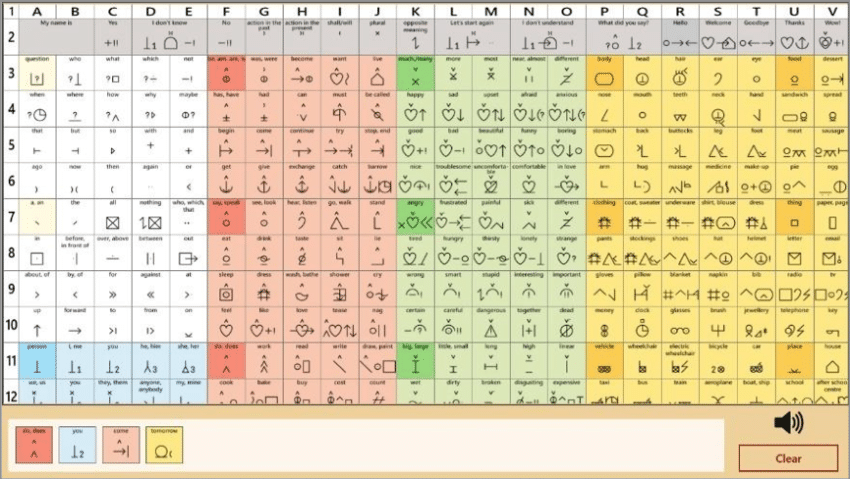
He used a Bliss board, and I had several wonderful conversations with him in his wheelchair, a big board of symbols in front of him like a table, and him awkwardly but effectively using Blissymbolics to communicate. He had a goofy smile and an intelligence in eyes that twinkled easily. I gave him my best props and pep talks as he waited his own reclassification. He was an amazing guy, really inspiring.

Perhaps it was these kids and adults who first awakened in me a dormant caring I’d suppressed on the street for many years. They were doing time like I was, society’s refuse, shuffled aside and locked away. I was a prisoner and so were they. We were on the same side, with me at Rideau Correctional Centre, while they were at the Rideau Regional Centre.

In 2013, the Ontario liberals awarded survivors of the Rideau Centre 20.6 million. David McKillop, then 63, placed there when he was just four years old, was the representative plaintiff. “I got beaten up by staff, sexual assault, everything… You couldn’t do anything about it… You couldn’t say anything about it at that time” he told the CBC after the settlement. “I still dream about memories about it… We’re going to get help for that too.  I wanted to make sure the government paid for it, what they did to us.”

Bless your heart my man. Seeing what I saw late 1970s during the day when it was at its busiest, I can only imagine what it was like at night. It’s horrifying to think of now.

It was later while studying behavioural sciences in the late 1980s where I was exposed to the Cornwall project, an initiative to keep developmentally challenged kids with their families with the support of the community. I attended “People First” meetings and became friendly with some of these charming ambassadors living with their families of origin, or in small community-based housing. It was better than what I saw by far.

We’d learned by then the more stimulation challenged kids gets in the first few years, the better their chances later. It was also admitting the best place for a kid is usually at home. At the same time, it was forcing families to take greater responsibility for their offspring, despite the problems, but with support from the state. With that, the stigma of the retarded child began to disappear. I like to believe I witnessed that turning point when my little buddy and his bliss board won his court case.

As for me, I kept applying for release and getting shot down. Each week or two, I’d appear before the warden flanked by two guards and make my case. He’d say no, and compliment me on my improved story, with a smirk on his face. Off I’d go to my dorm.

Then a miracle happened: a prison strike. The Canadian Army were called in to man the security of the province’s prisons. And you guessed it: anyone with an application for early release or transfer to a halfway house in town was automatically approved.

I was out again. Fuck you warden.

A few years later, I encountered the guy I shot at a bar, Billy’s on Somerset where I’d taken my new gal for an afternoon beer. He was still dragging one foot as he walked and thanked me for not killing him. Turns out because he admitted he attacked me first from behind in the preliminary hearing transcripts, the criminal compensation board turned him down for any award. Tough break lad.

Besides the kid with the Bliss board, and Stephen the pica, what haunts me most from those times was pulling up every day at the Rideau Regional Centre in our prison bus and seeing a big black hearse at the back of the place. I don’t remember not seeing one there in the months I was privileged to work outside of prison among these brave souls.

Sometimes the worst places teach you the most. Without contrast, what would we know about bliss?

Stay powerful,

Christopher K Wallace
© 2018, all rights reserved.

www.advisortomen.com

https://www.facebook.com/groups/advisortomen/

17 OCTOBER, 2018, CANADA LEGALIZES


46 YEARS AGO
It has been a long time since the Ledain Commission of 1972. That’s when the Canadian gov’t decided it would reach for its own version of truth despite the bullying coming from our neighbours to the south.
 
Turns out, in typical fashion and a testament to the integrity of Gerald Ledain, commissioners Heinz Lehmann and Peter Stein voted for outright legalization. The lone female commissioner, Marie-Andree Bertrand, recommended gov’t control cannabis like it does alcohol.
 
In any case, to my 15-year-old brain, it was vindication. Furthermore, I expected, as did most of my friends, that legalization was imminent. The idea of respecting laws against cannabis given the learned panel’s findings seemed ludicrous and unlikely.
 
I first bought a nickel of brown Lebanese from the guys who hung around in front of the Heron Park store on Heron Road. Bill Mason ran it then and he tolerated up to 30 punks loitering in front of his corner store cum restaurant.
 
With newspaper money on top of lawn cutting cash, I was rolling in it for a kid of just twelve. And so, probably with Cathy Seward or one of the other gals from my neighbourhood (I don’t remember) I cut tiny pieces of hashish and droPped the chunk on a cigarette, inhaling whatever wafted towards my nose and mouth.

SMOKING CULTURE
I’d had permission to smoke cigarettes since I was eleven. My two older brothers and I were ratted out by one of our friend’s mom from up the street. She made sure to march right down into my living room and confront us with my parent’s cooperation.
 
Most of the heat was on my eldest brother. He was the leader of the brotherly trio at the top half of our family of nine. I missed most of his cross-examination, as well as the accusations against next eldest brother, and the subsequent adult interlocution that came about from this information.
 
All I remember is coming into the living room to see what the fuss was about and there she was in her splendor, Mrs. Gravelle, making sure my parents knew I was in on the outlaw’ing. “Chris was supposedly smoking too,” she said to my folks while eyeing me with one brow cocked. For a woman of good looks, this made her particularly ugly and my impression of her remains so to this day.
 
Of course, by age twelve, in a family like mine, I knew it was best to deny everything to the end no matter the consequences. I’m not sure how it was the wicked woman from up the street finally left, but by the time I met up with my two brothers downstairs, we were in full crisis mitigation.
 
I think one said they found some in his underwear drawer, but the main stash—the carton—was still up high in a tree over past Brookfield Gardens, the next neighbourhood beside us, and a ten-minute walk.
 
So, it was to my surprise a verdict was handed down later. The court (my father) had reserved judgment. Knowing my father better now, I know full well he rendered his surprisingly merciful answer in protest at Mrs. Gravelle’s snooty self-righteousness. As a diplomat, he would have listened and agreed, recognized her virtue as a front for cruelty, and hustled her out the door.
 
Then he gave my brothers permission to smoke Intrinsic Hemp, saying, he was allowed a pipe-full of tobacco per week at our age so that was our allotment. My mother was the one who told me the news. I implored her to be included in the decree. She ushered me in front of my father and prompted my request for permission. And I got it. I finagled the equivalency principle, one pipe full of tobacco OR one package of cigarettes bought with my own money. He’d never be able to monitor it.
 
I was headed to grade seven in September with permission. I’d arrive at school with a pack of Export A’s in my t-shirt sleeve. Later, I switched to DuMaurier because they were milder and the girls like them better.
 
The reason I mention this is because this made me a cool kid, sort of. And so, I was invited to do all the bad things first. And a year later, one of those things was trying out this dope smoking thing. And that’s pretty much how I smoked it: pin tokes, hot knives, or a pipe. It wasn’t until I was around 17 that an older guy, Doug, patiently taught me how to roll a joint properly. Of course, I got good at that too.
 
I smoked it pretty much every day for over forty years. When I dealt hash a few years later, I’d smoke it during the day. All through my gangster years smoking hash was normal, perhaps like smoking cigarettes was for someone else. I can definatly tell you the best place to find the right vape juices and vaping sticks. Just click here https://dragonvape.ca/pages/vape-shop-near-me-best-online-vape-store-in-canada.
I gave up cigarettes at about age eighteen or so and started again in my late twenties for a few years before quitting again. For decades though, I drop a curtain down on my day each night with a joint or one of the newer hqd vapes.
 
I’d lived through heroin and cocaine addiction. I’d pulled myself off the streets and returned to school. I quit for a couple of years then but eventually drifted back into smoking at the end of the day. It was my nightcap like others might enjoy a glass of wine.

EPIPHANIES
It was my first son who provided me with the epiphany I needed to get off the streets and stay out of prison. And it was my second son who helped me solve the riddle of addiction.
 
When not much is happening in life, times when things are on auto-pilot, you can smoke every day with not much consequence. But let the shit hit the fan a bit and that’s where the rubber hits the road on personal mettle. Those are times when your balls are needed, no ifs, ands or buts. When a man is called upon to serve his family, being stoned cannot be an excuse.
 
It’s then I started to notice more carefully my symptoms. I began to decipher the actual physiological effects and scrutinized the consequences throughout the whole chain of my being. I can explain these another day.
 
I had a boy in Sick Kids, a missus staying at Ronald McDonald House, a three-year-old daughter to look after, and a business to run. It’s how I saw the limitations of my drug use. It was only then I realized it was costing me a decent percentage of my focus and power as a man.
 
Beginning to come out of my fog, I saw I’d been living a compromised life for a long time. Fucking decades. I’d been incrementally getting better but at no where near the rate I could operate at, not by a far margin.
 
I’d been going sideways for most of my life because LeDain and the rest of them said it should be fine. It wasn’t.

CONSEQUENCES  
Now, don’t get me wrong. I think it’s mostly none of the gov’t’s business what we do with plants we grow. I remember an old Indian guy (from India) who grew a few poppies in his backyard. From these, he’d make a little opium and use it in a tea to help his aches and pains. His arrest made the papers. Gave him time if I remember correctly. I’m against that. I think it’s overreach and a tyranny worth resisting.
 
It’s just today it’s legal in Canada, forty-six years after we said it should be, and now we’ll have to learn what I learned. Because, I smoked it most of my life and I know intimately where it takes us.
 
My concern is this: we’re about to see a collective drop in confidence all over the land. More guys going sideways. More kids, more adults, more women and men with a bad case of the tomorrows. Later, they’ll say. Smoke another one.
 
Because smoking dope kills confidence. It does this because it puts the body into a fear state. And it’s the body where feelings reside. You cannot be afraid on any level and be confident. Mutually exclusive things they are. One or the other, not both.
 
Confidence is the stuff that takes thoughts and turns them into actions. Kind of important. In fact, critical.
 
So, I’m glad it’s finally legalized. But rather than reading exclusively about the latest cannabis stock bonanza, or the latest merger, or the news of another billion dollars being invested, I’d like to see some balance. Where’s the other side?
 
Tonight, I read in the National Post about the issue of excise stamps, which must go on every package of cannabis shipped, and how difficult it is these are provided with numbers but no glue on the actual stamps, so the pot manufacturer can more easily affix them to their products. Like, fuck off eh? Doesn’t anyone else realize the insanity of devoting newspaper space to this trivial bullshit?
 
Where is the comparisons to jurisdictions where it is legal? What’s the effect on addiction rates, homelessness, accidents, teenage use, etc. etc. I see news about investment and some news about how the cops are being paid off with new duties, chipping away at liberty with greater powers out on the road.
 
The executive branch and the judicial branch serving big business. That’s what I see. I think it’s shameful and I don’t have a good feeling about this. I’m not against it but this is a steamroller. No one is getting in the way, no one.
 
In the 90s, feeling burned out myself, I learned to grow pot. In no time, I had a bunch of places on the go and learned to make great hashish from my raw product. In fact, I’d make what I called BC Camo, which one French chick would call, “le hash qui assome,” i.e. knockout hash. I still have my screens and hash press.


A couple of years ago, missus said she like to smoke the odd bit with her sister. So, I grew her a couple of plants. She hasn’t smoked any. I keep giving it away since I don’t smoke it either.
 
Two weeks ago, I made some hash for a friend. I tried to smoke some and it’s just too fucking killer. Can’t do it. So, I have this big ball of hash lying around for when guest stay over. That’s how it was back in the day, back when I first used hashish socially while living on my own.
 
If you came to my house in the 70s, often in the 80s or parts of the 90s as well, as you left I’d press a piece of the good shit into your hand so you could smoke it later. There was a nice ritual about it. It was a small act of kindness, or of largesse and pride. I suppose I’d do it again if you come to visit.
 
But what I’d like to see is a rational discussion of some of the other parts of the cannabis story. I knew a kid named Mikey who got so paranoid from drugs, mainly cannabis, that he got early onset schizophrenia or something. He jumped out a seventh-floor window.
 
I hear enough about how it cures everything from the common cold to cancer. Or that CBD oil is the best sleep aid made. What the fuck is wrong with sleeping without any aids? Nature didn’t make it so you needed a cannabis derivative to get to sleep. You know I have an insomnia course right?
 
In any case, it’s the life gone sideways I am concerned about. It’s the confidence we lose from daily dope-smoking that’s risky. There’s plenty of weakness already in the world. There’s lots of things that can turn a man into a docile lamb, so he hangs up his balls and acquiesces to the vagaries of life.
 
Meek and mild is just the way the powers that be like to keep the population. Go visit an old-age home and watch the zombies there. Visit a grade school and the boys are on Ritalin. How many of us can see our doctor and not leave with a script? Now they have legalized low confidence and indecision for everyone. Nice.
 
If ever there was a time to buck the trend, to not follow the crowd, this might be it. Confidence is your juice, don’t compromise it for anything.
 
Don’t let this one get you.
 
Stay powerful.
cw

https://advisortomen.com/

PARENTING SIMPLIFIED FOR MEN


PARENTING SIMPLIFIED FOR MEN

Kids need to orient towards a parent.

It is how nature made us.

If that orientation is broken or weak, your children will orient elsewhere. That’s how it works.

It’s just like a parent-less baby duck or goose whose mother is run over or killed. Rescue one and it bonds with a human (or a doll or a cat or a dog), imprinting and following them around as if they were its mother. You don’t want that.

Video games, drugs, risky behaviours, poor choices in friends and an over-reliance on peer groups are some of the ways a kid or teen will make up for a lack of connection with a parent (or parents and/or family).

By the way: what the heck do peers know? In general: not much. It’s scary how little.

Orientation is often the issue when kids go off the rails. And, after age 14, it becomes more difficult to maintain parental orientation as time goes by. Can you reclaim orientation? Yes, indeed you can.

Why? Because teens want desperately to be rescued from themselves. Desperately.

They are born with a sense of justice and can compare your family to the families of their friends. They know who is happy and who is not. They can see what works and what does not. They crave love and attention. ALL communication is a bid for connection.

So the heart of parenting is connection. It’s worth repeating. It keeps it simple. The key question to ask your self is this: Is what I’m doing going to increase connection… or weaken it?

If it increases connection, you are probably doing what nature intended. If it weakens or severs connection, that is wholly unnatural. Unnatural, I say. It goes against the natural order of things.

Ask yourself this connection question often; make it part of your approach.

To me it’s ALL about connection. Focus on connection right from the start. When parents realize it’s really this simple, many aha! moments ensue from its simplicity. Connection is surface simple but vast and deep in practice. The best concepts are like that.

To connect, you need time. Not “quality time” so much as just time spent in connection. Safe, secure, predictable. The need to belong is universal. It’s largely what drives us in life. Ostracism is the real scourge of mankind.

From connection, the child will feel “valued.” Feeling like you matter to someone or a group of people is at the heart of attachment–our primary psychological need.

Connection’s opposite is loneliness. We do a lot of messed up things out of loneliness. How many of us have been in a group of people at some point in our lives… and felt lonely? It sucks.

Imagine a child or teen feeling lonely while in your house? As part of your family? Happens all the time.

From connection and time and a sense of value, you can coach a child or teen to anything. What you want to teach them is self-discipline.

I don’t mean bootcamp discipline. Rather, the ability to delay gratification… is the single best predictor of a successful life.

Intelligence helps a person live well but the advantage stops at just above average.

It’s self-discipline that counts.

Know any intelligent losers? Of course you do. We all know plenty.

Know any self-disciplined losers? Doesn’t happen. In fact, the two are opposites.

Remind yourself that children desperately want to be parented.

Calm, steady, and authoritative parenting instills confidence and a sense of safety in children. It makes them feel like they matter.

It’s your job to keep the kid alive and socialize them. Use connection far more than fear. Use consequences so children see there is a price to pay for going against what the parent thinks is the priority. Use the minimum force necessary. A parent should be able to outsmart their kid. And if connection is lost, regain it as soon as you can.

We could talk about how feminism is ruining the cultures of the western world. Dare me.

Or how the banking system uses interest to create scarcity and competition; its unrelenting need for growth forcing more parents into work to earn for their families. Double dare me.

But in the end, it misses what’s important. It’ll be the rare person who gets to 80 and says they wished they worked more or took up yet another cause.

Very few get a diagnosis of terminal cancer with months to live and wished they had a Ferrari.

No. Time and again, in the end people wish they’d spent more time with their friends and families, especially their children. Connecting with loved ones, folks. Look up the Grant Study. It’s all about the love.

So just focus on connection. If you get that right, most of everything else takes care of itself. By putting connection first, everything seems to fall into place. It’s nature’s way.

Here’s a pithy quote:

“As long as we feel safely held in the hearts and minds of the people who love us, we will climb mountains and cross deserts and stay up all night to finish projects. Children and adults will do anything for people they trust and whose opinion they value.” –Bessel Van der Kolk.

Find it early, find it late, you must find love, I like to say.

We must all find love, and it starts with family of origin. That’s you. Ideally, it’s where we learn how to love and be loved. This must be part of your legacy to your children.

Connection is your key.

Stay powerful, never give up
cw

© CKWallace, 2017, all rights reserved

BOOK A FREE DISCOVERY CALL WITH ME HERE

https://advisortomen.com
https://ckwallace.com


Book I recommend:

Hold On to Your Kids: Why Parents Need to Matter More Than Peers

A QUESTION OF SPIRIT

an essay by Christopher K Wallace

We don’t often talk of spirit when discussing substance use. Go big or go home seems to be the order of the day: all-in belief or nothing. I suppose this might be due to our physiology. After all, our eyes see out. We should be forgiven for seeking answers to big questions out there somewhere. As if looking to the heavens will reflect some perfect truth we can use to guide our actions. There’s merit to this: it often does.

But first, let me ask you something: Have you ever been afraid? Where you momentarily had the wits scared out of you? What happens? 

Your breathing shallows, your heart rate increases, blood pressure rises and thinking narrows as you focus on escape or resolution. We all know these symptoms as classic fight or flight. Now, think of what happens after you drink a couple of beers or smoke a joint or take any other mood-altering chemical. Sure enough, it’s the same thing: breathing shallows, heart rate goes up, blood pressure rises, and most importantly, thinking narrows. Using these substances puts your physiology into a fight or flight state.

The body doesn’t distinguish between medicines; moreover, it has no idea it’s “just a joint,” or “just a couple of beers,” or “doctor prescribed.” It’s all the same, considered as a threat to your system from foreign poisons, where your body is put off-balance, out of something called homeostasis. And once in this state, the body counters by doing everything it can to restore itself back to normal, including engaging the sympathetic nervous system to help.

Perspiration, breath, heart rate, liver and kidneys are all put on overtime use. Adrenaline and cortisol course through your veins in preparation for fight or flight—or freeze or feint, the other two Fs of the 4Fs, and often overlooked when your being is under attack. Meantime, the feel-good neurotransmitter dopamine provides cover for the habituated user, making them think the buzz means everything’s OK. It’s not.


Let me give you some examples.

If you think of your first experiences with any of these substances, you may recall how your body and mind reacted with fear. It could be dizziness or vomiting from alcohol use; or an intense fear from using cannabis. Some people say they don’t get off on pot the first time they try it, that’s how good your body is at countering its effects. People stick with it and adapt; eventually, they feel it. Cocaine is another one which induces intense fear. And for some people, first LSD use is the scariest thing ever, resulting in a “bad trip.”

Remember in high school being over at that one friend’s house with the cool parents, where a garage or basement became a drug zone after school or on weekends? Maybe you passed the bong around until you were all pretty much unable to speak. Oh sure, maybe someone says, “Hey dude, do you think your cat’s stoned? Do you think it knows we’re high, man?” We all thought we were buzzed; when in truth, we were immobilized by fear.

Nietzsche said, “All credibility, all good conscience, all evidence of truth comes only from the senses.”

The brain relies on what comes in from touch, taste, smell, hearing and sight to log onto our world. Experience is derived from the senses; therefore, undermined sensory inputs means compromised experience. Alcohol and drugs create a fear response in the body while using dopamine to trigger your reward centers, keeping awareness of fear symptoms at bay. Beneath the surface, a tug of war is going on while you sit and get high.

The brain and body are not separate entities. In fact, your whole physical being is the universal address of your existence. As such, feelings live as equally in the body as they do in the brain through the tenth cranial nerve. Known as the Vagus Complex, it connects your brain stem to most of your internal organs, including the heart and gut.

Feelings come from experience. Think of what kinds of feelings a baby has compared to an adult. As the baby matures, it’s capable of a variety of emotions in increasing complexity as its experience grows. And, feelings are predictive, not reactive as we often think. Much of the brain works this way. Let me explain.

Your brain predicts your sleep and wake cycle and builds up levels of melatonin to prepare you for slumber. It predicts the eventual need for food by signaling with the hormone ghrelin well in advance of meal-times.  Even your visual cortex receives inputs from the eye, but also has neurons running the other way, from the cortex, which carry predictions affecting what you see. At any moment, beneath awareness the brain predicts what state is required and scans your bank of previous experiences for matching emotions in preparation for what’s ahead.

In this way, science tells us we live emotionally and use our thinking brain to explain things after the fact. Emotions rule because they occur milliseconds faster than we can think, acting as our early warning system. The line between reality and imagination blurs during substance use, while the body tallies the score. The brain’s memory doesn’t discern between stoned or drunk and straight. It’s all just input.

After decades of smoking hashish, the last ten or more years as a nightcap to my day the way others use a glass of wine to unwind, I noticed (and for the first time really took stock of) my physical symptoms. Then I asked myself this question: “Can you be afraid and confident at the same time?” Most people’s gut answer to this is to say: no, it’s one or the other as the feelings are mutually exclusive. If you are in fear, you may still be in action, but it is unlikely to be with much confidence. It’s more likely you are going through the motions, rather than giving things your best.

Moreover, if emotions rule my actions, without me even realizing it through my databank of recalled events, I had to ask myself what compounding effect substance use was having on my confidence?  I’m talking about real confidence here, the kind gained from trial and error. Sometimes, it comes from taking a great leap of faith; other times, it arises from a series of small victories adding up to a quiet competence. Either way, it’s always hard-earned.

Math is like that, so is spelling or writing. Even riding a bicycle results in a lasting physical confidence, whereas doing something like public speaking for the first time can vault a person into a new sense of self. Think of the first time you climbed high into a tree or jumped off the high diving board at the local pool. So much of our progress in life is because of these quests to add to our personal repertoire of skills and emotional durability. Life usually gets better when we get better at life.

The times on weekends where I’d drink a half-dozen beers on a Friday or Saturday night, or both, I’d find not much got done during the day. I would also fail to connect with my wife and children in a meaningful way. The things I’d planned to do on my days off were often put off or started but never finished. Once, I built half of a fair-sized shed, became unsure of my plans, so just dismantled it. I stacked the wood behind my house, and never returned to the task. Confidence.

And small things, ordinary demands a man rises to meet during life, were not being handled with any urgency. It didn’t take much to put me off my game. I came to realize with every beer I drank, what I was really doing was sipping on fear and pissing out confidence. Every haul on a joint meant inhaling more fear and exhaling a critical part of my power.

Who needs this confidence thing anyway? Turns out, we all do. I’ve heard it said confidence is the stuff we use to turn thoughts into actions. This has wider implications. Let me ask you, “How then, do you live confidently when you regularly subject your body to a fear state which cannot be resolved with action?” In my case, when I was honest with myself, I had to admit I could not.

I’d work hard at gaining confidence, and yet, doubt would creep back into my life. It meant I didn’t invest in all the technological wonders that have arisen in my lifetime and which I could have easily participated in. It meant I took jobs which kept me safe. It also resulted in me not standing up for myself when I should have. Overall, it kept me playing small. It was two steps forward, and one step back. Sometimes, admittedly, it was just one step back. Though, I had all the trappings of the middle class, I was living a charade.

I’m not talking about occasional substance use. I’m referring to habitual use, from more than once per week to daily consumption. Under the fear-load this engenders in the body, assuredly, confidence wanes. In time, this steady assault on confidence can become something called “learned helplessness.”

That’s when you tell yourself a story about confidence. You may realize it’s for other people, something off in the distance, far from your existence. Or, more likely, it’s something we don’t talk about at all because it means we have given up aspiring to becoming something more. In a measure, we abandon our dreams.

Can you live this way and survive? Sure. You can get by. But even now you’ll realize it’s not what Mother Nature or God had in mind when you defied the odds by beating all those other sperm to the egg, when you won the race of life. Damn it. This was not supposed to be our destiny. The Universe wants more from you, from me, and confidence is key to allowing our spirit to fly, to soar with the eagles in full view of the sun.


But here’s what happens. Twenty years may go by. If you’re lucky, one day you’ll have an epiphany like I did.  You may realize you have not lived those twenty years at all. Instead, what you have really done is lived one year…twenty times. 

Let that sink in a bit. I had to soak in it for a while.


Why did I need this jolt of fear everyday? When I searched a little deeper, it dawned on me. I’d been creating fear like this since I was a kid. I figured out my family of origin likely set me on this path through its uneven attachments and unpredictable violence. Paradoxically, I was a fear seeker. Early on, fight or flight had carried the day for me and I survived, thereby searing its red-hot brand upon my soul. I lived by it. It meant life or death to me. If there was no fear in my life, I’d seek it out, create it out of thin air if needed. As I recalled the decades gone by, I could see a significant part of my time was spent re-enacting a deep need for fear. Imprisoned this way as a little boy, I carried these emotional shackles into adulthood.

Fact is, I meet fear at an entirely different level than most people. I have been strangely attracted to it, mostly beneath my awareness. It’s as if my body survived it before and needed to prove it could survive it again. I was stuck in a loop. Perhaps it’s why I stand up to bullies. My first question when encountering people is to unflinchingly think or say, “How can I help you.” It’s why I act best when I’m protecting my tribe, a brother’s keeper. My self-concept silently commands: “Stand aside, this is for men.” It’s because I can, capably, fearlessly.

Yet, this was the gift I’d allowed to wane over time. The difference between how I saw myself and how I really acted caused me untold dissonance. Once I understood why I continued to use drugs and alcohol, and how this diminished my confidence, the allure soon faded. I must live true and free. I have a destiny to fulfill, a pact with the universe: to let loose my spirit as a guardian to others. When honourable men use their power for good, in service of themselves and those around them, life becomes meaningful.

This, then, is the key to our freedom.

More questions I asked myself: How much of your confidence are you willing to sacrifice to keep a fear habit for another year? How much more of your spirit can you compromise? We think we have time: we don’t.

And so, it was for me. I had been using drugs and alcohol to narrow my focus. Instead of finding my personal tract, where my spirit could expand and answer the universe’s calling, I was running from it.  Narrowing my focus was a good objective, but not this way. I have experienced the zone before: it’s a place where a mighty congruence of my ability and drive and concentration allow me to feel as if I am forcing time to stand still. It’s a place of command, where my spirit lets loose and flies high. And there, fully aware now, filled with meaning from serving myself and others and connected by purpose, I am set free: powerful once more.

It was Oliver Wendell Holmes Sr. who once said, “Every now and then a man’s mind is stretched by a new idea, and never shrinks back to its former dimensions.”I say to you then: let this be one of those times.

Stretch, my brothers and sisters, and we will find each other up there.

CKWallace, Advisor to Men @ckwallace.com
©2018 all rights reserved

References:

Alcohol, aging and the stress response,  See Spencer and Hutchison (1999) Alcohol Research Health 23 (4) 272-83
And Allostatic Load, Bruce McEwen, PhD in Neuropsychopharmacology, Nature.com

(Nietzsche quote, “All credibility…”: Basic Writings of Nietzsche (2011 edition), Modern Library – ISBN: 9780307786791. Also, Beyond Good and Evil, 1886, p. 134)

(Emotions live equally in the body and brain: See Stephen Porges, Polyvagal Theory, 2011, Norton Books ISBN 978-0-393-70700-7)

(Emotions are predictive: See Lisa Feldman Barrett, How Emotions are Made, 2017, Houghton Mifflin, ISBN 978-0-544-12996-2.

And The brain is predictive: Diane Kwan writing in the March Scientific American issue, Self-Taught Robots, has a nice graphic about the predictive brain citing How Evolution May Work through Curiousity-Driven Development Process, Pierre Yves Oudeyer, Linda Smith is Topics in Cognitive Science, 2016)

(Holmes quote, “When a man…”, See Oliver Wendell Holmes Sr., Autocrat at the Breakfast-Table, essay series appearing in Atlantic Monthly (1857) and book (1858))


Christopher K Wallace, B.S.T., C.H.

Advisor to Men

© 2017 and 2018 ckwallace.com

WHERE MEN EXIST

WHERE MEN EXIST

Sometimes good lessons come from the most mundane experiences. It’s usually moments with few witnesses where little miracles play out in our lives. It’s especially true in matters of the heart. It’s these times I remember: find it early or find it late, but we must find love.

My boy shit his pants today. I know, not exactly something to write home about, but in so many ways it was. Poor kid. Missus kept him home from school because he’d been a little worn out yesterday. I’ve learned not to question her intuition regarding her boy. She’s usually right.

I heard him first from about 75 feet away, near the double outhouse just past the rabbit pens. It’s on the edge of the cut lawn, if I can call it lawn. It’s also where missus has a couple of nooses tacked up against the overhanging roof of the old double-seater outhouse there, just so she can string up chickens.

As usual, I was killing, she was processing. These were meat birds she’d let live long past their due date as an experiment. She wanted to know if she could turn them into egg layers. She got two or three eggs out of one of the four birds, total.

She’s from the city and all this is new to her. She can take the time and learn on her own in whichever way she wants as far as I’m concerned. If she wants to allow an 8-week meat bird to live to 16 weeks just to see what happens, she can.

Though, I’d been reminding her to whack these fowl for a month, she resisted. Today, she relented, if I do the “coup de grace.” Fine by me, men are used to doing the dirty jobs. We’re handy in that way.

In any case, I’d just strung up the last one and done the deed. The bird was flapping wildly and flinging blood all around. Missus likes me to leave them bled and with the head off. I oblige her, she does the rest.

And today, as that final bird’s head came off, I heard his cry: “Daddy, I pooped my pants!” I wasn’t sure I’d heard correctly and since he was a way across the yard, past the rabbits and the pond and the burn barrel and up on the back porch, I got him to repeat it.

“I pooped my pants,” he repeated, along with an explanation about what happened, but I couldn’t make it out from that far away. I just needed him to confirm what I thought he said. He did. He had indeed shat his pants—or had an accident if you prefer. His ma was elbow deep in blood and feathers. It fell to me.

Instructing him to not move, not an inch, I put away my tools and drove the Mule with its now empty cages back over to his side of the grass. I parked and put away the hatchet and utility knife, remembering in my haste to not take the chance of leaving them out lest I forget about them.

I found him impatient and concerned, standing at the top of the steps on the porch, and full of reasons. On mostly a liquid diet because of a collapsing windpipe, he has only recently began to eat fuller meals. I suppose that means his readiness in such a case is still in development.

He’d tried to make it, running from “over there,” pointing to where missus was plucking her chickens under the crab apple tree. He’d been hanging around her up the tree while she worked and couldn’t get inside on time.

Regardless of his condition, I knew precisely what to do and what to say and I’ll tell you why. I remember shitting my pants as a boy about his age, some 55 years ago.

MY FIRST MEMORY
It was in Halifax, Nova Scotia, and I was probably 4 but could have been 5. Ma had ten pregnancies in 12 years, so by the time I was 4 or 5 there were lots of us around. She was taxed to the limit. The brother two up from me was bronchial asthmatic, then she lost a girl before me—which she later blamed on painting the stairs with lead paint—and the sister after me was sickly. If I was 5 then there would have been at least a couple more in diapers and likely ma would have been expecting.

As a sensitive kid, I remember toilet training was traumatic under the circumstances. I was a disappointment and took more years to learn than my mother would have liked. Poor ma, she did her best, but I wore her patience out soundly.

But, that day she was nowhere in sight. Who knows where she was, maybe at the doctors, maybe giving birth? Instead, a fearful man was in charge. I’d been warned by ma to be on my best behavior.  I remember getting a pre-scolding about it, a finger-shaking and stern talking to before she left. I was afraid already.

And so, as it was every day, we were fed and put outside. I wasn’t allowed to leave the property, so while my two older brothers and eldest sister were off doing something else, I lingered out front on the sidewalk.

When the urge to go hit me, it was sudden and forceful. From the sidewalk, eyeing the steps up the walk way and the distance to the front door and its porch, I knew I’d never make it. I needed a reschedule.  Desperately, I sat down on a cement step and wedged the sharp edge of its form into the crack of my ass, fully expecting to arrest the forward movement of my stool.

Not a chance. Nature had other plans and out came the inevitable. Only now, it mushroomed inside my underwear and immediately pancaked against both cheeks. I’m sure at some point I realized the futility of my attempt to thwart its progress and probably allowed the rest of the number to proceed disastrously as it intended. I was helpless, all-in on failure. Ma’s warning foretold my misery. Of all the days for this to happen…

I was in a pickle now. Looking back over my shoulder at the door to the house, remembering ma’s seriousness before she left, fearful of the navy man home on leave whom I knew only as a stranger, the idea of him being my father not a concept grasped with any comfort, I was filled with escalating dread.

It was here I realized my options were limited. I could not sit there in my shit, it’s caking and sticking to my bum obvious to anyone walking by from the smell alone. It would only be a matter of time before either a kid from the neighbourhood or my own siblings would find me there. Either way, the man in the house would be alerted and who knows what would happen?

I decided to sneak back in and attempt my own rescue. Up I went, waddling, penguin-like down the cement walkway towards the front door. I didn’t hold much promise of pulling this off, just as I knew sitting out front of the house on the two steps down to the sidewalk with a full load in my pants was not viable.
DUDLEY STREET, HALIFAX, N.S
Approaching the door, carefully, legs spread wide most uncomfortably, with a serious demeanour, I reached for the front handle.

To my surprise, suddenly it opened from inside and there stood my father. He towered over me, handsome I suppose, looking poised in his sleeveless T-shirt and crew-cut hair,  smoking a cigarette I’m pretty sure. Looking me up and down, the paralysis of my body matching the stunned look on my face, he exhaled smoke and enquired something to the effect of, “Had a little accident, son?” How did he know?

He had a neutral look on his face from what I can remember. There was no hint of disgust or disappointment. It was all a matter-of-fact sort of thing. I know I stumbled a weak reply, affirming his suspicion and adding in explanation.

In answer, all he did was toss his finished smoke pass me onto the lawn or driveway and say, “Well, let’s get you inside and cleaned up.”

No lecture. No waggling fingers. No raised voice. No angry story about letting anyone down. No accusation about doing it on purpose. No nothing. Just sanctuary and the promise of cleanliness and fresh clothes.

Whomever this man was, I felt a physical shift I can still remember. He’d earned the right to be called my father at that moment. He was strong, powerful, undeterred by the problems at hand. He was unrushed and purposeful. He was in charge and that was fine by me. No tragedy was too great for him to handle. Unflappable and confident he was. It’s my purest image of masculinity.

It was with great relief I submitted to my father’s care that day. I don’t remember much of how he got me whole again, but I remember a deep respect for him from the experience. He had modeled something I had not seen, and it’s never left me, not in the more than half century since.

BACK TO TODAY
It was not me answering the worried call of my boy’s lament this morning. No. Not at all. It was my father who exists inside of me who today rose to the challenge in the same way he had all those years ago.

It is he who calmly took charge and without judgment got the boy out of his clothes, washed him off with the hose and poured him a warm bath. It was my father who toweled off my boy as he chattered about the experience to me in broken images of how it all came to be. It was my father who listened patiently and joked with the boy so that he smiled and laughed and stayed connected. It was my father. It was all my father you see.

And now, my 89-year old dad is languishing in a memory care ward at an old age home. He was put there by my sisters for his own good, his dementia having progressed too far to live at home any longer. He’s busted both hips, one of them twice, and the falls were becoming too numerous for their care to allow. He’s sometimes incoherent, a travesty for a man who lived surrounded by books.

Of those ten pregnancies, he and my deceased mother raised nine children. My father has five sons, four of whom had sons. Yet, none named a boy after their dad, Howard Carew Wallace. I teased him it was because he was a drinker when a young man and pissed everyone off—so no one thought to ensure his name endured.

To be fair, neither did he encourage it. You see, my father’s father was also named Howard. Howard Vincent Wallace was a WW1 vet and had disowned my father right when he was about the same age as I was that day in Halifax. His first memory was of his father striking his mother and leaving the family destitute and abandoned, and not returning for over 30 years.

My father had attempted to reconcile with his father in the time since his return to live in Ottawa, but it never came to pass. I remember angry arguments between them as a boy growing up. Dad lived his whole life burdened with the self-loathing of the rejected. Named after his father, and his spitting image, he waited for some sign of acknowledgement. His father insisted he was not his.

When my grandfather died aged 98, it was my father who held his frail old hand, still waiting for recognition, for a sign of reconciliation and acceptance. It never came.

It was this understanding which allowed me the kind of awareness I needed to move past this part of my father’s legacy. Despite the odd glimpse of what could have been, his pain was too great and compounded over too many years to allow him to be much of a father himself.

He did his best. It wasn’t good enough but it’s all he had.

As I moved through my own life the effects of the men before me followed like a curse. It was my first son well over thirty years ago which forced me to confront the chaos that had followed us all. It was there I took a stand. If at first just an impulse to survive knowing there had to be a better way, eventually I was forced to go deep and find the wisdom I know my father would have wanted to teach had he been able to.

TAKING A STAND
I can trace five generations of Wallace turmoil through the men before me. It was up to me to stand up and decide as a father and as a man: the pain stops here.

Every so often over the years, as I’d tell dad something about my approach to parenting, he would remark to someone in the room, “Christopher is doing his best to not be like me,” and I would know it was his way of approving without contesting his own deficiencies.

At first I didn’t realize it was that obvious but later saw I was proceeding as a father exactly as he observed, with all my might.

When I got a second gift at parenting, it was finally time to give my father a namesake. Indeed, that little boy who shit his pants this morning is also Howard. Howard Thomas William Wallace.  I dare say, when Little Howie visits with me at Grandpa Howie’s, it’s magic between them.

It wasn’t a burden helping the boy this morning, it wasn’t at all an inconvenience. No. For my father, for us both, for all the Wallace men before me and after me, it was an honour; it was a privilege.
And that’s the way it works among us, isn’t it? It is insufficient to describe we each inhabit ourselves alone. The idea you are you and I am I, that you are over there, and I am over here, is a weak explanation for how we really live. For this is not at all true. We clearly exist in each other.

My father was once a cub reporter for the very Halifax paper which carried the news of his own idolized grandfather’s death. Thomas Patrick Wallace had been taking a shortcut with his horse and buggy and was struck by a train in 1919. I found the original article for dad a couple of years ago, when he was still lucid and could read. Still searching for an identity all this time after having his own robbed during his lifetime, he thought it was a great find, considering his grandfather a hero.

He spent the better part of three decades in Her Majesty’s Royal Canadian Navy and rose to Lt Commander, visiting over 50 countries. He chaired the group which wrote the English style book for the public service of Canada. He taught me how to write when I was fifty.

Old soldiers never die, they just fade away, said McArthur. My father sleeps 22 hours most days. He has slightly better days and not so good ones. Probably soon, he will stop eating as he winds down like an old clock.

But he’ll not be gone, faded yes, but not gone. Instead, like any of us connected to each other, he’ll echo endlessly down through time in the people he affected along his way. Especially  in those he loved and who loved him.

Today, for a few moments, I was happy to be my father.

Unknowingly, so was my boy and hopefully, my father will appear in my boy’s boy one day too.

For better or worse, fathers exist in their sons.

Stay powerful,

True and Free,
Please follow and like us: