May I? or Should I? Reflections on the Cornell 7
The controversy surrounding the Cornell Seven has people once again talking about young men, young women, alcohol, sex and consent. Serious allegations deserve serious investigation, and the people responsible for determining what happened should do exactly that.
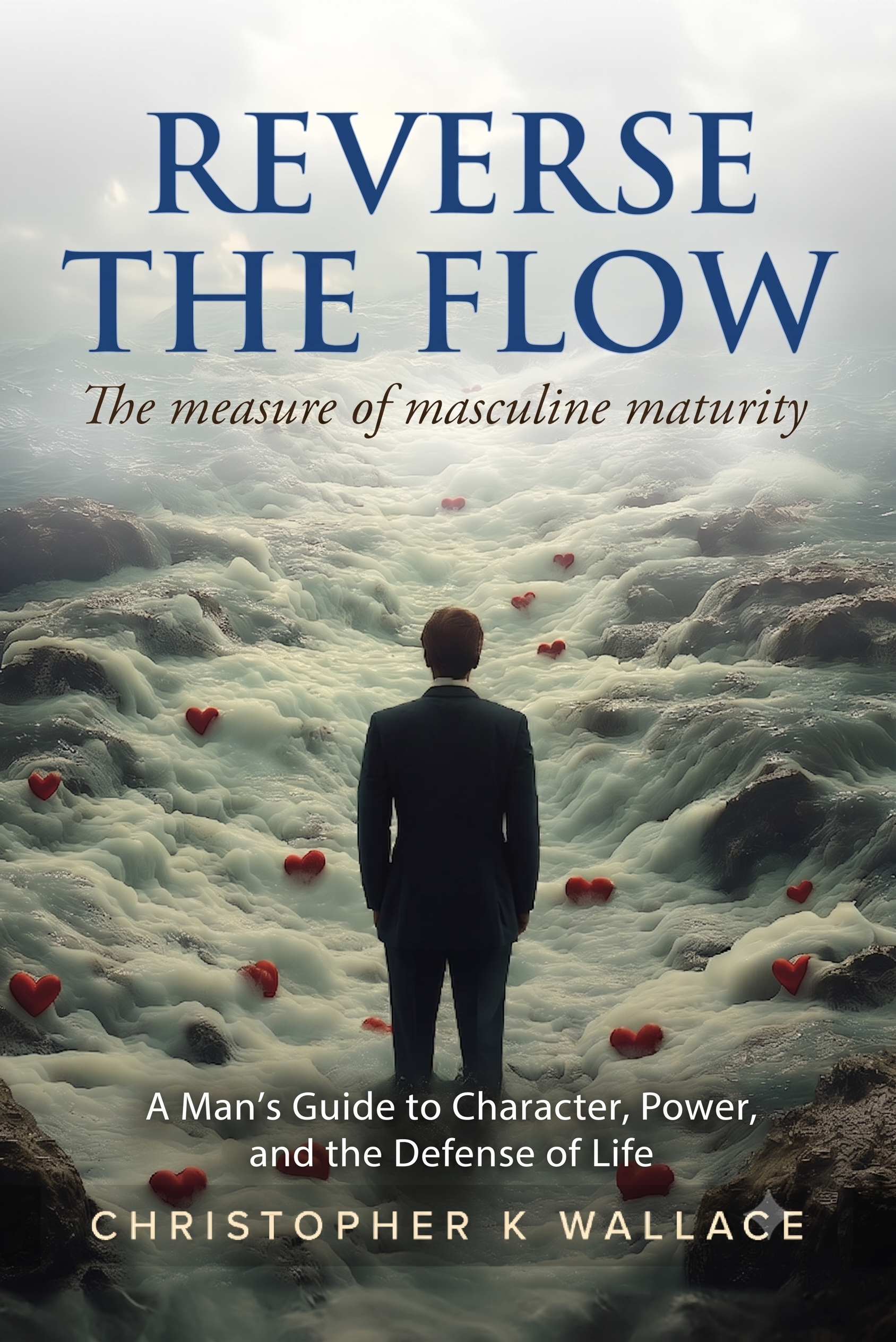
I am interested in another question raised by these stories. I ask what are we teaching young people about character? After all, it’s the subject of my latest book, Reverse the Flow.
We have become very good at teaching consent. It is essential, yet consent establishes a boundary rather than a complete sexual ethic. Two adults can still freely agree to something that is foolish, degrading, exploitative, destructive, or simply something they will deeply regret tomorrow.
Consider consent and character as two sides of the same coin of cultural freedom.
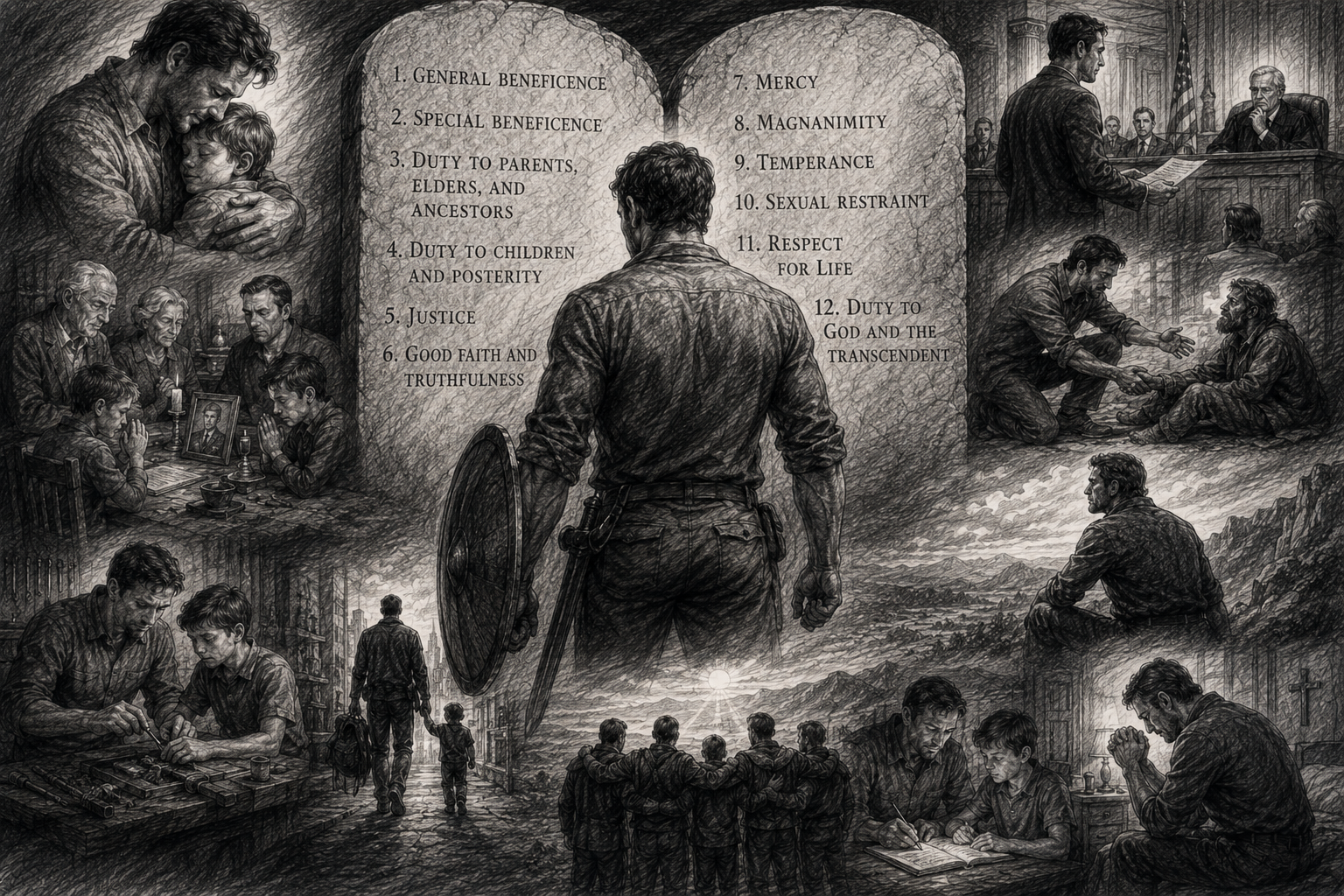
In The Abolition of Man, published in 1943, C. S. Lewis assembled examples from civilizations separated by centuries and continents to demonstrate what he called the Tao, recurring principles of conduct through which human beings learned to regulate themselves. Among them was what he called the Law of Sexual Justice.
Cultures differed in their rules, customs and expectations, yet they repeatedly arrived at the understanding that sexual desire is powerful and consequential and therefore requires restraint.
I translated that ancient principle into the Defender Character Commitment in Reverse the Flow: “I treat sex as powerful and consequential. I honour sexual order because it binds families, trust, identity, and responsibility.” It became part of something we call The Defender Creed.
We have learned a great deal since Lewis wrote his little book, including how profoundly male and female biology differs. That matters when we put young men and women together with alcohol, drugs, sexual opportunity and impaired judgment.
I wrote about this in my 2022 book, Sipping Fear Pissing Confidence, after encountering Shelley Taylor’s work when researching my first book, Drinkers Riddle, published in 2015.
You already know how alcohol compromises judgment and inhibition but likely have not considered that it also engages the physiological stress system. That’s because the catecholamines dopamine and adrenaline tend to fire together, with implications for understanding why we seek certain experiences in the first place. Hence the title of my book, Sipping Fear Pissing Confidence.

Taylor’s work helped demonstrate that, on average, male and female responses to stress differ, with affiliation and social connection, which she called “tend and befriend,” figuring more prominently in female stress reactions while males under stress rely more typically on the fight or flight reflex.
Put all this together in a sexually charged environment and the ancient requirement for sexual restraint starts looking entirely justified.
The crude version goes something like this: ten beers into the evening and a group of young men may decide they want to fight everyone, while ten beers into the evening a young woman separated from her supports may become sexually uninhibited in ways she would avoid while sober.
Individuals vary enormously, yet alcohol acts upon sexually differentiated human beings in ways that most men and women readily acknowledge are not the same.
I’ve known about Taylor’s work for 12 years, but it’s been out since 2000. When I explain to either sex how alcohol activates the HPA (hypothalamus-pituitary-adrenal) Axis, they get it right away. Yet, I have yet to see this critical sex difference taught anywhere (buy my books, I say).
What effect does this awareness have on you? Suddenly, “girls’ night out” may take on a different meaning. So does buying drinks for a gal you may meet at the bar.
This is also how character begins where permission ends. A young man may have the opportunity to take advantage of a drunken situation. Character asks what kind of man takes the opportunity and what kind makes sure the woman gets home safely.
The same moral agency applies to women.
A culture that respects women should take their choices seriously enough to tell them that sex, alcohol, drugs, pornography, promiscuity and providing sexual access to strangers can have real consequences. Treating women as adults means granting them both agency and responsibility.
Look around at the strange sexual bargain we have constructed. Millions of young males disappear into Pornhub while young women can make money supplying the appetite through OnlyFans. Male sexual drive becomes a market, female sexuality becomes a product, enormous corporations collect their percentage, and everybody gets invited to call the transaction freedom.
Perhaps we should ask a better question. What kind of people are we creating?
This is where my concern becomes particularly focused on men. Male strength, aggression, competitiveness, sexuality, risk tolerance and coalitional drive are tremendous human assets when governed by character. When governed primarily by appetite, resentment, narcissism or immediate gratification, not so much.
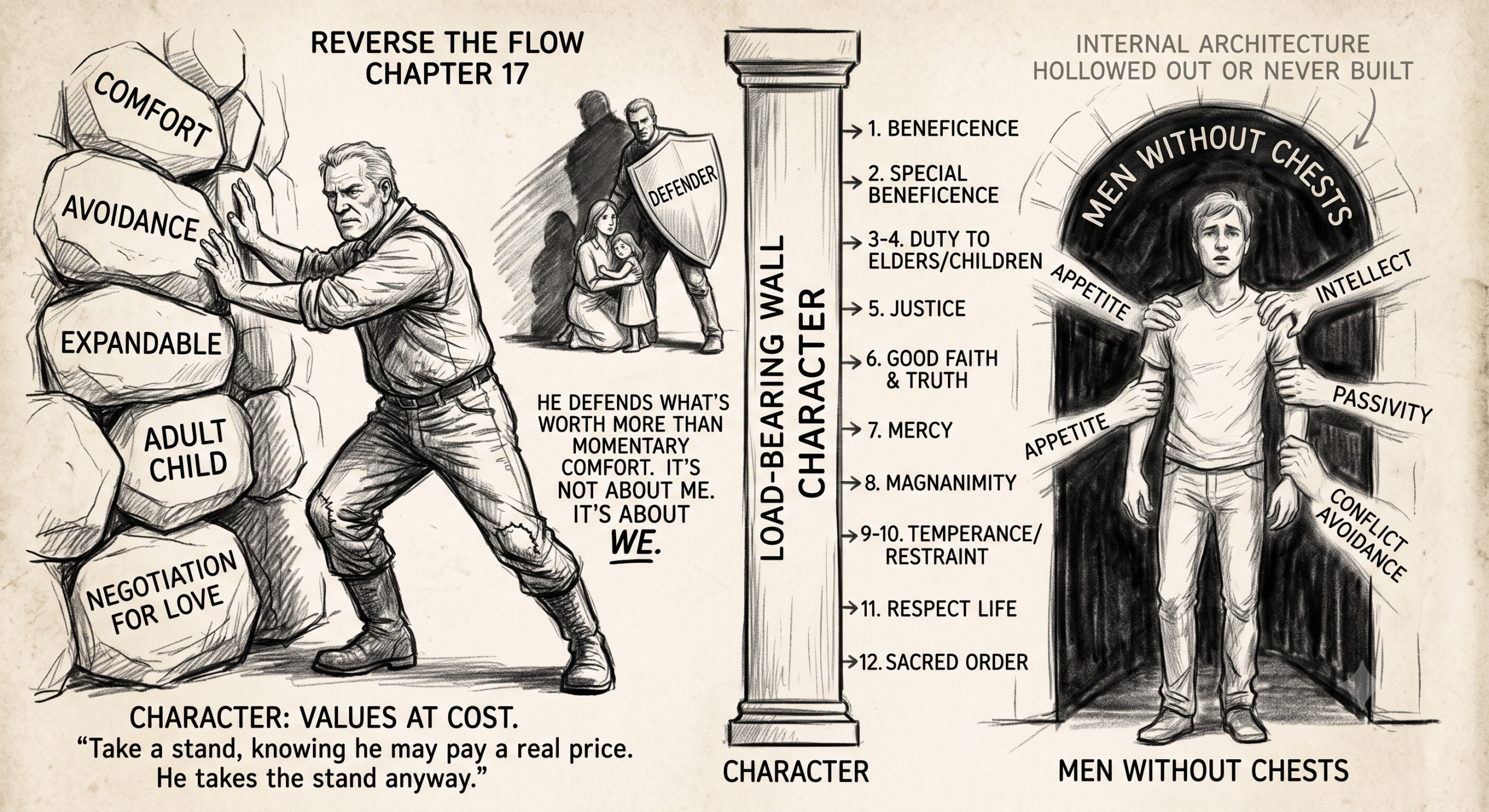
In Reverse the Flow, I distinguish the expendable male from the powerful defender of life. Character is often the load-bearing wall between them. The expendable male spends himself pursuing comfort, approval, sex, distraction or escape, while the defender learns that his power exists in service of something greater than himself.
That is why I define character as values at cost. Restraint means less when we have little desire to do the thing being restrained. Character is doing what is right despite temptation or expedience.
It reveals itself when a man chooses a higher obligation and claims that identity. Identity is destiny.
We also seem to have forgotten that men historically formed other men while generational masculinity has been on the wane since the Victorian Era. Call it a capitalistic externality for lack of a better term, and no one’s fault.
It’s not enough that a healthy male coalition does more than defend its community from outsiders. It also establishes standards among its own members and checks the reckless, predatory and disordered man who threatens everybody else.
Without judging anyone, imagine a fraternity where the highest-status men make it culturally unacceptable to exploit an intoxicated woman. Imagine young men who see protecting her as an expression of masculinity rather than an interruption of their fun. Imagine one man saying, “Enough. She is going home,” and the others immediately understand their responsibility.
That is male power. More importantly, that is male power governed by character.
My argument in Reverse the Flow is for a Patriarchy of Character, a culture that deliberately forms boys into men capable of carrying responsibility while teaching girls that their own gifts, sexuality, choices and vulnerabilities matter. We have fucked around long enough.
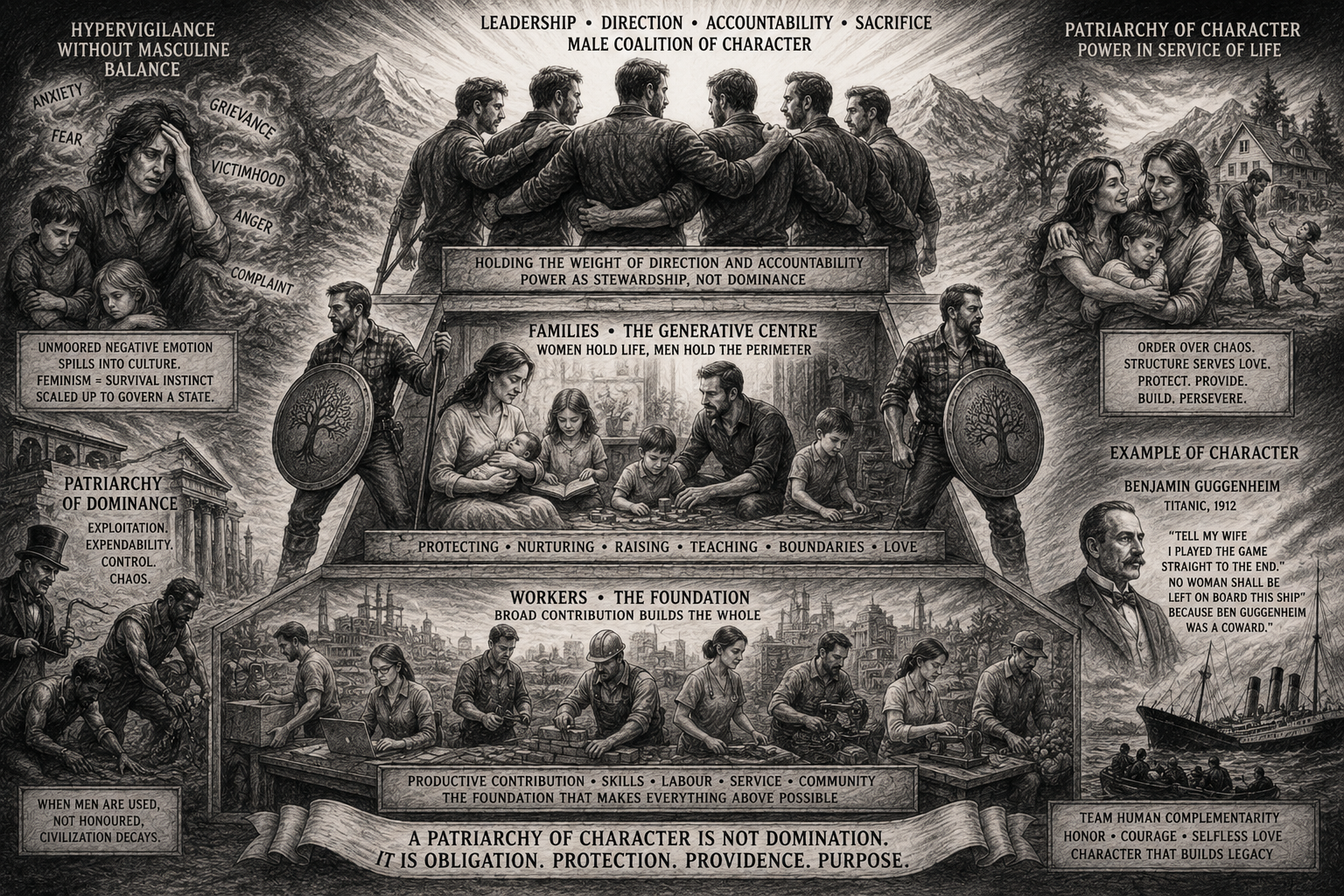
Matriarchy is an unrealistic pipe dream. We need to teach both sexes their differences, their obligations to each other and the ancient social contract through which individual appetite becomes subordinate to the greater good. The complementarity of Team Human must prevail.
Personality-disordered men and women will always exist among us. Every generation produces its share of narcissists, manipulators, predators and glib opportunists, which makes the surrounding population of people with character especially important. Men typically keep these types in check; women help but cannot do it alone. A social contract only survives because enough people believe it is worth upholding, even when violating it would be easier or personally profitable.
That is why I would train character from childhood. Teach restraint alongside freedom, responsibility alongside rights, duty alongside desire, and show boys that being a man means becoming someone others can trust with the power that comes with age, duty and obligation.
I like to ask what it means to be a man. One answer is that a man is a male who defends. Why? For if a man fails to defend others must step into the breach and defend for him. In most circumstances, this is unacceptable. In all things, be a defender, a powerful defender of life.
The world desperately needs prosocial men of character who use power and love in defense of meaning and freedom for us all.
Which brings me back to the title.
Consent asks, “May I?”
Character asks, “Should I?”
I bet you know the answer. Cornell shows us why it matters.
Stay powerful, true and free…
cw