Author: Advisor to Men

FREEDOM FROM SHAME

“There’s been a stabbing'” —Sid Vicious, Sex Pistols
Often guys ask questions around the subject of legacy. What is it you want people to remember about you long after you’re gone? No one gets to choose how we are remembered so I’m never sure how to answer. Is it a waste of time, a focus on a future I cannot control? Or is it a legitimate concern? I don’t know.

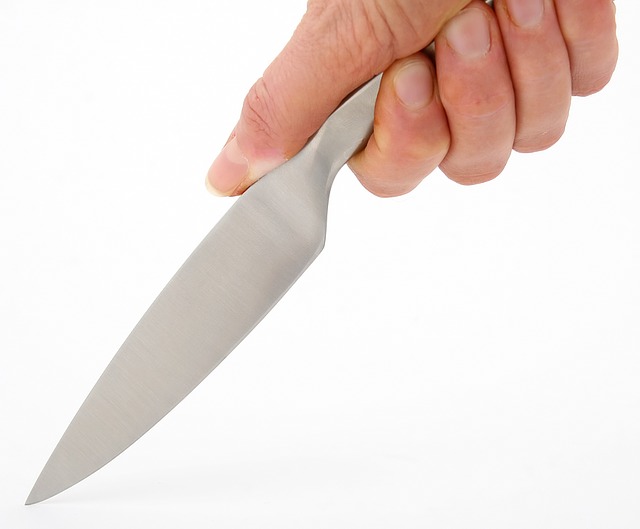
Legacy makes me think of a time many years ago when I had been stabbed in the abdomen.

It was over an old beef and the guy picked a fight with me after waiting for me to come outside of a treatment centre I was staying at after withdrawing from a heroin and cocaine addiction. Fucker was laying in wait for me just the way we knew how. I should have known to watch out but got careless. I’d had an argument with my woman over the phone and slammed down the receiver and walked outside. It was the moment he was waiting for as he sprang out of the bushes.

I was surprised when his first punch was to my stomach as I grabbed his throat to punch him in the face. Right away he broke loose and ran away, after glancing for a split-second at my midsection. Puzzled, I noticed blood seeping from my abdomen. It was blacker than the night so I knew he’d hit deep. Rushed to the hospital by friends at Our House, the clothes on me were cut off in emergency as I lay on the gurney.

Surrounded by the team, the doctor begins to snap on rubber gloves as he questioned me as to what happened. He tells me he needs to probe my rectum for blood. I felt weak and getting weaker, cursing the travesty of this personal invasion. “Faggots,” I thought to myself, angry because at the time it’s my best go-to emotion.

Suddenly, I’m on my side and his fingers are up my ass. I vomited.

Because I was looking right at him, he had to jump back so that the remains of my half-digested supper just missed him full on. A nurse had put one of those curved stainless dishes next to my cheek but I overshot it by far. As it was, I thought I probably got some on his shoes. I can still see his horrified look, the “what the fuck?” look of disgust flashed for a second before his face collapsed immediately and returned to a normal look of concern.

“Sorry doc, sorry for puking on your shoes,” I mumbled. To which he looks at me a little incredulously and answered, “No problem Chris, really, it’s OK.” That’s when I passed out.

The head trauma surgeon had been summoned to operate on me while I was unconscious. I know this because he came in the next day shortly after I opened my eyes and told me how I’d died and they managed to save me. He was a tall, handsome fella, greying temples and clearly a master of his game.

He told me how many pints of blood I needed and so forth. Said he was pretty sure they got all the cuts to my stomach and liver because the knife had been used saw-like fashion in a quick and repeated in-out manner. Then he told me something weird. Said if I ever wanted to come in and talk to him about what had happened, he’d make time for me.

I remember my first inclination was to ask myself if he was gay: the gangster homophobia again. Clearly he wasn’t. No. It was someone offering to lend a hand, proffering encouragement without expectation. He was just being a good person, and with a schedule like his, it was a deeply honourable gesture. I had time to think about all this while I recovered in those few days afterwards. I’d been shot in the chest the year before and that had hurt but the stomach bit was much worse. Standing was a real bitch.

What if I’d died there and then in that hospital? Up to this point, my life hadn’t amounted to much. In fact, I had a bad case of terminal “piece of shit-ness’ as my core worth. My legacy thus far was as a failed human.

Yet, here was this busy and super bright man, top-of-field type, and he was offering to spend some of his valuable time with me: a gangster-junkie, denizen of the deep street. I tell you: it sort of blew me away.

Lying there, a vision came to me, one where my family buries me as my father had once predicted they would. This conversation had occurred in a room just like the one I was in now, at this very same hospital the year before when I was detoxing from junk. In that visit, he said I would soon die, and the family would bury me…and forget me. Daydreaming, I imagined the funeral and the burial, catching a glimpse of my burial stone and it’s inscription:

Here lies Chris Wallace, 1957-1985, “Sorry, I puked on your shoes.”

It would be a fitting epitaph, perfectly encapsulating my life until then. I remember thinking to myself after sitting on this image and idea for a day or so, finally declaring to myself: “This simply won’t do.”

I’ve been crawling back from despair since. I was down low, and it’s been a long haul back from the violence and uneven attachments of my youth. The early years of life create a powerful template,  a child’s fear of abandonment and the internalizing of shame become set in personality, requiring awareness and work to reverse and remedy.

If you can imagine this happened over thirty years ago. It took the first year to recover physically and cure my lifelong insomnia. Another year to get back into some kind of shape after having my arms riddled with needle marks, busted knuckles and arm, being shot, hit with bats, being run over and all the rest. It took five years just to stop craving cocaine.

I eventually lost a marriage that was probably never salvageable but raised a fine son in the process. And I turned my love of reading and learning into an ongoing education, feeding my spirit. I only returned to prison once about ten years later for a few weeks. I intervened in a fight when three punks were attacking a friend. My record got me charged and convicted. I’ve been pardoned for it all since.

But that day in the hospital counts of one of my great epiphanies in life. Another was promising my two year old son I’d do my best to be his father somehow, which is what had brought me to that treatment centre in the first place that fateful night.

Along the way since, I helped people as I could. I studied hard as a behavioural science tech and graduated first in my class. But that was no measure of immunity for the work I needed to do after being down for so long. It took me 30 years to get all fucked up and it appears it’s taken me the equivalent time to recover. Just as my descent into madness was a gradual one, so has been my comeback.

After solving the riddle of addiction a few years ago, deeper truths continue to bubble up, slowly making their way to the surface of my awareness. Maybe it’s coincidental to my confidence, to my sense of being able to survive in this world among peers and a greater community. Perhaps I could say this past decade has been the happiest time of my life, if happiness is even a thing.

It’s from this personal history of weakness that I realize it’s often common in others. We can allow all manner of failing to seep into our lives and without realizing it, cover our personal power like mould on old vegetables. We can cower where courage is needed. It is grow or die; it’s entropy: rest means decay. Life demands action and expansion, or death by neglect.

So I use the idea that a man should recognize, harness and grow his power in service of himself and the people around him as a way to live a life of meaning. This is what sets him free. It’s a freedom I taste often and it is neither an intoxicant nor a sedative. It’s simply freedom from the tyranny of existence. No less. A Wallace’s birthright is to spread a message of freedom.

Horace Mann says: “Be ashamed to die before scoring a victory for mankind.”

As someone who has carried shame most of my life and can fall back into the programming of my earlier years, shame is a constant enemy. Then, I knew I was broken, and this made me ashamed to show people the real me. It was much too risky, my abandonment fear too real.

There’s no room for shame in my life now. There’s no room for it in yours either.

Following Mann’s advice, reserve shame for the avoidance of death. And what is this victory he demands? Who knows? It’s certainly not to squander whatever gifts we have. No. To do so would be to question the infinite wisdom of the universe, which gave us life. Infinite wisdom. There are a trillion stars in the Andromeda galaxy. A trillion. Come on.

Know this: when we dispense with the idea we are broken and not good enough, abandoning the notion others will never love us if they see us as we really are, we gain a tremendous power. It’s your legacy of freedom.

In large part, when we take care of shame, legacy takes care of itself.

Stay powerful.

Christopher K Wallace
© 2018 all rights reserved

https://facebookgroups.com/advisortomen

Join a weekly call here:
https://advisortomen/board-of-directors

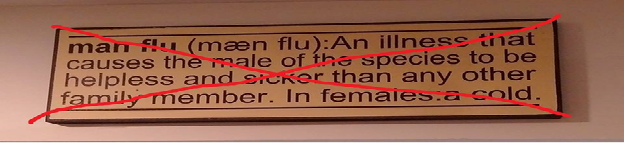
REAL MAN-COLD MANIFESTO

Thank you, Oh Universe, for this virus.

It was brought to me upon the wheezing, coughing, and sneezing wings of friendship. As such, it is not purposely malicious; but instead, a sign of communion with my fellow man.

Far worse it be to never have a cold. For this would mean my gifts to others were never shared, neither their gifts with me. Sadly, this could mean my demise, at first in spirit, later physically, leaving me a hollowed-out shell of self.

If I never caught a cold, it would mean I was isolated and alone: Death to a human.

No. I realize you are but one of a legion of cold viruses that circulate my world, forever re-combining with bits and pieces of each other. I fear thee not… for each time we meet my body learns to defeat another foe.

Though, it takes a week or two to best you, your specific kind never possesses me again. Each time, particularly you, and your malevolent symptoms, are banished from the kingdom of my being for evermore.

You are but an inconvenience.

And neither shall I feel much guilt in transmitting your existence to others. Though, I take great care to protect the weak, the old and the very young from your trials.

For myself, rather than see you as harm, I see you as opportunity. To me, you are an exercise in immunity and I am up for that task.

The occasional lament overheard, those times when what seems like complaint makes its way past these lips, let me explain: It is because my work is being interfered with, nothing more.

For this is what men do; work in many ways defines us. Though the interruption is temporary, it is not tolerated. A cold is often cursed for daring to detract from our noble cause.

Let no one be mistaken: a cold is nothing to a man.

Nothing at all


Christopher K Wallace

©2017 all rights reserved

ckwallace.com

Continue reading

RAT RACE

CAUGHT IN A RAT RACE?

Feeling like you’re stuck in a rut? More rodent metaphor: like you’re on a hamster wheel spinning too fast to jump off. Spending part of your time wound up like a cornered rat who jumps straight at an attacker before running away? Are you like most November vermin, coming in from the cold looking for free food and lodging to survive winter?

I like to catch and kill rats, not feel like I’m in a race for survival with other rats where my chances are slim.  Like these dead fuckers in my traps.

But I have indeed felt this way for some time now. Caught in a race, and not one of my choosing. You see, this is a post about reinvention. Mine, yours, anyone’s.

EVENTUALITIES
I thought I was doing well in the newspaper industry. Despite its faults, it’s a product I could get fully behind because in many ways it matched my values. The idea of informing a voting public about the executive, judicial and legislative aspects of gov’t so they could make informed decisions at the voting booth seemed like worthwhile. Though I could see the corporate influence eroding its power under a concentration of newspaper ownership, it was still idealistic at its core. It is still necessary for democracy.

After running a team, I managed to rise to Canadian senior vice president of the largest paid sales subscription service in North America. With over one hundred reps and a dozen managers spread over seven cities to mentor (some of whom helped train me), it was a job I loved. My intention was to sail into the sunset on its low six-figure compensation.

Things didn’t work out. After the last big recession, advertisers migrated online, and the papers lost their financial base. By 2015, they’d shrunk even more and become desperate. The public turned away from the format, unwilling to recycle something that purports to cut down trees, nor sacrifice the convenience of digital news on demand.

I’d had a little boy in 2013, a child to add to my daughter, born in 2011. The boy had medical problems. Just as I contemplated moving to Chicago to take on a market and replicate a large and successful campaign we’d managed in Los Angeles, the medical insurance alone meant I had to turn it down. Regrettably, all this left me no option but to look elsewhere for work.

DEAD-ENDS
The energy business in Ontario had become appealing once again as the provincial government added 50 billion in spending on renewables, a cost borne by ratepayers. With a legislative majority in charge, locking in electricity prices in the face of steady increases made sense for my business customers. It helped me get out of the newspaper business, and after a couple of years, I was doing well. But there was little room for developing the kinds of teams which characterized my role in anything I’ve ever done. I’m a builder, first and foremost.

Added to this, in time a change of government stopped adding costs to the operation of the electrical grid and the public expected a roll back of pricing. Regulators also tightened up the consulting side of things with new policies. The company used this to justify cutting CPA compensation in half.  Instead of taking any of this seriously, they demanded people “do whatever it takes” to be successful. Suddenly, I saw a high turnover of reps, led by an echo chamber of managers who were little more than Machiavellian opportunists.

When I broached the idea that the kind of pressure the company is putting on sales with such dubious fundamentals was bound to attract martyrs (high conscientiousness, people pleasers) and personality disorders (narcissists, psychopaths, etc.) the company CEO’s flippant response was “we all have a personality disorder.” Well no. We don’t.

So here I am, sixty-years old, about to reinvent myself once more. I have a young wife and two small children. Times like this are perfect to really take stock and try to get it right. Rather than consider this a trial, it’s a blessing. I’ll tell you why.

BLESSINGS
First off, Corrie put me onto The Boy Crisis a few months back, and I finally got around to reading it. In it, there are 55 ways dads contribute immensely to a child’s life. In fact, it’s better to have a mom and dad in the home, but if you could choose only one, the studies say the kids are better off with dad. I can’t tell you what a shot in the arm this has been.

I wish I knew earlier because I tease missus I’m the baby whisperer. When my daughter was a born, she was difficult to put to sleep. No one had her number like I did. Not her mom, not her favourite auntie. Give the child to her dad and I’d put her out in no time.

Around the house, I noticed I was much better getting the kids to pick up their toys, help with chores and at settling disputes. I was excellent at getting them to eat, put to bed, and a myriad of other ways necessary for effective parenting. Yet, I felt a little sheepish about it and I know why. I had bought into the stereotype that “mommy knows best.” Truth is, sometimes she does, especially when the kids are sick, spotting it days before I do. Almost everywhere else, I’m ahead.

Ideally, it takes two parents to raise a kid, so her contribution is huge. Mine is too.

For example, I’ve been cooking some meals. We eat healthier when I take care of supper. My boy has a collapsing trachea and was on 70% liquid diet. In a few weeks, I have him on 90% solid food. I’ve even gotten him to use a fork the odd time—the little savage. My daughter is excelling at school in two languages. We get to speak French together, so it’s like a secret communication between us no one else in the house can understand for now. Pretty cool.

I’ve been the advisor to men for many years. I used to be a counsellor, but that freaks guys out. Then I called myself a coach, now everyone’s a coach. So, I’m an advisor—takes the pressure off us both. But ever since I graduated first in my class in the behavioural sciences, I like doing it no more than half of my time. Anything more burns me out. This keeps me fresh.

PURPOSE
As some of you know, I’ve solved the riddle of addiction. On top of that, there’s a few other key teachings which benefit men I’ve found, especially with personal relationships, parenting, and managing life in general. I’d like to get my message out somehow to larger audiences. I think every man should be in a continuous growth process. It’s why I figure the best deal for men is in a low-cost monthly mastermind like Board of Directors or something like it.
Outside of being a dad, nothing is more satisfying that when a man tells you the work we did together changed his life. I’d do it for free because I can, but without skin in the game, it’s not as effective. People should pay something for value so that they value it more. I’m a bargain they tell me, though, I wouldn’t know and part of me says it’s not for me to decide.

So, at my age, I’m going to take a real estate license. I think it might be just the way for me to go. I’m a hustler—meaning I’m not afraid of work—and I’m good with people. I act diligently as their champions, so selling houses and businesses should be up my alley. I once had a real estate license in the early 1990s but let it go. I’m familiar with its basics.

Missus is doing photoshoots on the weekends and cleaning houses for cash during the week. I admire a gal who can roll up her sleeves and get to work. Financially, we’re fine but she likes to stay busy now that the kids are both in school. I’m happy to have time in front of the computer during the day. Maybe I can write those two books waiting for me.

All this to show that no matter what age, a reinvention of self should be the norm, and not in any way something to fear or worry about. I’m excited about it. I’m encouraged I’ll be able to choose who I work with and who I don’t. I know real estate has its share of the unscrupulous. I intend being the best I can be.

I’m telling you all this so that if you find yourself wondering if you should stay or go in whatever work you’re in now, know that you can and will reinvent yourself. I suppose you could say I’m trying to inspire you, by showing you there are smaller versions of Colonel Sanders happening all around you. He didn’t go anywhere in life until his late fifties.

We never lose the ability to be something else. When we played cops and robbers, doctors and nurses and monsters and whatever else as children, we were those characters. Self-concept is destiny. How I see myself measured up against how I believe others see me is a key driver of human activity.\
LISTEN AND FLOW
And that’s the thing. Like acting, reinventing your life and self-concept is always possible. Circumstances often force your hand, and sometimes you decide to play cards you weren’t sure you even had. As you know, a man who finds his power and uses it in service of himself and others will find a life of meaning. It is here where his freedom lies.

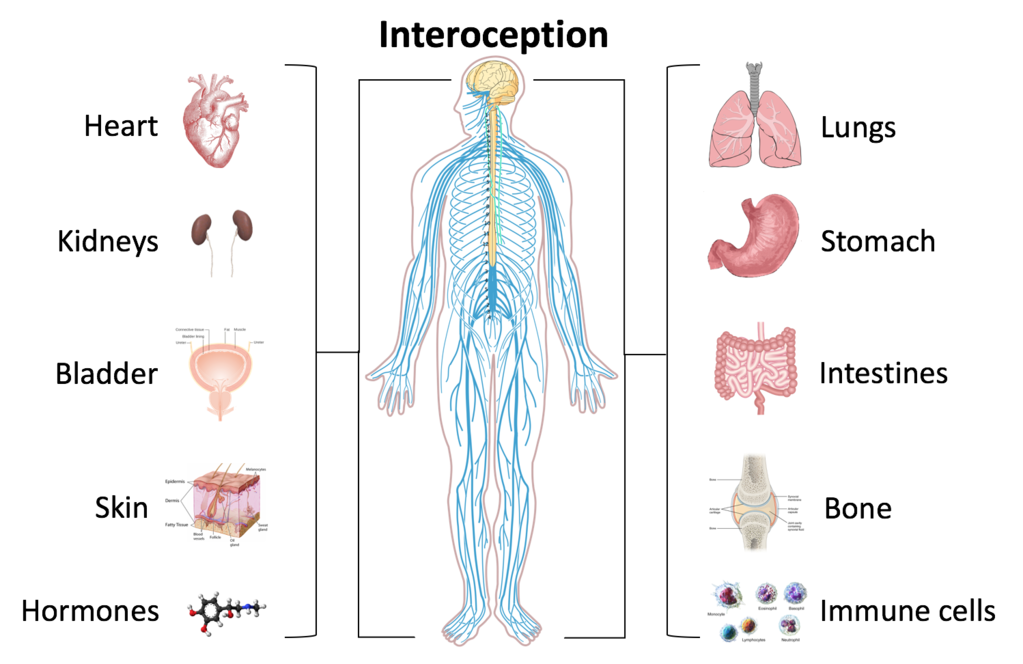
To this end, I’ve spent a few weeks listening to my body. I’ve spent some time in tune with my chain of being, paying attention to interoception—the messages sent to my brain by the body—and decoding its consequential thoughts. Thoughts are reflections of the body.

It’s through this examination I’ve been able to find my way forward. You may have heard me say I suspect what lies locked away in your body by way of epigenetic methyl groups passed along from your ancestry, and the totality of emotional states from your life’s history, constitutes your soul.

Indeed, they call this process soul-searching for good reason. If you find yourself similarly challenged, try going within, understanding the answers are in your body. Move, move more, and move more again. The chances are revelations will appear as you sweat, while exerting yourself. Or soon after, quietly calling forth influences of distant lineages, as answers begin appearing as ethereal whispers. And you will know.

The body is the universal address of your existence. It is there, where ancestral past meets feelings carried from experience, where being calls for full expression of passions and talents, fully engaged, content and focused, where you stop time. This is your zone. The more I search for it, the more I find my flow. You can too.

It was Horace Mann who said:

“Be ashamed to die until you have scored a victory for mankind.”

Life has a purpose for us all. We cannot seek to question its wisdom in ultimate deceit. The gift of our humanity is in the way we rise to create order from chaos. We must not ask what we shall receive. We only seek to answer how to use the gift of this life, so we may repay what we owe.

Where shall you find victory my brother?

Where shall you find freedom?

Stay powerful,

© CKWallace Nov, 2018 all rights reserved

Join us on facebook at:
https://www.facebook.com/groups/advisortomen/

Join your online men’s group at:
https://advisortomen.com/board-of-directors/

BE GREAT IN ACT

THOUGHTS INTO ACTIONS

“Be great in act, as you have been in thought,” said the original bard. What was William telling us when he wrote this directive, this mini-missive for life? Could be he was urging us to be more confident, because confidence is a big part of what takes thoughts and turns them into actions.

Sometimes fear does this too, but not in the “great” way Shakespeare was referring to when he gave this advice. Greatness, being your best in a moment, is something we all experience, if only in our minds.

The question is how to take those fleeting feelings of greatness and bring them forth into the world.

Acting is one way, a version of the old “fake it until you make it” cliché. And as much as this strategy has become a trite call to be something other than yourself in the internet era, it’s still a pretty good approach. No wonder actors love what they do. They perfect the “becoming something else,” repeatedly, even becoming addicted to it.

This reminds me of when I first learned to shoot pool. Oh, not the very first time, because that was as a 13-year-old when my big brother suddenly turned to me one Saturday and asked me what I was doing. Ten minutes later, Stephen and I were nearby at Centennial Billiards on Bank Street playing on one of the small tables.

I was terrible. I’m sure Stephen was only moderately better. We didn’t play again for several decades. In the interlude, he visited over a hundred countries in service of gov’t, while I did… other things. But little did he know, by way of introduction to this wonderful game, of the seed he’d planted in me.

I played it on and off for another twenty years before I got much better. In my early 30s, in college, I often played at Edgar Lefevbre’s East End Billiards, just up the street from my place in Cornwall. I had a cheap two-piece cue and could count myself as a moderately decent player, enough to hold my own amongst other players there who were the equivalent of duffers in golf.

It was when I moved to Southern Ontario and began to run a sales team during evenings all over Southern Ontario that I stepped it up. Each night, I had three or so hours to kill between dropping off my reps and picking them up again. I drifted into the pool halls of each town to play snooker.

Pool, meaning straight pool, eight ball and nine ball, hadn’t taken off in Canada. These were American games played on smaller tables and Canada was a former British colony. We played on 6’ x 12’ tables and looked down upon the pool shooters to the south, preferring snooker. Later, I came to appreciate these smaller table games just as much. Nine ball is my favourite.

The Canadian, Cliff Thorburn, had been crowned World Snooker Champion in England in 1980. Then he’d blown away the snooker world by scoring a maximum in the Championships in 1983: a perfect game of 15 reds with 15 blacks and then all the colours to score 147. At the time, it was snooker’s equivalent to breaking the 4-minute running barrier record.

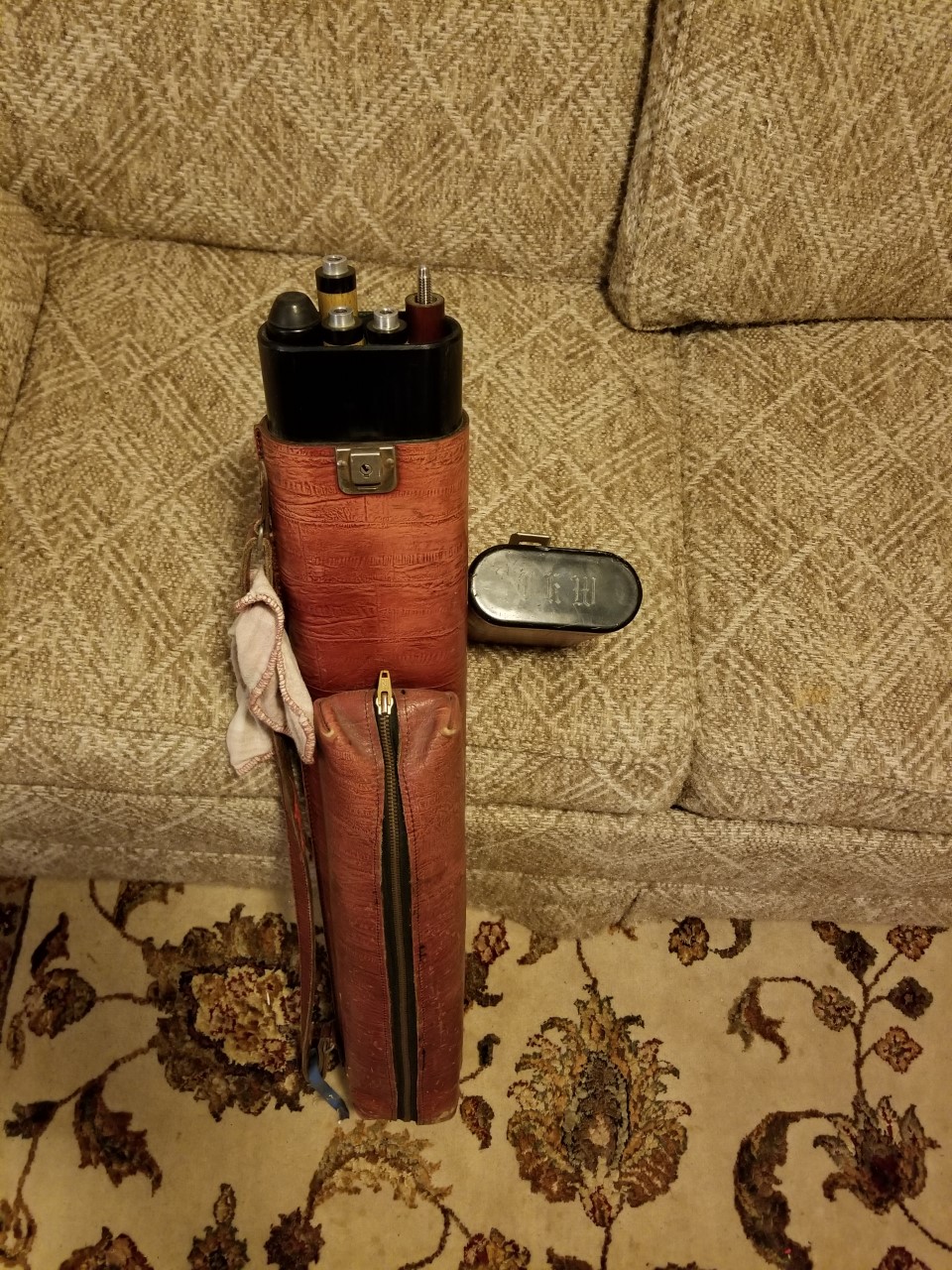
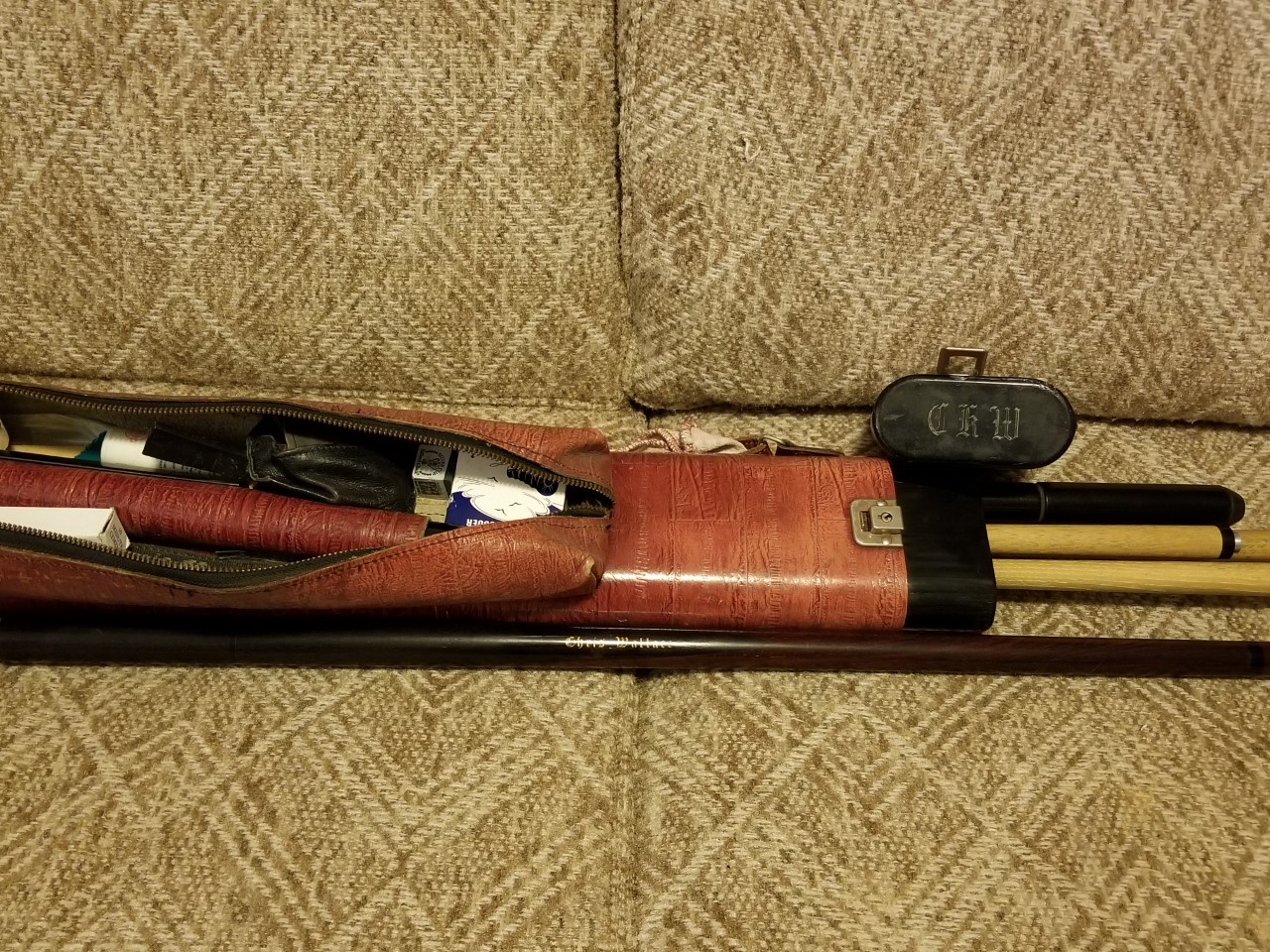
When, in 1988, I moved to Hamilton, eventually I started playing at The End Pocket, on Upper James. Marty Olds had bought the place and I’m pretty sure he still owns it. Alain Robidoux, a French-Canadian from Montreal was by then our top player in England, ranked something like number 8. I heard the announcer say he used a hand-made cue built by Marcel Jacques. I later found out Marcel had been a bowling hall carpenter, building those beautifully precise tongue and groove alleys, and made pool cues on the side.

I know this because on a whim one day, I called a pool hall in Montreal, and by luck they could get a message to him. He called me back a day or so later and I found myself agreeing to meet him the following week at one of his local pool room hangouts. He tested my stance and measured my body and arm length, as well deciding on the thickness of the cue’s butt so it would best fit my hand.

$500 bucks and a few weeks later, my cue.

When I bought my cue, I still hadn’t met Marty and the rest of the boys at the End Pocket, but I’d been in to bang the balls around a few times. When I showed up to practice on table #6 at the back of the room with the Marcel cue, Marty noticed right away that I could play well enough. The cue gave me away as a serious player.

From then on, I was welcomed into the loose fraternity of the better players there. Never the best or most talented player, I only won one of his tournaments a couple of years later and got my name printed in the classifieds for it. But it was the endless games of golf and follow played for 25 cents a point that I remember most.

I didn’t like losing very much so I enlisted the help of Canada Fats, Tony Lemay, a gambler in Toronto who made a living at the racetrack and playing cards. In three lessons at $50/hour, Tony helped me find the stance I still use to this day, very much emulating Cliff Thorburn’s frontal approach to the ball.

By this time, I was playing in rooms from Scarborough’s Snooker Canada to places in London or Niagara Falls, and everywhere in between. I’d pop in and find a game, usually for five or ten bucks a rack and the table time.

Occasionally, I got to practice with a much better player. It was a fella in Brantford, Ontario who pointed out my biggest flaw, striking before I’d pinpointed the exact place on the ball down to the size of a pen mark, instead of a circle the size of about half a dime. My eyes were weak.

I think he was also frustrated at me not being a worthy opponent and could see my potential. He did something curious: he stood behind me and wouldn’t let me strike and move on until I’d corrected what it was he was telling me. Instead of allowing me to continue my poor form, he insisted on a correction on the spot by raising his voice and saying “no, no, NO, that’s not it, keep looking for it,” so I’d be forced to stop etching the flaw further upon my style, dismantling and rebuilding the weakness which held me back in the process.

Frustrated at first, by the time he was done with me in that one evening, I was making shots with such precision I ended up beating him. He nodded when I did, knowing he had beat himself through me. The score was just proof of the soundness of his lesson.

I think his name might have been Paul but I’m unsure. All I know is I’m grateful to this stranger for his coaching. I still think of him, still see him nodding his head in approval without saying a word. My game went up from there.

This was my pastime, not my professional pursuit. At one time, I considered buying a pool room but realized it would run my love of the game if I was forced to sit in a room all day hoping customers would spend money. I played for fun, and a little money, but the real fun was in playing well.

Never intending to become a better player, I had simply taken my thoughts about playing and acted them out. I’d faked my way into a level of mastery of the game by first getting a world class cue and then forcing myself to play to its level. Funny how that works.

There are two other enormous excellence lessons I learned while playing pool. One was about visualizations, the other about flow. I’ll report back to you about these in other posts.

In the meantime, I like to believe this era in my life contains valuable lessons, ones’ I still do my best to apply today.

think of ways you can act “as if” and see yourself in a different light. What are some ways you can realize some of those thoughts which surface in your mind, begging to be turned into actions? Often thoughts come and go and are forgotten. What if we acted on some of them instead?

Three hundred years after Shakespeare’s missive, what can we do today to honour his advice?

Sometimes confidence comes from little wins, ordinary victories accumulating over time into a meaningful whole, call it a gestalt of competence if you will.

At other times, it comes from taking risks. Something daring, perhaps done on a whim, and which can open a whole new area of life just because of it’s power as a linchpin to action.

It’s like putting on a good suit. Suddenly, people act differently around you and accord you with more respect and power than when you’re dressed in work clothes. Suddenly you’re standing straighter and taller, speaking clearly and with better manners. More about this later.

Suddenly, when we take risks, people appear along the journey and contribute something to our game. It’s just how things work, beautifully.

Realize the difference between thoughts and actions is often found in a simple leap of faith.

Go with it I say. Do it now, chase a passion.

Stay powerful.

CKWallace
Advisor to Men.
©2018 all rights reserved

https://www.facebook.com/groups/advisortomen/

QUALITY RELATIONSHIPS

QUALITY RELATIONSHIPS

It’s true what they say: The quality of your life is measured by the quality of your relationships.

Most of us are lucky if we can count on one hand the people we consider close enough to confide in, to turn to in times of turmoil and trouble. Even, to be able to say “I love you,” to someone, be they man, woman or child.

Or, just to check in and connect, somehow, on some level, to let others know you exist while recognizing they exist too. And I’m not even speaking about only being able to tolerate someone else’s company. Or liking them.

Liking a person is kind of important if you’re going to consider them a friend. You think? I bet we’ve all had friends at some point we didn’t care for, people we really didn’t like.

One of our brothers tonight called to say his dog passed away. It was an honour to take his call.

Thirteen years he watched over his friend. It was a runt from a champion line, but because of a heart murmur, it was going to be put down. My friend rescued the little pooch.

He spent ten grand getting her a heart operation way back in the early days. At six months it was attacked by big mean dog and had to have 18 stitches, undergone without complaint. All her teeth had been removed…

And today, bringing her into the vet to see if there was anything he could do to make her more comfortable, she waited patiently in his arms in a room.

He looked at her, she looked at him, she closed her eyes.

She was gone. Just like that. As if, “thanks boss, but I’m 95 in people years and we’ve had a great life together. Goodbye.”

His daughter is 21 today. Most of her remembered life this little dog was part of it. As her father, this rough-around-the-edges son-of-a-gangster won’t tell her now. Not on her birthday. He’ll wait and tell her later in the week in person. He’s like that now, a man. He wasn’t always.

And that’s the thing about life and love. We may start out with not a lot of it in our heart but if we give it time, if we allow it for ourselves and others, it will find us.

They say there are three levels. One is “what can you give me” type love. It’s Janet Jackson singing “what have you done for me lately” while shaking her ass. Fuck off.

Two is a trading relationship. We trade with others all the time.

You tailor my suit coat for a hundred bucks, saving me from throwing out a perfectly good suit jacket I had made in Hamilton by Bruno the Tailor in ’89, and we’re good. Do it right and I’m happy, you’re happy.

But is that love? I don’t think so. Yet, many of us have only a trading relationship to come home to every day. And that’s the thing, you see: It’s not quality.

It’s why my gruff friend, as hard as any guy, grieved today. Because his little dog gave him nothing but level three: unconditional love. The dog made itself belong to my friend, unquestionably, irrevocably, and loved him even on days where my friend may have been unable to love her back.

It’s part of a man’s DNA to take care of others. If he does it or not is another thing. It’s not enough to call yourself a man because you produce more than you consume, so there’s extra to go around. It’s bigger, much deeper than that.

I once knew a fella whose background was the Irish Mob in Canada. Eastern Canada based, he worked out west. I think it was mostly because all the guys above him had been whacked.

Those Montreal Irish, The West End Gang, purportedly connected to the IRA guys back home, scared the shit out of the bikers and the mob most days. They made Montreal bank robbery capital for many years. Forced the Canadian Bankers’ Association to undertake drastic changes in their procedures.

I noticed he always had a small dog with him. Little thing, probably a Bichon/Poodle mix or something. One day, I asked him, “Hey George, no disrespect or anything (respect is big with goodfellas, like a fucking religion), but why is it I see you with such a small dog all the time?”.

Fucker looks at me quickly, stares me in the eyes. I brace myself just a tiny bit. Suddenly, he softens a fraction and says to me matter-of-factly, “Because little dogs need protection too.” His eyes held mine for a moment and he looked, well, very human. Obviously, I accepted his answer.

In fact, I thought it was the best response ever. Sure shut me up, and no, I didn’t probe further. I knew there was something more to it but it wasn’t the time. What else could I say?

My friend today telling me about his little dog filled in a bit more about what George meant. See, my friend told me he grieved more today for this little dog than for his own mother and father when they passed.

More pain than the death of his mother or the death of his father?? Is that a sin of some kind? Maybe.

It’s just both guys had experienced little in the way of unconditional love in their lifetimes. Yet, their humanity, surrounded by a fortress of protection learned in a lifetime of pain, was there, mostly hidden, but intact.

It just took one little dog to bring it out.

In the quiet moments away from others, the loyal pooch and master found and celebrated what was important.

Not sad at all, I say. More like, hopeful. It’s a reminder to recognize pure love when we see it and know it’s real.

Because there lies the real power in life. If we are not standing up for good, we can’t even call ourselves neutral. Because good is love, and love is what counts. Indeed, it is love which is powerful.

Today, I salute all men and their dogs, big or small. Condolences to all of us who have lost a beloved pet. They are like family, perhaps even more. Man’s best friend is also a bridge to what is best in a man.

Find it early or find it late, we must all find love.

Rest in Peace Trixie. 2005 – 2018

Thank you.

Stay powerful gentleman,

CW

https://www.facebook.com/groups/advisortomen/

NARROWED THINKING


The Zone of Happiness

This week as I traveled about, visiting the lives of others along the way both online and in-person, I was struck by a few things I’d like to share with you. Specifically, I want to talk about narrowing thinking and how it lies at the crux of the best of human experience.

When I think of those times in my life when I was firing on all cylinders, it’s when I’ve been able to focus at such a deep level my total being was engaged in living in the moment. It’s when the distractions of my surroundings are inconsequential to what’s before me. It’s when time seems stands still.

I’m not sure if you know what I mean, but if you think back, you’ll quickly remember a scene from your history where you were so engrossed in what you were doing that all else didn’t matter. I wonder if you realize it’s at these moments when we are at our happiest.

Let me qualify that statement.  I surely don’t mean a form of bliss where we are like Snoopy just grooving to Schroeder’s piano. Though this is sometimes a part of it, it’s by no means the template against which we should judge our affective experience in these circumstances.

What I mean by happiest is more like we are blissfully unaware of feeling at all. At least, the tyranny of emotion is lost for the moment, and we leave behind all feelings of inadequacy. Our usual level of vigilance changes, but it’s not that we let our guard down. No. It’s because something else takes over.

That something is a feeling of almost limitless power, or better, power being expressed at the limits of our abilities. This is when we hit a zone, or our zone, and whether we hit it accidentally or on purpose doesn’t matter. What counts here is a condition which lies at the pinnacle of human expression. It’s as if we know it’s where we belong, a place where good things, sometimes great things, happen.

It’s a serious manifestation of our gifts coming together all at once, without being aware of limits or constraints which might cast doubt upon our competence. It’s more than confidence because it’s a blend of the mental and the physical, a symbiosis, the meaningful whole of an action. It’s the Gestalt.

Practice, Focus and the Impossible

The quick and easy way to hit zones is to practice over and over so new competence is ingrained in the cerebellum, like never forgetting to ride a bike once learned. Being able to shut out distractions is next, narrowing down focus to what is before you, so time is lived second by second, or not noticed at all.

When the first two conditions are met, the longer you linger there, the more chance you have of hitting the heretofore impossible. That’s when you stretch, using your powers of concentration and emotional equilibrium to push the boundaries of your skills. It’s a time when we truly get out of our own way, allowing whatever talent we have to sing fully, to express itself at its peak and beyond.

I’d sometimes get like this after a few years of shooting snooker. In my best games, I wouldn’t even notice my surroundings except for how they were needed to play the game. It didn’t matter who was watching, or what my opponent did. My eyes were on the green table cloth and the balls. My whole body and mind was an extension of the cue and cue ball and I could make that ball do my bidding without regard to limits. I’d control the game in a way far above my normal play.

I say the zone is also when we feel most alive. The connection between our existence and the world around us blends seamlessly, acting as one, without boundaries and without fear or need to explain. We are poetry in motion. We are the poet.

It’s as if we are nodding to the Universe, acknowledging its wisdom in choosing us, in bestowing a chance at life to this very being. It’s when we are fulfilling our promise, the pact we have with life itself.

Cheating the Zone

Sadly, I don’t think we get enough of it. And the peace and power derived from visiting our zone has such appeal that we often try to recreate its essence in other ways. Unfortunately, these are often maladaptive, poor substitutes for the real thing causing more harm than good. What lies at the heart of these coping mechanisms is the desire to narrow thinking, to thin out the complexities of life and simplify what occupies the mind.

Drink a few beers or haul on a joint and watch your thinking narrow accordingly. You’re in some kind of zone alright, but it’s not a celebration of your personal power. It’s a artificial hijacking of your sympathetic system, putting your physiology into a fear state to narrow your focus to escape danger. Whereas the real zone slows your heartbeat and focuses your power, this effect increases the heartrate and scatters your competence.

And it works—soon all your thinking of is pizza, or pussy, or fighting. Or you have slowed your body down, frozen, like a deer standing on the road staring at headlights. Or the rabbit you see on the neighbours lawn, immobilized, heart beating as fast as a snare drum, hoping it blends in.

For some, TV, food, porn, gambling, cigarettes, shopping all have the same capacity to narrow focus artificially, from an external view but without engaging the internal power and talent which exists in all of us. The suicidal try to do the same thing, narrowing their thinking down so effectively to escape the pain of life until, tragically, their options run out.

External vs Internal

The eyes see out, I like to say. So much of what we do is triggered by what the eyes can take in. Like all of our gifts, sometimes our qualities can become faults. Too often we see and respond without considering what we really seek. We all need to narrow our focus, to feel alive and celebrate our gifts in the moment. Too often we seek to do this by taking a pill of some kind, by relying on the environmental, the external solution to what really can only be solved internally.

You might expect I’ll speak now of finding more adaptive ways of narrowing thinking, of recognizing it’s draw as a fundamental expression, and encouraging you to make better choices. But here’s what I was taken with this week:

Turns out we don’t need 10,000 hours to become competent at something. See, the way I just wrote that represents the impression I took from reading Malcolm Gladwell’s famous missive about learning a new skill. It’s my own nonsense and represents the way I, along with most people I know, have misinterpreted the commitment he writes about. He’s talking about elite level mastery, world class level competence.

Old Dogs, New Tricks

In a TedX talk I watched this week, Josh Kaufman talks about researching Gladwell’s misunderstood recommendation and finding it takes around 20 hours to learn a new skill adequately. Of course, I thought when I watched him, I’ve learned plenty of things in less than 10,000 hours! Kaufman breaks it down further, suggesting just 45 minutes a day for about a month will do the trick. This is a refreshing antidote to the Gladwellian notion that it takes 5 years of hard slogging to achieve respectable competence at something.

I have 20 hours. 10,000? Not so much.

In just under an hour per day for a month, you could learn a reasonable amount about something or get good enough at something to then decide if you wanted to learn more! Piano enough to play Fur Elise, a language well enough to visit a foreign country, how to weld so you can make… anything. It just goes on.

Well, there are twelve months in a year, and how many in a lifetime? If average lifespan is 80 and we take just 50 of those years as potential months of learning, that’s 600 months of opportunity. Or 600 new skills we could potentially get good enough at in our lifetime.

Oh my, where have all my excuses gone now?

I was thinking about this when one of the guys in my men’s group told us a family friend killed himself on Tuesday. Booze was a big contributing factor. These are always tragic. People will say the suicidal was selfishly passing their pain on to the living. It’s possible. Though suicidal people who have lived through attempts tell us they thought they were doing everyone a favour. There are no good answers.

Fear Works: Just Not Well

Every day I run into folks who are affected by this scourge—attempting to narrow thinking by taking short cuts—using drugs and alcohol to kickstart adrenaline and cortisol in their system, not realizing that this IS their addiction. It’s not so much the booze or drugs, it’s these fear hormones which create an emotional state providing relief from the complexity of their existence.  While in fear, your focus is on survival, a much simpler scope, aimed at satisfying much baser needs.

And food and porn and gambling all do the same thing to a degree, using intermittent reinforcement to distract and narrow focus, attempting to gain a reward by way of a shortcut. Our eyes see out. But it’s here where the maladaptive breaks down: it’s like a dog chasing its tail. We never quite catch up.

And we don’t grow. Confidence wanes further for there is no competence in these.

There are no new skills to be found in that box of donuts, the next six pack of booze, the next shopping spree at the mall or the hardware store, the next pack of smokes or cannabis dispensary. You could argue there are skills to learn from the next porn clip you watch but that really depends how long you’ve been watching, doesn’t it?

The Search

What if we all realized this is what we were trying to do: narrow thinking. It’s our natural way of shutting out all the noise. Done right, it’s escapism with benefits. And it represents the only true way of meeting the need to live fully engrossed in the moment.

All sorts of things are like this. Watch any teenager who has mastered a video game at a high level. They get into a zone and if there wasn’t a clock on the screen and levels, they’d make time stand still. Look at their eyes, and they never leave the monitor. A friend of mine use to fly fish with such concentration that rather than go ashore to take a piss, he’d let it go in his neoprene waders and rinse them out later.

Neither of these extremes will kill you. Some of the other ways we narrow thinking can and will.  Yesterday I came home from a rather challenging week. Though I’m grateful to find myself alive every morning, I’m no more inured to the pain of life than anyone else.

Rather than go blow my mind with dope or booze, I instead sought ways to just calm myself and heal. Oh, I know there’s still pot kicking around here somewhere. And the beer store is a few blocks away. Heck, I could swallow a few Percocet, bumping up my eighth of a tablet dosage to two or three full tabs and I’d be nodding in no time.

And these would have left me hung over this morning, feeling dissonance for having compromised my pact with nature, knowing I was ungrateful for the life I have been lucky enough to win. These would have eroded my confidence, which in turn, would affect my competence. If I still drank I’d be sipping on fear and pissing out confidence. Hard earned confidence. This is the truth.

And that’s what meditation is for. No wonder it’s so popular. Even if you don’t meditate, a walk will narrow thinking just as well. Ten burpees is a pretty good reset. A run will kill off any anxiety attack. Perhaps I’m at an advantage because I have a slew of cognitive behavioural strategies I can implement to narrow my thinking. Well, these have come with practice. I also slept very well last night, something I had to practice. We build character, no one hands it to us.

Come to think of it, I had to learn to drink in a dysfunctional way too. In fact, I worked hard at it over time, just as I did with the rest of it, from dope smoking to heroin use. Gees, it took me years just to learn how to roll a joint. Cocaine definitely took some getting used to—fed my paranoia. I puked my guts out first time I did heroin.  All of these things took concentration and trial and error before I could successfully use them to… narrow focus.

When measured up against all these, it’s actually easier to learn to narrow thinking internally, by far.

Think of those times when you entered into a zone of competence, and remember how good that felt.

These days, when things get to me and I feel like I need a break, knowing the secret, the real impetus of my condition, that what really begs my attention is just to narrow my focus, I have other choices.

And in a month, looks like I might just have one more.

You could too.

CHRISTOPHER K. WALLACE

Advisor to Men, Counsellor at Large
at ckwallace.com

©2018, all rights reserved

Kaufman’s TedX talk:


THE CHAIN OF BEING

THE CHAIN OF BEING

Let me tell you how I best understand the fundamental links of being. These four variables together comprise something I call the emotional being chain. It is these four factors which operate mostly unknown, influencing everything, especially how we think and interact with each other and the world.
Contrary to what most people believe, we exist emotionally and then use our brain (usually the left brain in right handed people) to rationalize things later. We tell ourselves a story of why. We are far more deterministic than religions bent on “free will” allow.

Emotions occur faster than the brain can think for good reason: If a threat is present, we don’t have time to weigh the pros and cons of a situation. Instead, we’ll use our fight or flight system to prepare to either escape or resolve the danger immediately. OK, basic enough.

Out and about, most of us exist in a mild fight or flight state most of the time. We stay at the ready.

The human brain is a prediction machine. It uses the body’s needs, and prior emotional experience to make sense of the circumstances in the environment. Everything we do, our perceptions, our actions and our learning is based on making and updating expectations.

In fact, all our disappointments are driven by our expectations.

Even sight is based on predictions and expectations.

What you see comes in through the eye and hits the visual cortex at the back of the head. Most of the signaling goes from the eyes to the vision center there.

But, some neurons go the other way, coming from higher levels of the brain (the cerebral cortex) down to the visual cortex. These are thought to carry predictions. If you have seen it before, you are likely to see it again.

If you can’t identify something, your brain will fill in the blank from memory until you see a more accurate picture. This is helpful remembering a route home, but also allows us to see images in clouds on a summer’s day.

The brain uses interoception to gauge the body. That means it checks what’s going on with you physically through its special sensors. It does this primarily through the tenth cranial nerve, the vagus system, which is connected to the heart, gut and organs.  It uses exteroception to gauge where you are in a space, giving you an awareness of your surroundings and your place in it.

For example, 100,000 neurons line your gut, another 40,000 exist in the heart. More than 80% of vagus neurons are afferent, meaning they signal towards the brain. These give the brain a constant update of what is going on physiologically. The brain is not just in your head but rather, reaches most of the body.

From this, you get two general emotional states: valence and arousal. Valence is simply comfortable or uncomfortable. Arousal is either on or off, alert and agitated or resting.

Feelings are predictive, not reactive. Long before we become aware of feelings we have, they have already taken hold of our body’s system. The brain is constantly trying to predict what will happen next to prepare you for circumstances.

You probably remember overreacting to something on incomplete information. We all do it, it’s a natural part of what it is to be human. It’s only as things unfold can we tell if our reaction was appropriate or not.

We are constantly adjusting. The better we understand this, the easier it is.

Feelings are predictive responses to the body’s needs based on prior emotional experience, then tested against the social reality before you—after the fact—and corrected.

We learn feelings first as babies, and these become increasingly complex as we are exposed to new experiences.

Contrary to the idea we all possess the same emotions, it is more that we experience many of the same things which produces a similar storehouse of emotional responses. There is no strict set of emotions shared by all.

Every experience you have as a young child onward contributes to your bank of feeling states. These are called upon predictively (mostly below awareness), allowing you to face whatever situation is in front of you.

It’s a best-guess system, corrected after the fact.

Even as you read these sentences, you are trying to predict where I’m going with this. In conversations with friends, you are doing the same; that is, trying to guess what they will say next. You’ve caught yourself finishing other people’s sentences more than once. Others have done the same with you.

Prediction is why when you first gaze upon a scene, you may see things you know from memory before seeing what is actually before you. That’s the brains prediction system at work!
In any given moment, your brain is using its vast storehouse of recalled emotional experience to determine the future and the best state to keep you safe. You are also using the same basic mechanism to predict and understand the people around you.

We sometimes jump to conclusions based on beneath the surface feelings about something. Other times, we under-react because our experience doesn’t signal the current situation as a threat or familiar.

No two people’s emotions are quite the same, simply because no two persons have lived in the same way. In the case of anxiety or anger, you may now understand how prediction is the real cause of our discontent and pain.

You can imagine all this brings great advantages. Recording old emotions and feelings in the body for future use is a handy evolutionary adaptation. Having feelings directly connected to your sympathetic system means fear can safeguard your life.

The sequence is this: Physiology (body) to emotional state (valence and arousal) leading to predictive feelings (based on old experience) and finally, thoughts. This is the chain of being.

Think of thoughts as an “explanation” for what’s going on with the body.

This is why we adjust after-the-fact. The body is way ahead of us, and thoughts come last in the chain of being. Where do we feel fear the most? In the body. Follow me so far?

Ever come home after a long day and snap at someone? Only to realize later you hadn’t eaten since that morning? That’s an example of interoception leading the way. It can be good to stop and ask, “what’s my body telling me?”

And, by understanding feelings as imperfect guesses based on old experiences, we can take responsibility for them by countering their effects and perhaps, letting them go. Maybe you just needed to eat something or look after your body with sleep, water, etc. Learning to recognize signals from the body is key to personal mastery.

What’s the best way to create new feelings? Create new experiences.

Doing new things gives you new feelings to store away for later. This is how we break old fear pattern by implementing new strategies.

Doing this gives you a deeper repertoire of scenes and emotional data points—which your brain will automatically employ and test against the ongoing reality before you. That’s also what maturity is about: Life gets better as we get better at life…

It’s worth repeating: all our disappointments are driven by expectations. Not only is this true, everything else about how your body and mind deals with the world is also driven by expectations. Changing expectations is going to the source of things.

To consciously change your state at any given moment, you can change what you think or change what you do.

DOING AND THINKING

The chain of being: Physiology, emotional state, predictive feelings, thoughts.

That’s your approach to life, factoring in your consciousness. Here’s something else: You can intervene at each end of this chain to tackle anything. You can change the body, thoughts, or both.

Focus and Language: two special forces bridging the chain of being

We simply cannot take in all the information around us and record it. Nor can we mentally attend to but a tiny fraction of the stimuli in our environment. The brain is amazing, but it has its limits.

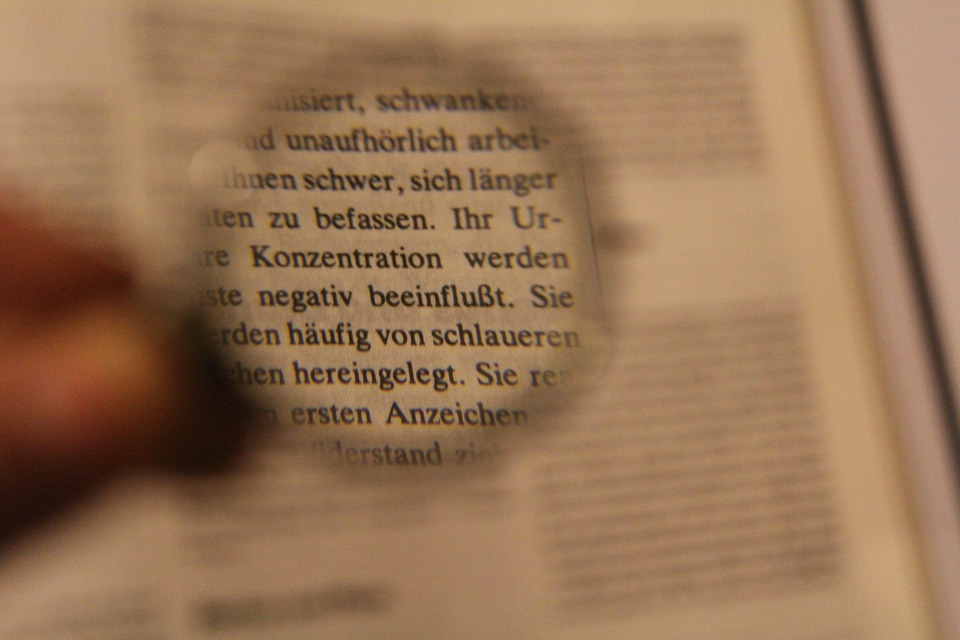
Imagine looking around you with a large magnifier and only seeing through its lens. You would see some things straight ahead clearly up close, the rest of it at the sides would be blurry and faded. That’s what your brain’s ability to focus is like.

Focus is both mental and physical. You use your eyes to focus, and you turn your body towards what engages you in the environment. And, pictures from what you see engage your mind physically at the visual cortex. The rest of your senses operate on focus as well, as you touch, smell, strain your ears to hear, or  when you taste something.

What you are telling yourself, your self-talk, your thoughts, can be brought under your free-will ability to control through focus. So is your imagination. Otherwise, self-talk is under at the mercy of the subconscious.

It can also be either/or. You can stare at something new and for a moment, register no thoughts. In these instances, you can almost feel your brain trolling through its databank trying to make sense of the scene. Other times, you can stare into the distance and see nothing, while vividly day-dreaming about something unrelated.

Where you decide to focus works at both ends of the being chain. You can use focus to take control of fear by determining what your body will do and thereby, what thoughts come to mind.

Language: a bit of both worlds.

If you were born wild without language, it is thought that you would soon develop one to communicate with those around you. Like focus, language has both thinking and doing aspects to it. It straddles the distance between the two ends of the chain of being.

You speak a language, in which case it’s a physiological thing. Add to this you can whisper, and you can scream, you can also sing, and you can whistle. There’s a remote village in Italy where some of the old-timers whistle to each other to communicate. To THEM, whistling is a language in itself—no words, all physiology.

You will often think in images, impressions, even feelings, and taken together, you might express these with the use of language in thought. “I told myself…,” we say to others as we explain ourselves. “What I was thinking was…,” is another. And all of our rationalizing, the story we tell ourselves after the fact to explain why we have acted, felt, or thought something, is usually expressed in language.

While what you do and what you think are the main doors to your chain of being, both focus and language play special roles.

Focus means you cannot remember much of your past. You can only recall a tiny part of your history depending on its significance and emotional intensity. This tells us putting full stock in a remembered past is a mistake. It  might be necessary, but is rather weak grounds for making conclusions about the present.

That’s not to discount or dismiss the past entirely. After all, part of the richness of your life and most important lessons resulted from what you remember. It’s likely there was both pain and pleasure derived from your history, and these experiences added to the fullness of life.

But it’s important to realize the remembered past is a faulty record, and therefore, accord it the skepticism it deserves. Studies show just talking about our past experiences changes what we remember, something called re-consolidation. It’s said every time we revisit a memory, we put it away just slightly changed. We put a different spin on it as we reconcile the past through today’s eyes and viewpoint.

Again, it’s the power of focus, a great deal of which is not under conscious control as the chain of being rules.

A similar case can be made for language. When I was learning to write, my father used to tell me how important it was to get the wording just right. In fact, this is one of the best challenges of writing, or communication in general. Getting it right when we describe our situation or thoughts to others is far more effective when we find the exact words to express what we are trying to say.

And so, it goes with our thinking. If I tell myself “I always get nervous meeting new people,” chances are I always will. If I tell myself I can’t, what I am really saying is that I won’t. If I mention I am “outraged” when the word “concerned” would have done just as well, I pay for it physically in higher emotional arousal. Inflammatory words cascade through the chain of being and cost me, exaggerating their physiological effects in the end.

Talk angry and the body is angry too, even destructive. Speak fearfully and the body cowers from life, afraid, protective, tentative, hesitant and weaker than needed.

The body is where you live. Living in the present is the only way to live life effectively. The past is but a distant memory.

Sure, keep an eye on the future but spend most of your energy in the present—where the real action takes place. It’s all any of us can control anyway, right?

Similarly, you can tackle the chain of being at the thinking end to reframe things, thereby providing answers which create better feelings and a more relaxed emotional state.

Letting go of ill-will towards someone or something often results in a noticeable relaxation of the body’s musculature or internal process. It can stop our guts from flipping. It can make a headache go away.

I have two ruptured disks. I’m in pain every day. Yet, medicine knows of others who have the same two ruptured disks and have very little pain. The differences between the two might be found in my chain of being.

I know if I carry anger towards someone, my back will hurt more than usual. I had to learn this over the years. Now, I’m very careful to not carry ill-will or I suffer the consequences. Anxiety or overworking to deadlines do the same thing. Part of my self-care is to not make things worse by triggering the chain of being with shitty thinking.

Another cool example of the chain if being is smiling. Even better, smile facing a mirror. The brain will sense your smile and release hormones to match the body’s condition. Suddenly, mood elevates. Every time you brush your teeth, smile at yourself in the mirror to finish, hijacking the chain of being in your favour.

I used to bridle my door-to-door reps’ mouths with a pen. Having a bad day? Sit in the truck with a pen across your mouth, forcing your face into a smile for 10-15 minutes. Sure enough, when I put them back out to work, they’d start selling again. I’ve done this successfully too many times to question its merits as an intervention.

Anyone in a full-blown panic attack can kill the pain of anxiety in ten minutes by going for a jog. There’s something about putting one foot in front of the other while staying upright at speed which negates the future-focused thinking characteristic of anxiety. Soon, the body takes control and releases the tensions held by thought.

I tell you all this because we often forget the body. Instead, because we tend to think in language, or in pictures and music, we focus only on our thoughts and convince ourselves this is where we should put the most stock.

But when you consider the chain of being, it’s plain to see the natural order of things starts at the body and ends with thoughts. When people experience trauma, there is a disconnect in the chain of being. Heart rate variability will lessen, and the body-tension may hold indefinitely. Unexpressed defensive postures that would have been usually employed at the time of trauma may instead be internalized in the body and cause problems later. This is why activities like yoga are so effective in this case: the breathing and body awareness allow for a re-connection of interoception pathways, identifying, lessening and releasing triggers to trauma.

The chain of being is why I put the body first when I consider areas of my life. It’s body, spirit, people and work. It all begins with the body. Routine habits like good posture while sitting or walking, or activities like dancing, can elevate your emotional state and provide immediate benefits.

You may think you live at some street or avenue or town somewhere. While this is true as a place where you rest, put your stuff and get your mail, it doesn’t give the real picture about where you live.

The universal address of your existence is in your body.

Go rattle that chain…

Stay powerful, never give up

©2018 Christopher K Wallace
Advisor to Men
all rights reserved

Facebook
advisortomen

FORMS OF BLISS


I once did time in a provincial reformatory for shooting a guy. It’s a bit of a long story but the gist of it was I was attacked from behind and beaten with nunchucks over a girl. Not any girl, she was runner-up Miss Nude Ottawa and a good friend of mine. I wasn’t even fucking her, then.

To shorten the story, the owner took a dislike to me sitting there with all the strippers at my table drinking and snorting lines with the girls. I ended up a little drunk with a high school buddy who happened to come in looking to see pussy. The owner  waited until the afternoon lull before picking a fight, then siccing the headwaiter on me from behind with nunchucks. I went down but not out and left.

I came back and shot one of them and tried to kill the other one. Fucker kept throwing beer cases at me and hiding behind people as I fired, until I had only one bullet left which I kept to cover my exit.

I got away but turned myself in a few days later once the cops had raided everyone I knew. I was holed up at a gal’s place who was not my girlfriend, being looked after. From there, I arranged arrest on my terms, after a hospital visit with my lawyer to sew up my head 48 hours after I was injured, something rarely done..

I got bail after a few days, thanks to my brothers and sisters stepping up to vouch for me. This despite my having not lived at home for several years. It was also the one time my folks were not in town I found out later. My eldest brother even pledged his motorcycle as surety for bail. I guess you could do that in those days. We used a lot of the “out of character” phrase, a mantra for some time afterwards.

At the preliminary, I was suddenly thrust into a waiting room at #1 Nicholas Avenue with all the people who were going to testify against me. So, I went downstairs with my gal to the coffee shop and bought about 30 coffees and sandwiches to serve my witnesses. While asking if they needed creamers or sugar, I had a chance to give them my side of the story, impressing upon them this was “out of character” and resulted from being attacked first.

Not only that, the guy who had hit me from behind and whom I’d shot, taking out his spleen and leaving a bullet lodged up against his spine, suggested we make a deal. He’d admit he hit me first if I’d testify for him later at a criminal compensation hearing. I agreed.

Whereas my lawyer had told me straight up I’d get at least five years, waving the book with the attempted murder statute under my nose, I ended up with a deuce less. That is two years less a day. Which means I was in a reformatory. No pen time this bit.

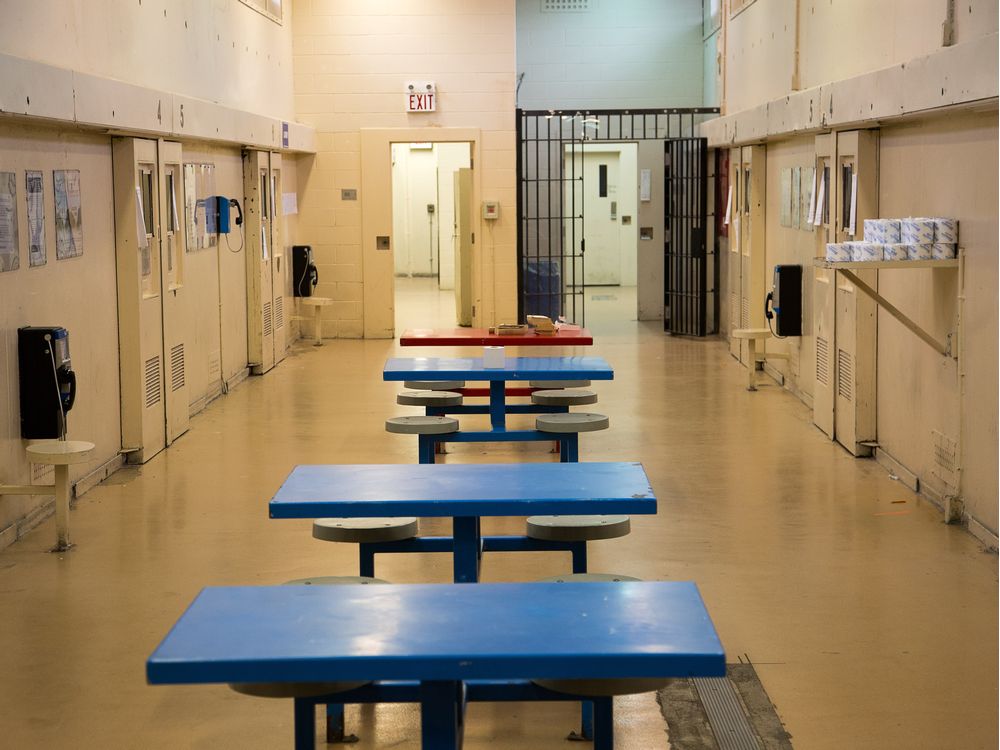
As I returned from court and was being re-booked into the county jail’s maximum wing on Innes Road, one of the guards was a little impatient with me as he demanded yet another search at the Max Rotunda. “Turn around, hands against the wall, spread’em,” he said gruffly. I noticed some broad looking at me and stared back her with contempt, thinking she probably liked to see me humiliated in this way.


photo by Wayne Cuddington/ Postmedia

Not an hour went by before I was called out of my cell to speak through the bars at the top of the range to this very lady. Apparently, she was our new classifications officer and wanted to hear my story. Prisons were being staffed by women suddenly in our rush to progress.

Of course, I told her it was all a mistake, that it was an overreaction on my part after being brutally beaten for no reason other than petty jealousy. I did my best to convince her it was “out of character” and told her about my jewelry and furniture businesses.

By the end of the week, I had buddies deliver letters attesting to my businesses and how I was needed outside to keep things afloat. I got out within ten days of being in. The guys on my range—many of whom I knew from the outside—couldn’t believe it. I left them the rest of the hash I’d smuggled in up my ass on the day I was sentenced.

That worked out well for a while. I was in a halfway house out on Riverside, with an apartment on Innes just a few miles down the river. Meanwhile, my buddies had rented a place further out the river for the summer. I bounced between the three places.

Peanut Haven out by Manotick it was called, and I rented half of one of the three cottages with my buddy Flo. Every morning at ten while at the halfway house, I’d dress in a suit and tie, grab my briefcase and go outside to meet my partner. He’d show up in our Cadillac dressed in jeans and a T-Shirt with bulging muscles. He looked like my body guard and we didn’t deny it. Then I’d either go deal dope one place or another, the time away barely causing a ripple in my schedule.

Sometimes, my partner had other shit to do so I’d drive the Caddy around and take care of business myself. It so happened I walked into a buddy’s place to collect some money one evening, just as he was being raided. I’d almost forgot about this until my high school reunion a few months back. Someone there reminded me they were there when it happened.

I knocked on the door and when it opened I saw he was being raided and ran. They caught me on the stairs and found my keys. They searched the block and tried the locks until they found the right one. My partner had left a few ounces of pot tucked into a construction boot in the trunk without me knowing. I was busted.

I remember the ride downtown in the wagon with the other guys. How I had to push my handcuffed arms from behind my back and under me, and how they had helped me get my legs through one at a time, so I was cuffed from in front instead of behind. I remember that.

I was returned to the county bucket and reclassified. I kept telling them it was all a mistake; the pot wasn’t mine and was left there by mistake. It was still, “out of character,” despite how it looked!  I even had someone else claim the pot as theirs. We took a shot at it. The guards started calling me “silk.” My poor classification officer gal listened patiently and told me she’d send me to the easiest place possible. I was shipped out to a minimum-security joint.

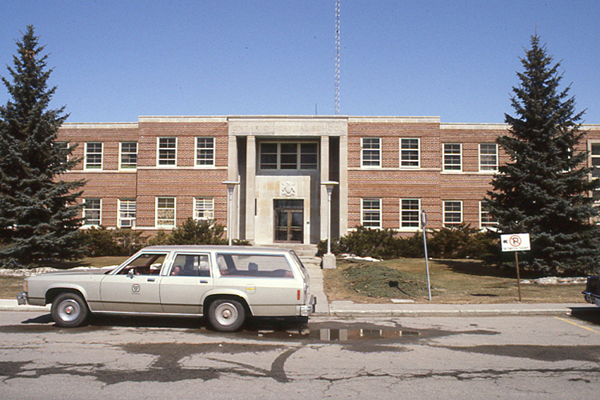
No sooner than I arrived at what we called Burritts Rapids, I immediately applied for a half-way house. I remember that interview with the warden. He called me a con-artist and reminded me of the silk nickname which had followed in my classification reports from Ottawa. He denied me outright and told me to do my time. I told him I was happy to re-apply again later.

I worked at it. The thing was, you could be denied and re-apply the next day. So that’s what I did. I was turned down over and over for transfer out to the city. And the food at the Rideau Correctional Facility, as it was known officially, was terrible. By far, the worst food I’ve eaten in prison and where I was introduced to hickory tasting coffee. Horrible, I found punishing.

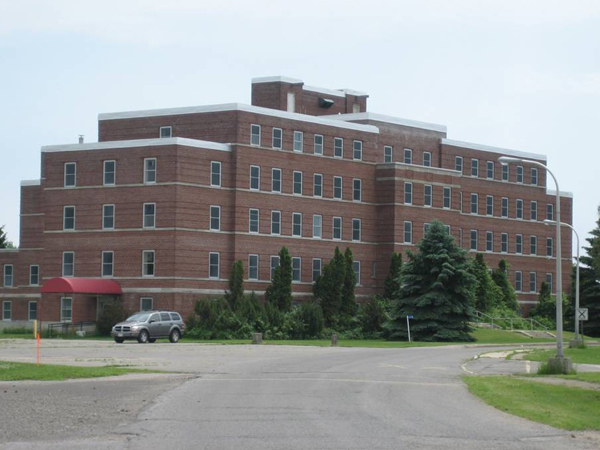
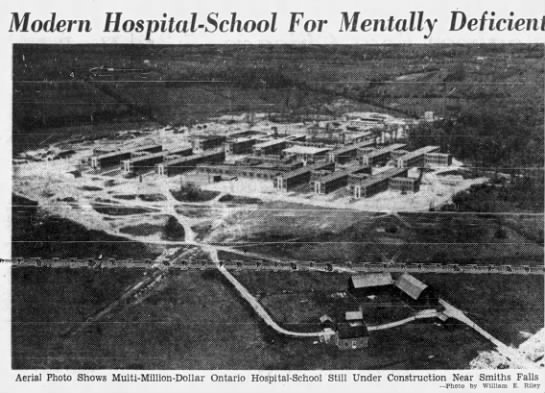
So I aimed for and won a day-job working at a local developmental hospital in Smith Falls. They had those at the time, since closed. I’d be bused to the hospital every morning and spend the day there working as a pool porter. I’d get a voucher where I could eat cafeteria food which was ten times better tasting than joint food. I’d also get to wear my street clothes and talk to women, good smelling gals. I could also swim in the pool if I wanted, with women lifeguards who worked there, and were nice to me! It was a good go, as they say.


It was there I saw what they used to do with all the kids no one wanted. There were kids wards and adult wards, male and female. They even had a series of cottage style buildings where some of the more high-functioning kids could live. I never met anyone from those.  Blind, deaf, dumb kids were dumped here by families, encouraged by doctors.

Autistic headbangers occupied whole wards, banging their hockey helmeted heads on the floor all day. Many were in diapers, toddlers who screamed and self-harmed in their self-soothing attempts, but some were older. None of those kids swam that I remember. Or if they did, I was sent to fetch them strapped in a wheelchair and brought them down one at a time.

Several wards held schizophrenics, separated into male and female. Those places were nuts at times, depending on when the meds had been given out. The male wards were tough. I saw attendants dressed in while smacking people in desperation when they were attacked, or someone was stealing an ashtray or a smoke. It was an angry place when meds wore off.

Many Down Syndrome kids and adults lived there. Every developmental issue was represented at the Rideau Regional Centre. If you had never encountered anything like this in your life, the only thing I can reckon it to is the freak shows at the ex. In those days, families gave these kids up to the state, to be institutionalized. The place had to house a thousand, I bet.

Whole wards of alcohol damaged individuals, Korsakoff Syndrome and tardive dyskinesia had a place there. Wards with people in straight jackets for their own protection and the protection of the staff. The developmentally delayed child who lives becomes a developmentally delayed adult in a place like this. Without good stimulation in these warehouse-type institutions of old, it becomes a horror story, far beyond Steinbeck’s, “Of Mice and Men.”

Everyone smoked in the place, and during the day it had clouds of smoke in every hallway and in every dorm, cigarette butts everywhere on the floor. I remember a kid who had really bad brain damage from a car accident. He was one of my first pool-porter patients. Because of him, I learned to walk on the right side of my charges with my left hand on the back of their neck and my right hand folded across my mid-section and holding on to their right forearm. This way I could pivot them one way or another in a hurry.

Big and tall and you could tell, once good-looking, Stephen was pica. And he was addicted to any stimulant, not just tobacco. He once got away from me and ran into a ward and grabbed their instant coffee and started to scoop it into his mouth by the handfuls. The attendants freaked and physically intervened and taught me how to hold on to him.

He’d run through his weekly allotment of smokes in a day or two and nic-fit the rest of the week. He’d gesture to me, two fingers tapping his mouth slowly while saying in a deep and clearly brain-damaged way, “mokee? mokee?  moke?” with a twinkle in his eye. Sometimes I’d oblige him, and become his new best friend. He could answer questions about his accident, but it took a great deal of effort. I’d bust his balls about how all the girls must have liked him.

I’d be walking him down the hall to the pool and I’d sense him looking at me out of the corner of his eye, sizing me up, getting just slightly more anxious. First time it happened he broke free and dove upon a cigarette butt on the floor and gobbled it down before I could stop him. After that, I see him start to twitch a bit and look ahead and spot his target, taking precautions.

In one of the male adult wards lived Birdman. Staff would get him up in the morning and dressed. Soon he would strip naked and sit up on the window sill in a crouch for hours and hours. His whole body, from head to toe, would turn blue from the constricted blood vessels while his tongue would dart in and out like a lizard. His penis would hang down over the side as well,  a vestigial long dong of blue. He was mostly catatonic, staring off into space.

I happened to be there when a kid with cerebral palsy sued the government for the right to make his own decisions about where to live and how to spend his monthly stipend. I can’t remember his name (Mike?) but he won in Ontario court while we were all pulling for him.

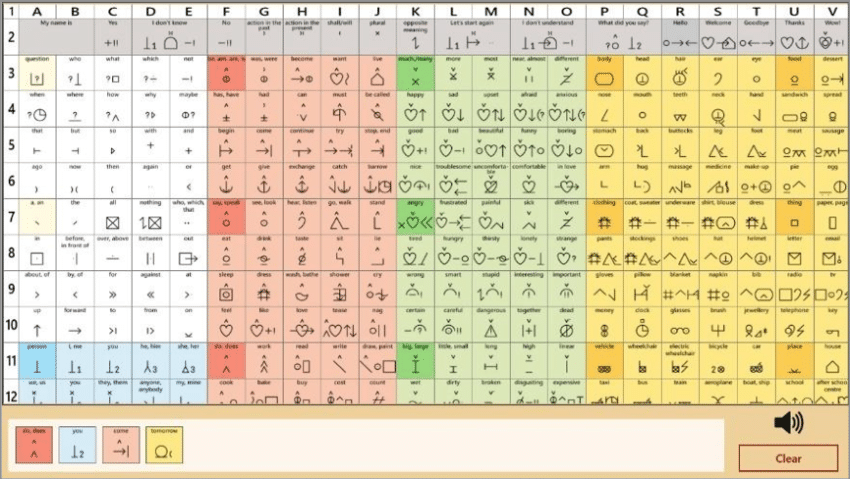
He used a Bliss board, and I had several wonderful conversations with him in his wheelchair, a big board of symbols in front of him like a table, and him awkwardly but effectively using Blissymbolics to communicate. He had a goofy smile and an intelligence in eyes that twinkled easily. I gave him my best props and pep talks as he waited his own reclassification. He was an amazing guy, really inspiring.

Perhaps it was these kids and adults who first awakened in me a dormant caring I’d suppressed on the street for many years. They were doing time like I was, society’s refuse, shuffled aside and locked away. I was a prisoner and so were they. We were on the same side, with me at Rideau Correctional Centre, while they were at the Rideau Regional Centre.

In 2013, the Ontario liberals awarded survivors of the Rideau Centre 20.6 million. David McKillop, then 63, placed there when he was just four years old, was the representative plaintiff. “I got beaten up by staff, sexual assault, everything… You couldn’t do anything about it… You couldn’t say anything about it at that time” he told the CBC after the settlement. “I still dream about memories about it… We’re going to get help for that too.  I wanted to make sure the government paid for it, what they did to us.”

Bless your heart my man. Seeing what I saw late 1970s during the day when it was at its busiest, I can only imagine what it was like at night. It’s horrifying to think of now.

It was later while studying behavioural sciences in the late 1980s where I was exposed to the Cornwall project, an initiative to keep developmentally challenged kids with their families with the support of the community. I attended “People First” meetings and became friendly with some of these charming ambassadors living with their families of origin, or in small community-based housing. It was better than what I saw by far.

We’d learned by then the more stimulation challenged kids gets in the first few years, the better their chances later. It was also admitting the best place for a kid is usually at home. At the same time, it was forcing families to take greater responsibility for their offspring, despite the problems, but with support from the state. With that, the stigma of the retarded child began to disappear. I like to believe I witnessed that turning point when my little buddy and his bliss board won his court case.

As for me, I kept applying for release and getting shot down. Each week or two, I’d appear before the warden flanked by two guards and make my case. He’d say no, and compliment me on my improved story, with a smirk on his face. Off I’d go to my dorm.

Then a miracle happened: a prison strike. The Canadian Army were called in to man the security of the province’s prisons. And you guessed it: anyone with an application for early release or transfer to a halfway house in town was automatically approved.

I was out again. Fuck you warden.

A few years later, I encountered the guy I shot at a bar, Billy’s on Somerset where I’d taken my new gal for an afternoon beer. He was still dragging one foot as he walked and thanked me for not killing him. Turns out because he admitted he attacked me first from behind in the preliminary hearing transcripts, the criminal compensation board turned him down for any award. Tough break lad.

Besides the kid with the Bliss board, and Stephen the pica, what haunts me most from those times was pulling up every day at the Rideau Regional Centre in our prison bus and seeing a big black hearse at the back of the place. I don’t remember not seeing one there in the months I was privileged to work outside of prison among these brave souls.

Sometimes the worst places teach you the most. Without contrast, what would we know about bliss?

Stay powerful,

Christopher K Wallace
© 2018, all rights reserved.

www.advisortomen.com

https://www.facebook.com/groups/advisortomen/

UNCONDITIONAL LOVE

MA’S INFLUENCE
I was once married for 24 years and nine months. I knew at the quarter century mark, I’d have to stand up to say the time we had spent together was the best a man could hope for, that I’d do it all over again. You hear guys say they were lucky to have found such a woman.  I knew I couldn’t do it.

Interspersed among those years were some good moments—I’d raised a son to adulthood, largely defining me as a man—though, my overall matrimonial experience was a nightmare. I couldn’t celebrate it, not in the least. Our friends knew of our challenges. I also realize it was not all her fault.

I was raised by parents who stayed together. It was in a different era to be sure, the baby-boom. They raised nine children to adulthood, out of ten pregnancies in twelve years. My mother died at home a few years ago, surrounded by all her adult children reaching out to touch her while she lay helplessly in the hospital bed we’d set up in her living room. Her husband of sixty-two years held her hand and whispered sweet reassurances to her as she went.

Throughout their long marriage, my father was a diminishing force. First, he beat booze, giving it up when I was just a boy and attending meetings for decades. Not enough, his uncertain sense of self—inherited and formed from ancestors and upbringing—became a weight too great to bear. It left him weakened, violent at times, needy and distant. Eventually, his burn-out led to early retirement.

Yet, for all his troubles, my mother stood by him. These people were my avatars for love. With 33 meals a day to cook, ma was busy. Overwhelmed is a better word. The baby girl before me had died. The boy above my dead sister had bronchitis. The sister after me was sickly but survived. Our eldest, my remaining big sister, tells me these two took up a lot of my mother’s time. I was born at nine pounds ten ounces, the big, fat, happy baby, and left in the crib, the back of my head flattened from the hours alone. Ma later said she couldn’t get me to turn often enough.

I had a hard time with toilet training. I needed more attention than ma had to give. I didn’t stop wetting my bed until grade two. Attending a French school as an Anglo where I didn’t understand a word, I felt further disconnected. It was during this time I realized my dreams of pissing meant I was probably doing it at that very moment. It became my signal to get up and go, and I defeated it thereafter. I became a lucid dreamer.

I remember yearning for my mother’s approval. She was tough on me about toilet training, oft-times berating me, accusing me of having accidents on purpose. My remembrances the stuff of Freud, it made me need her more. I called for her in the night sometimes, or I begged her to lie with me at bed-time. It was so I could feel her reassurance before the lights were turned out and darkness in the cold of my parent’s basement prevailed.

I don’t blame my mother for she did her best, providing just enough loving encouragement to make me think more was in order. It was she I turned to for every need. She was indeed my north, south, east and west. With my father absent in the early part of my life sailing the seas for the navy, I had only ma. Even when my father refused further postings and promotions for the Armed Forces so he could stay with us, we still had only ma.

THE SOUL
That’s the thing about children: they experience families physically.

Without the cognitive ability to evaluate the world with intelligence or morality, lived emotional states are locked into the child’s body forever more. In fact, this is what feelings are: predictive responses to circumstances based on your databank of experiences. These are only corrected after-the-fact by the social reality at hand.

A baby has few emotions in the beginning, added to as it lives with more complexity. No two of us feels the same thing. There are no basic feelings; there are only shared experiences which give us a semblance of what another feels.

The brain relies on interoception through the tenth cranial nerve—the vagus system connected from the skin and organs to the brain stem—to discern the body’s needs and prepare your best emotional state. It’s done faster than you can think, on a best-guess basis. I suspect what lies locked away in your body by way of methyl groups from your ancestry, and emotional states from your history, constitutes your soul. Add in mankind’s collective unconscious and the soul triumvirate is complete.

These influences carry over into adulthood for all men. The need to belong is universal in humans. All of us have a part of our being which fears we may not be good enough, and because of this, we may not be loved. Some of this might be innate, but much of it comes from our first relationships. Attachment to others is critical to survival.

Darwin said: “Natural selection will never produce in a being any structure more injurious than beneficial to that being, for natural selection acts solely by and for the good of each.” And as my old prison pen-pal Conrad Black often says, “Self-interest is paramount.” Despite her efforts, mother cannot help but attach conditions to her love. The self-centered child cannot see this clearly.

MARITAL MYTH
In observations over many years, I’ve heard enough behind the scene curses from mothers displeased with children to know their elevated status as virtuous and blessed with infallible loving is only partly merited and mostly unrealistic. In fact, it’s an ideal, and it’s not in any way restricted to women. Men also love their children to the best of their ability and come up short. Daughters are affected too. No one becomes a parent with anything but good intentions.

And so, you may say, we don’t marry our mothers. Well, that’s the problem, we must. On some level, family of origin influences are bound to carry over into adult relationships. You see, we exist in each other. It’s not enough to say you are over there and I’m over here; indeed, if we spend time together under each other’s influence, a part of you will remain with me.

Most men, subconsciously that is, without even realizing it, believe our partner will love us unconditionally— like we may have thought or wished we were being loved by our mothers.

While normal for a child, as an adult it’s an irrational belief, a transference of a childhood pattern where mother is all-powerful and we crave her acceptance. As we grow through childhood and into adulthood, the hope to be loved unconditionally is imprinted upon your soul, seared and branded there as if your worth depended upon it.

Of course, all your disappointments are driven by expectations, and this is one your adult partner can never meet.

Kind of an impossible quest in many ways, decidedly an unfair burden upon her and the relationship. It results in living up to a preposterous model she can never satisfy, and which should never be fulfilled. Furthermore, and more importantly, it keeps a man a boy.

I wish I knew this then. It may not have changed anything in my marriage… but it may have. What’s important is this: I know it now.  Missus is not my mother. Heck, even my mother was no saint. My expectation I’d be loved unconditionally in my first marriage meant I didn’t show up as powerfully for my woman as she needed. After all, I was me! I’m a great catch, right? We’ll emulate my parents!

Nonsense. A man who believes his woman should love him unconditionally is giving into his boyish need to be loved by his mother. Cute for my five-year-old, not much more than pathetic for a grown man.

FREEDOM
It was in his book, Iron John, where Robert Bly writes the keys to a young man’s freedom lie under his mother’s pillow. He must steal them from her while she sleeps and escape the comfort and confines of her castle, turning his back on safety and embracing danger and adventure as his own man. It is only from venturing out from under his mother’s watchful gaze can a man find himself and learn to live without her.

Once gone, he must never return. He must leave boyhood behind for good.

This is what lies at the root of many a man’s weakness around his woman. My missus is a lot like my mother. Many of her traits I find quaintly familiar, but only now after many years together. Attraction is like that. It’s programmed deeper than awareness, based on familiar neural pathways like other emotional states, it can only be corrected by the social reality before you. If men are anything, they are adaptable.

My woman is not my Madonna. She is no saint and holds no perfection though at times she is perfect for me. As an intuitive woman she may seem vast and as deep as an ocean, but she can also be as shallow as any bog, a swamp of wants, demanding in her needs.

Remember Darwin’s counsel. Your woman is completely unrelated to your family. She is not at all kin until you make her so through your children and history. I don’t advocate becoming a trader in your relationship, with every deed bargained for like shopping at the butchers. No. Not at all.

It is enough for a man to repudiate once and for all the notion of unconditional love. To see it as this: clinging to a childish expectation you will be loved no matter what. No again.

There is no respite from earning your way in love just as in life. There is no coasting, relying on an emotional bank account too easily overdrawn. Who keeps that ledger? Taking the metaphor further, it’s far better to make regular deposits, and let compound interest do its thing.

As ma used to say, “there’s no rest for the wicked.”

I know she meant that in the kindest possible way. Or did she?

Stay powerful,

© CKWallace Nov, 2018 all rights reserved

Christopher K Wallace
Advisor & Mentor
for a free 15-30 minute strategy call click here


Ma with me at the Governor General’s for our coat of arms unveiling in 2012
I have her nose.

THE BET (true story)

Some of the best and worst of humanity can be found at the crux of competition.

In a larger sense, competition over food, over territory, over commerce, occupies the macro, the endless ways in which groups all over the world serve their constituents, be it government for people, or public companies for shareholders..

At the personal level, we compete against each other for jobs and sustenance, for partners, for status within our group, each a micro-level expression of wanting to be worth something, to belong somewhere, to best our rivals. Competition is proving one’s worth.

What often motivates us is death, though not usually directly. No, it’s subtler, beneath the surface. Perhaps we compete to be sure this is not the day we die.

DIFFERENT CONTEST, DIFFERENT FOLKS
Men and women tend to compete differently. As generalizations go, those differences have exceptions, where traits thought masculine are found in a female, and vice versa, depending on the actors. There are plenty of feminine men and masculine women. So, we’re speaking of majority only here.

Thus, if Susan Pinker writes that women tend to maneuver covertly, using mean remarks, social exclusion, and by trying to win over your friends and allies, it’s not a rule set in stone for all women. In fact, these are strategies sometimes used by men. If not used by men, men can learn from them.

Men tend to compete slightly differently. They like to best each other straight up, mano a mano. But not always, for another way men compete is to put each other down. I remember reading in Scientific American some years ago about brain scan studies showing both approaches satisfy the same needs. Competing directly or by put-down lights up identical reward areas of the brain. One approach is social, the other not so.

Because one sure-fire difference between men and women is the level of their boasts. Perhaps this is the opposite of putting someone else down, boosting self instead. Men brag about being able to do something, as if to dare someone around them to challenge them on the spot. And they do. Invariably, they do.

THE RCC

Let me tell you about a guy named Dave and a bet he made.

We were doing time at a Burritt’s Rapids facility, also knows as the Rideau Regional Centre. It was a minimum-security place, a few dozen miles outside of Ottawa where I’d been sent for shooting a guy (which was out of character).

Discharging a firearm with intent to kill they called it, allowing them to sentence much more leniently, but which hardly disguised the original charge of attempted murder. Semantics maybe.

We lived in dorms, I think about twenty or so inmates in each. The dorms faced each other so you could see another dorm across the hallway through heavy wired plexiglass. When I was there, it seemed to be full. On any account, rather than work on the farm during the day, I’d managed to secure a job as a pool porter in a nearby town days (something I wrote about in an essay called Forms of Bliss).

We had some real characters in the place, and nothing anyone had done was all that serious comparatively, which is why they were in minimum security. And the fact it was out in the country meant we got the local crowd of country crooks populating the prison, some of whom were entertaining guys.

In the dorm opposite me there was a gay couple even. Well, that’s what you’d call them now. Back then they were just queers. It was a slight balding guy of about 30 and a younger guy of 17 or 18 or so I remember. The younger fella had the last bed, way at the end of his dorm where these two would sit and flirt with each other all during lights on time. No one much paid them any attention, and I remember they were protective of each other.

When everyone would be off at the gym or elsewhere, they’d sneak physical contact. Everyone knew it but just ignored them.

My father had taught me about homosexuals when I was just a boy of 10 or so. Not a formal lesson mind you, but just one of the half-dozen memories I have of him where he was a stellar parent. Before that, I had the usual homophobia of any young boy my age and of that generation, seeing it as a severe taboo, having a strong enculturated prejudice against it straight from the school yard.

I’d called my sisters lesbians and earned a trip to dad’s room for a talk. This was a time of luck, where a talk with pops was possible, instead of the usual, where violence ruled. During his discovery of me regarding the complaint which brought me before him, we found I had no idea what a lesbian was.

He explained it perfectly, telling me it was women who loved each other, just as men and women loved each other. He added it wasn’t a choice, but rather how they were made. More importantly, he mentioned these were people looking for love like anyone else. I remembered that last bit, it stuck. It was probably 1968-69.

The first pot growers I encountered were in this prison. These were like every pot grower I’d come to know afterwards too: indignant, righteous about their cause, feeling maligned by the state. Of course, they held my sympathies.

These boys had taken the seeds out of their Mexican weed and tossed them into the ground. Lo and behold, a few months later they had pounds and pounds of the stuff, for free! They were pretty hush hush about it all inside, because they didn’t want their “secret” to get out. Since I always had a gal bringing me hash on the inside no matter which joint I was in, I got the inside scoop.

That’s something laughable now but back then, the connection between the highly illegal pot being bought, sold and smoked, and the potential of the seeds that came with it (before seedless pot hit our markets), wasn’t well-known. In fact, growing yourself was a crazy good idea very few followed for many years later.

Another fella there was a short muscular red-head who had to be 30-35 or so, pure farming country good old boy. He was friendly, and always had a laugh to share as a steady ball-buster. That was the thing about prison. I’d been kicked out of the house at 15 when dad broke down and therefore lost access to my four brothers. I found lots of brothers elsewhere.

And what had country boy done? He’d gotten drunk with friends and they all were hungry. So, he went into a field outside Kemptville where beef cattle were kept. There he killed and butchered an animal for its best steaks, leaving the rest of the carcass behind and fucking off with the meat. When word got out the next day, someone remembered seeing his car on the road the night before.

If remember right, while recovering at home, and still shit-faced, buddy woke up to cops looking at all the blood on the seats of his wheels sitting in the driveway.

But back to Dave, for he’s the best example I know of male competitiveness. You see, Dave was a pimp. Or, at least that’s the gist of it.

It was back in the very early days of the escort business, where the Yellow Page folks finally allowed escort ads. It blew open the pimp business as gals and guys lined up to make money. There are always women willing to sell their body for a few bucks, but it can be dangerous work. They use men to set them up and drive to the appointments and make sure they’re protected. Dave did that for a cut.

He was a good-sized kid, maybe late twenties. He wore glasses and was smart enough, verbal. In other circumstances, he would have made a good manager or business owner. He also had a twinkle in his eye and a ballsy determination. Of course, he was in for assault—something about him and another guy beating up some john who had messed with one of his girls. The usual.

Dave always had some broad visiting. Not a good-looking gal mind you, but he got visits. We’d see each other in the visiting room and know I’d soon have shit for sale. His visits didn’t bring him much. He just didn’t have that kind of pull with people. Those who couldn’t smuggle would have relatives visit and leave them $50 bills. We traded goods for that currency. In every joint I’ve been in except county buckets, there was cash to be had for drugs. Dave had neither.

But, Dave was a determined-type, we had a lot in common that way. We weren’t content to do time and wait to get out. We were proactive mother-fuckers.

I’ve been to a few comedy clubs in my time. Especially since the advent of Yuk Yuks and place like that. I’ve busted a gut in a half dozen cities I’m sure.

But I have never laughed as hard as I have while inside. It’s the war-stories. It’s reports from the underground. It’s guys who are living at times, sometimes all the time, right on the fucking edge of sanity and insanity. It gets very funny, in an incredulous way. Oh, the shit people get into.

THE BOAST

And those ball-busting war-story boasting sessions were just the kind of place where one-upmanship can be brought to a whole new level. It was at one of those gatherings of the haves, the ringleaders of the joint, where Dave uttered his infamous line, “I’d just about do anything for a $50 bill.”

Wasn’t long before suggestions were made. The usual, let a cat lick your nuts, diddle your cat, eat the pussy of a 300-pound fat chick, eat shit, etc.

“Wait a minute, did you say you’d eat shit? No way!”

Dave, not one to back down, flatly replied, “I’d eat a whole shit for a $50 bill.”

And wouldn’t you know it, guy pulls one out, red Mounties right there, waving it around while making sure the guards aren’t walking by. “I’ve got to see this. You’re on,” he says, calling Dave’s bluff in front of the boys.

Dave: “I’ll do it, wait until tomorrow when I have to go,” said matter-of-factly.

Get-the-fuck-outa-here!

And so, the next day, I’m thinking this has been called off. Nope. Dave was in my dorm, so I got to witness the plan’s progression. During the day he’d smuggled out a plastic fork and knife and small paper plate out of the dining hall. He showed them to me, asking what I thought of by way of stash.

He signaled to me when he was going in to the toilets to get his stool. “If I’m going to eat shit, I’m eating my own,” he said. Couldn’t argue that at all.

Near after supper, he’d produced a lovely stool, decent consistency, and curling in a half moon on the plate replete with tapered end where his anus had pinched it off as it exited his arsehole.

There he was, slightly acne’d and puffy faced, a little soft but his muscularity from regular workouts now showing through his shirt, and his overall demeanour a curious look of high concentration. It was as if he was treating this as no big deal, indifferent to the challenge, wisely creating a conqueror’s mindset, long before that word ever entered popular psychology’s lexicon.

And I believed him. If anyone could do this, Dave could. He was a lower echelon dweller, from the projects, living among the poor and the profane, places where suburban realities did not exist. He had banged lots of fat girls, maybe even his sister (if he had one). For sure he had his red wings, an honour gained by eating the pussy of a menstruating woman, maybe his sister’s friend or the neighbour.

He was a gladiator of gall, a welfare warrior, and mercenary of mooch. He was a sick-fuck our boy, and we were proud of him.

THE CRUX
Someone kept six at the door but didn’t linger. Instead they’d keep moving and walked across the hall while glancing up towards the offices as one by one, the guys from the night before filtered into the dorm, sitting at different beds pretending to be visiting a person here or there to not attract attention.

When the six-man signaled the guard was off the range and had moved into another one, it meant there might be twenty minutes before another appeared. It was then Dave nipped into the washroom to retrieve his prize.

The shit had congealed into a shiny, waxy state on the paper plate. You could smell it. It smelled just like shit. Only, you weren’t smelling your shit, which I presume you’re at least somewhat used to by now. No. You were smelling Dave’s shit. It was an entirely unpleasant experience. It reeked of bad food from a bad body. A ripple of moans and suffering remarks erupted from the gathered.

I insisted he do it on his bed. No way it was coming near mine. Finally, someone called him on: “You gonna do this or what?”

Dave asked to see the fifty. Then, there was the delicate negotiation of who would “hold” the fifty, you know, in case the bettor reneged. This resulted in more insults and calls for respect. Finally, the group prevailed and the holder of the fifty was persuaded to hand it off to someone he could easily take it back from if necessary.

Dave put the plate on his lap. Gingerly picking up the plastic fork and knife, he began to cut off a piece of shit, like someone cutting into a steak. Only, it didn’t give any resistance, but did cut nicely. He broke away this piece onto his fork, leaving a brown shit stain in its place on the plate.

He lifted the fork up to about chest high as he sat on the edge of that bed. He had water ready in case, or maybe it was a pop. He’d invested in whatever remedy he’d need, for fifty bucks for nothing is a rare thing in prison. That’s the way he looked at it: He was getting money for nothing.

Lifting the fork to his mouth, the collective leans back and away from him in disgust, not able to quite take their eyes from the fork and shit in front of his face. The person sitting directly across from Dave suddenly realized the precariousness of his position and made a bold move out of the way at the last minute… just in case.

Dave put the shit into his mouth. He looked fine. It was in there and his mouth had closed. He began to chew.

It may have been a few chews, but it wasn’t much more. Involuntary seizures hit him as surely as there was something knocking him on the back of the head. He soldiered on and tried to swallow, tears forming in his eyes as his body convulsed, dry heaving, chest rising and falling.

Through tears in his eyes, doubt suddenly appeared on his face. Perhaps it was the difference between what his mind commanded and the way his body responded, but he looked at once tyrannized and confused. He gulped as if to swallow once more and his throat stopped mid-way and reversed course. He began to show just a bit of brown spittle at the corners of his mouth. His lips were glossed in brown, like he’d been eating baked beans, no napkin.

He rose up, the assembled fell back on the beds before him, spreading apart on both sides like a peeled banana. Dave convulsed again, this time raising a hand to his mouth area. For the last time he tried to slide that piece of errant turd down his throat, but it would not go. His mouth remained open, where you could see the mashed shit on his tongue and teeth, like when a rude person who speaks with their mouth full.

He ran towards the bathroom stalls next to us, as people cleared their legs and feet out of his way. There, through the full-length plexiglass windows, we could see him puke up the remaining shit from his mouth, and any other shit in this stomach. Great heaving occurred as he emptied his being of any possibility of shit.

The bettor snatched the fifty from the holder while all of us moaned in sympathy and in awe. Everyone broke protocol and spoke too loudly and too often, describing every second of that scene in minute detail. “Did you see him put it in? Fuck off!” and, “I thought we about to be sprayed with shit, goddamn it!” and “Fuck me, I can’t believe I saw someone put shit in their mouth!” and, “I never thought he’d do it, no way!!” and on and on.

I’ve never fully told the shit story until now. Over the years, I’m sure I’ve mentioned it in passing, that I once saw a guy try to eat shit on dare. No one seemed all that interested in hearing about it. I know why. Surely, no one would believe it. And the other thing is you can’t mention it in mixed company. Bit of a mood-killer maybe.

Dave came back out of that bathroom a dejected man. He was almost apologetic. He kept saying something like, “I thought I could do it, but it just wouldn’t go down no matter how hard I tried.” To him, it was now about failure and the lost opportunity. It was rehashing the technicalities. More importantly, it was about not being able to best the fella who taunted him. He couldn’t command his body to win this one on will alone.

I’m pretty sure the rest of that bit I never let Dave get close enough to me to smell his breath. I know he brushed his teeth, I lived with him. It was just… something.

I wish him well, hoping his experiences in prison exposed his frailty. Maybe it put a convincing damper on his invincibility, and perhaps kept him alive on the outside. I hope he lived to tell this story. After getting out, I never saw him again. Never forgot him either though. How could you?

That’s what happens to men, and to boys. We compete at an entirely different level than do the girls. It’s a big difference between us. It’s unlikely in your lifetime you will ever encounter such an ordure ordeal, such as eating shit for dollars.

And if you do hear of such a thing, you can bet almost anything it won’t involve a woman instead.

Just don’t bet eating shit. Can’t be done.

Ask Dave.

Stay powerful.

cw

©CKWallace, November, 2018, all rights reserved.

https://www.facebook.com/groups/advisortomen/
https://advisortomen.com/board-of-directors/

THE BET (true story)